Tiếng Việt
After mole removal, many people experience darkening or hyperpigmentation at the treated site, which can be unsightly. Can this dark discoloration be resolved? The answer is a definite YES, provided you follow the right aftercare routine or seek timely intervention. The following article from Dr Xuan Quan Clinic suggests solutions to help you restore smooth, evenly toned skin.
Why does the skin darken after mole removal?
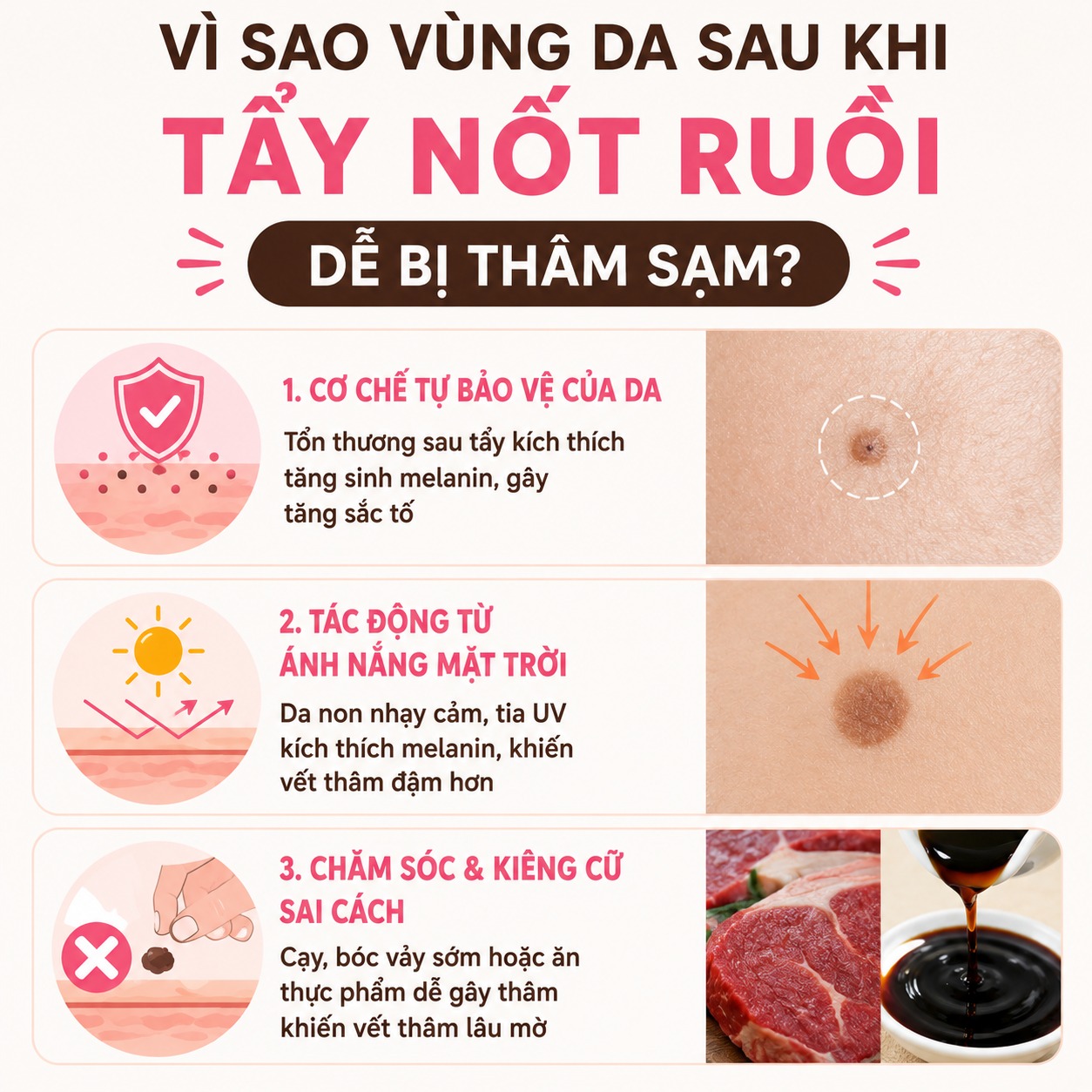
The dark discoloration at the site of a recently removed mole is essentially a case of post-inflammatory hyperpigmentation. This is a very common reaction caused by the following main factors:
- The skin’s self-protection mechanism: Mole removal (whether via laser or chemical treatment) damages the epidermis. To protect the delicate, regenerating skin, melanocytes are stimulated to overproduce melanin, causing the skin to darken.
- Sun exposure: Newly treated skin is extremely sensitive. Without proper coverage and sunscreen protection, UV rays directly impact the area, causing dark spots to deepen and making them difficult to fade naturally.
- Improper aftercare and dietary habits: Picking at or prematurely peeling off scabs before the skin has fully healed, or consuming foods known to promote dark scarring (such as beef or soy sauce), can cause the discoloration to persist.
Timeframe for dark spots to fade after mole removal
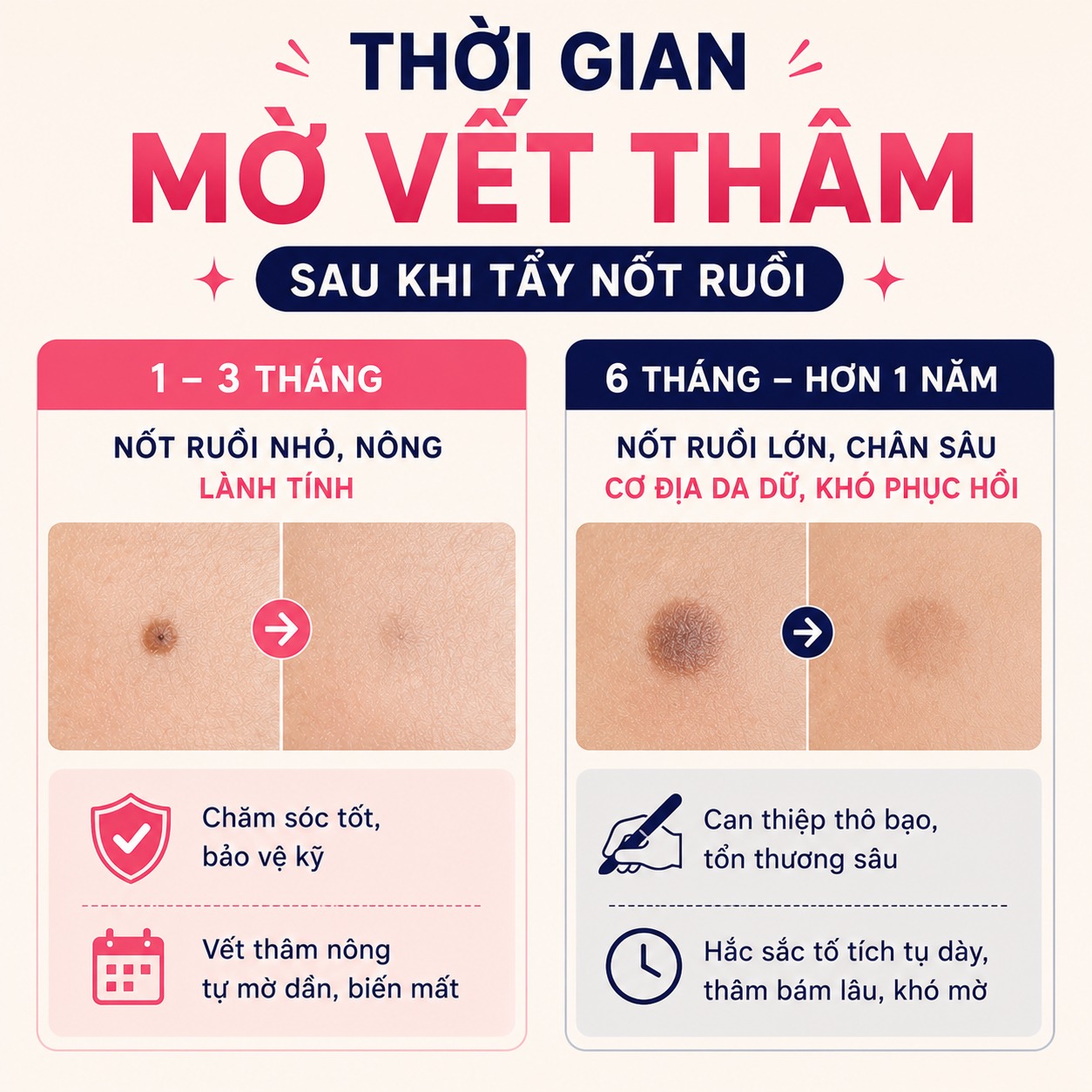
The time required for dark spots to fade completely and for the skin tone to even out depends on individual physiology, the size of the original mole, and personal aftercare:
1 – 3 months
For small, shallow, and benign moles: With proper care and diligent sun protection, superficial dark spots will gradually fade and disappear within this timeframe.
6 months to over 1 year
For large, deep-rooted moles, or in cases involving aggressive treatment or a skin type prone to difficult healing:
In these instances, deeper tissue damage leads to a dense accumulation of pigment; the resulting dark spots are persistent and require a significant amount of time to improve without specialized technological intervention.
Effective solutions for treating post-mole-removal dark spots
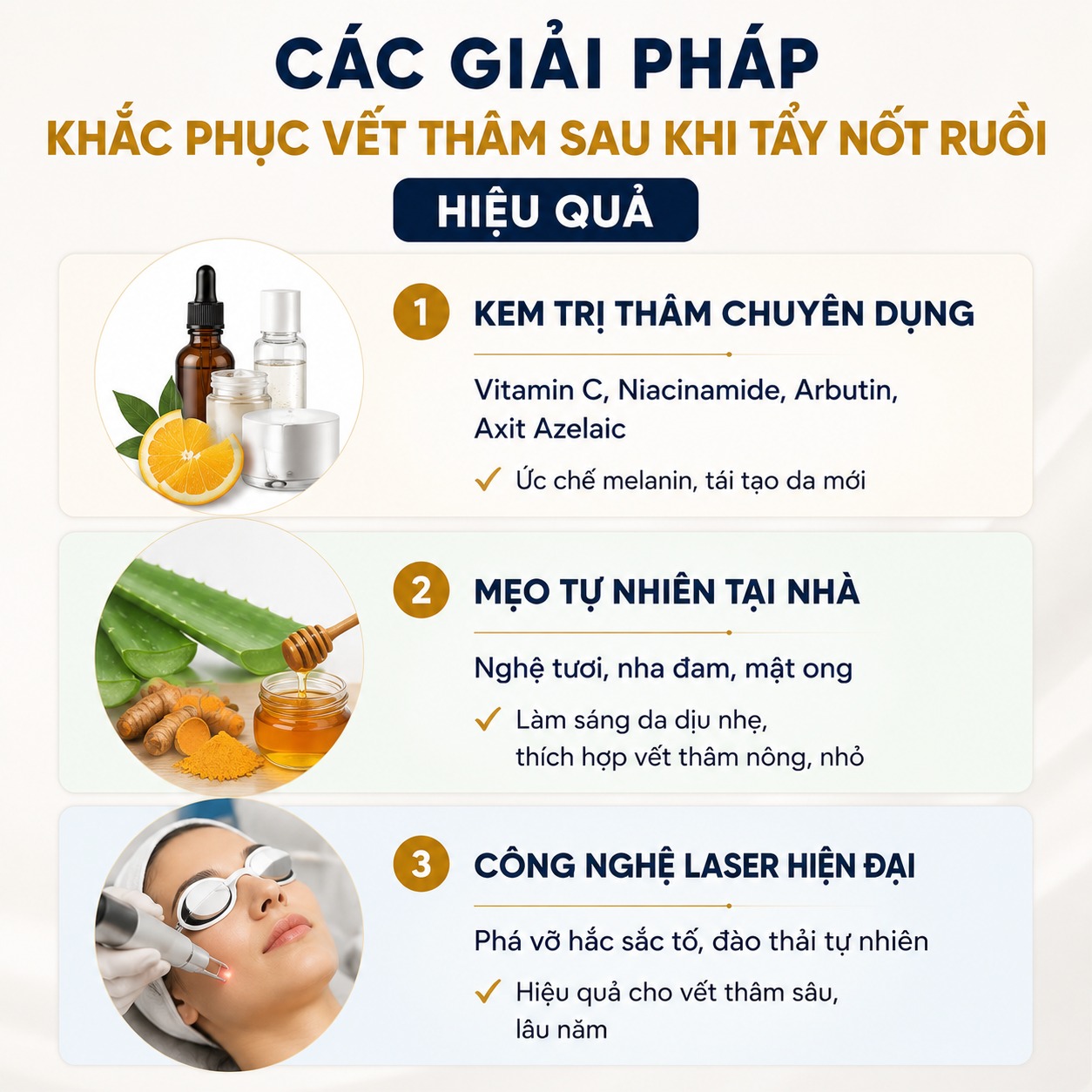
To quickly eliminate stubborn dark spots and restore an even skin tone, you can employ the following scientifically backed methods:
- Use specialized dark spot treatment creams: Apply products containing Vitamin C, Niacinamide, Arbutin, or Azelaic Acid. These active ingredients inhibit melanin production and accelerate the regeneration of new skin cells.
- Use natural home remedies: Once the wound has fully healed and new skin has formed, you can apply fresh turmeric, aloe vera, or honey to the dark spots. These are gentle, safe methods for lightening minor, superficial dark spots.
- Undergo modern laser treatment: Laser therapy is the optimal solution for deep-seated or long-standing dark spots. Laser energy penetrates the epidermis, breaking down pigment clusters into tiny fragments at the source, which are then naturally eliminated without damaging the surrounding skin.
Safe Post-Mole Removal Skin Treatment and Recovery at Dr. Xuan Quan Clinic
If you are dealing with stubborn dark spots or wish to minimize recovery time, Dr Xuan Quan Clinic is a trusted destination.
Here, you will receive a direct consultation from Dr. Xuan Quan, who will recommend the solution best suited to your skin’s condition.
The clinic employs modern techniques to gently eliminate dark pigmentation at the source, quickly restoring smooth, even-toned skin without causing pain or damage.

In addition, the procedure incorporates intensive restorative nutrients to nourish the skin and stimulate new cell regeneration from within. The entire process is performed in a sterile medical environment, ensuring absolute safety with no downtime required.
Notably, Dr. Xuan Quan guarantees quality through a reliable, transparent, and long-term warranty policy, providing clients with complete peace of mind throughout their journey to achieving a radiant, smooth complexion.

FAQs About Dark Spots After Mole Removal
To help alleviate your skincare concerns, Dr Xuan Quan Clinic has compiled and answered the most common questions from clients below:
When can I start applying dark spot treatment cream?
You should only apply dark spot treatment cream once the treated area has fully scabbed over and new skin has begun to form (usually after 7 – 10 days). Absolutely do not apply it while the wound is still open or oozing fluid.
Do I need to avoid certain foods if I develop dark spots after mole removal?
Yes, it is essential. To help dark spots fade quickly and prevent them from darkening further, you should avoid foods known to trigger hyperpigmentation and scarring – such as beef, soy sauce, water spinach, coffee, and alcohol – during the first 2 – 4 weeks.
Can long-standing dark spots – or those that have turned black or red – after mole removal be treated?
They can certainly be treated. However, long-standing dark spots or those with altered pigment structures are difficult to improve with standard topical creams. You should consult a doctor to utilize high-tech methods that break down pigments and accelerate skin recovery.
The information above covers whether dark spots from mole removal can be resolved and outlines effective treatment methods available today. If you are struggling with persistent dark spots following mole removal, please contact Dr Xuan Quan Clinic immediately to schedule a direct consultation with Dr. Xuan Quan and receive a tailored treatment plan.