Tiếng Việt
After rhinoplasty, pain usually subsides over time. However, many people worry when they still experience pain a month after the procedure, even persistent or recurring dull pain. This could be a normal recovery reaction, but in some cases, it could be a warning sign of complications requiring early examination. This article from Dr Xuan Quan Clinic will help you understand the causes, differentiate the level of danger, and provide safe treatment options from a professional perspective.
Is it normal to still experience pain a month after rhinoplasty?
From a professional standpoint, after about 3-4 weeks, the nasal structure enters its initial stabilization phase. The soft tissue gradually recovers, and the cartilage implant begins to adapt to the body. Therefore, mild pain and transient tightness may still occur in some cases.
However, if you experience persistent pain one month after rhinoplasty, with increasing pain intensity or accompanied by unusual symptoms such as swelling, redness, burning, or constant discomfort, you should not ignore it.
This could be a sign that there is an internal problem with the nasal structure and requires examination by a specialist to accurately assess the cause.
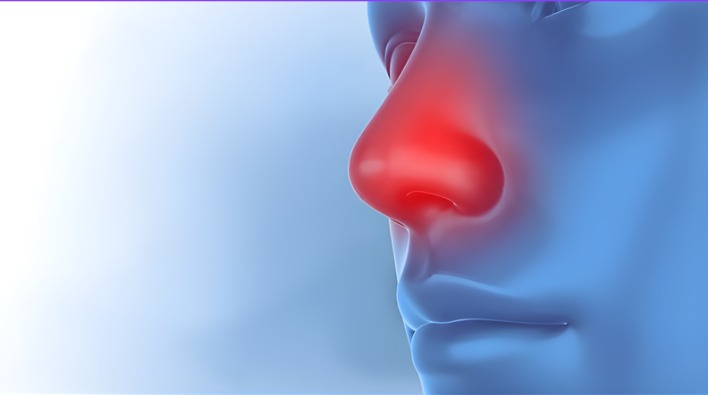
Reasons Why Nose Pain Remains One Month After Rhinoplasty
Nose pain one month after rhinoplasty can stem from various causes, related to both the body’s recovery process and post-operative activities. At this stage, the swelling has significantly decreased, but the internal structure is still developing. Therefore, some factors can cause prolonged pain:
- Slow nasal tissue recovery due to slow healing or improper post-operative care, leaving the surgical area still sensitive.
- The implant cartilage has not fully stabilized, commonly seen in structural rhinoplasty, semi-structural rhinoplasty, or cases of previous cosmetic surgery.
- Mild inflammation around the surgical area, causing a dull ache, especially when touching the nasal bridge or tip.
- External forces during daily activities such as wearing glasses too soon, lying face down or on your side putting pressure on the nose, or accidental impacts during movement.
- Infection or material irritation (low incidence but requires special attention), often accompanied by increased pain, swelling, redness, or prolonged discomfort.
Identifying the correct cause is crucial not only for timely treatment of nasal pain but also for preserving the shape of the nose and long-term aesthetic results.

When is persistent pain after rhinoplasty (1 month) a dangerous sign?
In most cases, if the pain after 1 month of rhinoplasty does not subside but tends to worsen, this could be a warning sign of an abnormality that needs to be checked early. According to professional assessment, this could be a sign of prolonged inflammation, infection, unstable cartilage, or a reaction to the rhinoplasty material.
You should pay special attention and consult a specialist immediately if you experience one or more of the following signs:
- Persistent pain that does not subside over time, or even worsens after the basic recovery period.
- Sharp or deep pain inside the nasal bridge, not just superficial pain.
- Significant swelling, redness, heat, and tightness in the nose, different from normal physiological swelling.
- Unusual discharge, foul odor, accompanied by a slight fever or fatigue.
- Noticeable changes in the shape of the nose, with the nasal bridge appearing crooked or asymmetrical compared to the original.
How to handle pain after 1 month of rhinoplasty
If pain persists after 1 month, proper treatment is crucial to avoid affecting the shape of the nose and the long-term aesthetic results. At this stage, specialists usually advise patients not to be complacent and not to self-treat based on intuition.
Specifically, you need to note the following principles:
- Do not self-medicate with painkillers or antibiotics without a prescription, as incorrect use can mask symptoms or prolong inflammation.
- Minimize pressure on the nose, avoid touching, bumping, or wearing heavy glasses that put pressure on the nasal bridge.
- Maintain a gentle lifestyle, get adequate rest, and sleep in the correct position to reduce pressure on the nasal area.
- Return for an early check-up at a reputable aesthetic clinic so the doctor can examine the nasal structure, cartilage stability, and accurately assess the recovery progress.
Timely check-ups help the doctor accurately assess the condition, thereby providing appropriate treatment and preventing more serious complications.
Safe rhinoplasty at Dr Xuan Quan Clinic
Clinical practice shows that many cases of rhinoplasty pain after one month stem from improper surgical technique or inadequate post-operative care. This is also why choosing a reputable aesthetic clinic from the start plays a crucial role in achieving long-term results.

At Dr Xuan Quan Clinic, rhinoplasty is a popular choice among clients due to the following core factors:
- Experienced doctors with extensive practical experience, having handled numerous difficult cases, failed rhinoplasty procedures, and cases of noses that have undergone multiple surgeries.
- Personalized rhinoplasty techniques, avoiding generic nose shapes and ensuring harmony with each individual’s face and body.
- Standard medical procedures performed in a sterile environment with strict safety controls.
- Close post-operative monitoring and detailed care instructions ensure stable and long-lasting recovery.
At Dr Xuan Quan Aesthetic Clinic, rhinoplasty is not just about changing the external appearance, but a safe aesthetic solution aimed at achieving natural beauty and long-term peace of mind for each client.
Therefore, pain after rhinoplasty one month could be a normal recovery reaction or a warning sign of an abnormality if it persists. To ensure a stable and safe nose shape, you should closely monitor your nose and seek medical attention early if you experience prolonged pain, swelling, or unusual discomfort.