
 Tiếng Việt

An upper eyelid retraction following blepharoplasty is typically caused by the removal of excessive skin or the incorrect attachment of sutures to the levator muscle. However, there is no need to worry; this issue can be effectively corrected and fully restored through specialized revision surgery. Join Dr Xuan Quan Clinic as we explore safe solutions to restore a natural look to your eyes!
Signs of upper eyelid eversion following eyelid surgery
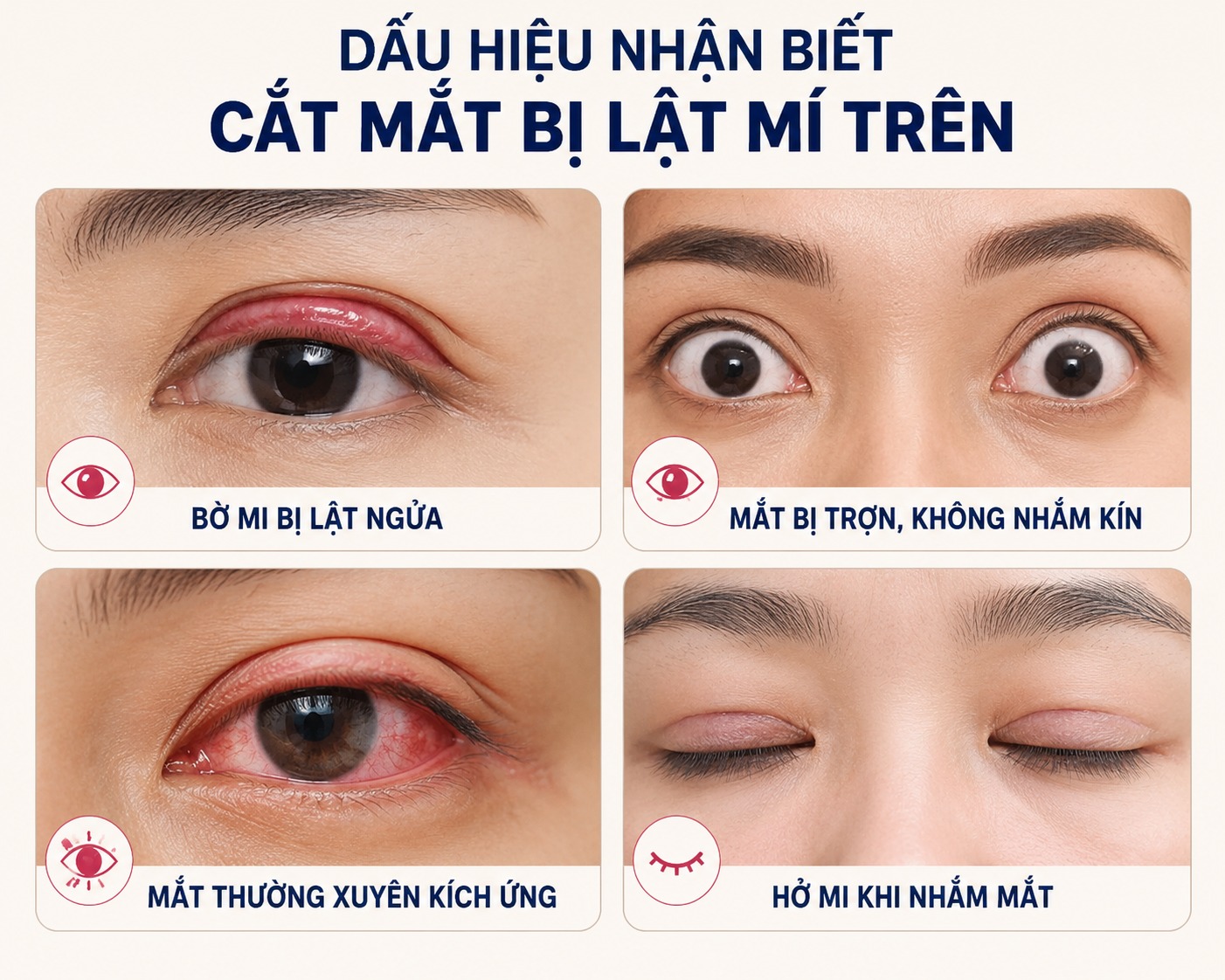
An everted upper eyelid resulting from a botched cosmetic procedure is typically characterized by the following, easily observable signs:
- Everted eyelid margin: The edge of the upper eyelid is pulled upward and outward, exposing the red inner lining (conjunctiva).
- Widened, unclosable eyes: The eyes appear perpetually wide-eyed or “staring,” giving them a harsh, aggressive look. Even when attempting to close the eyes—such as during sleep—the eyelids fail to meet completely, leaving a gap (lagophthalmos).
- Persistent eye irritation: Because the eyeball is constantly exposed to the air, the eyes may become extremely dry, feel gritty or painful, appear bloodshot, become sensitive to light (photophobia), and tear excessively.
Causes of upper eyelid eversion following eyelid surgery
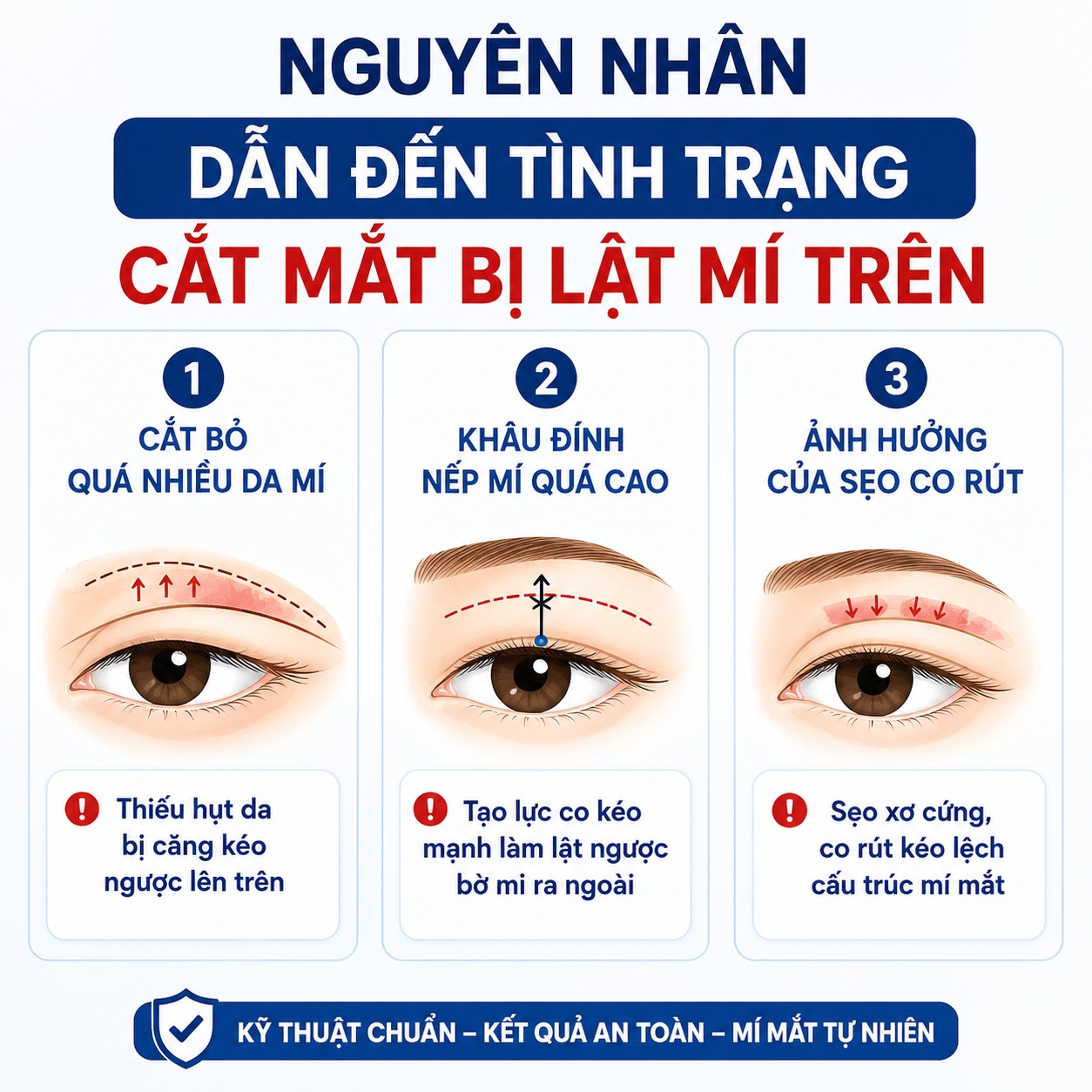
Eyelid retraction following blepharoplasty is generally not due to an individual’s inherent physical constitution, but rather stems from technical errors made by the surgeon during the procedure:
- Excessive skin removal: The surgeon may miscalculate the proportions or remove too much redundant skin, resulting in a severe shortage of eyelid skin and causing the eyelid to be pulled taut in an upward direction.
- Eyelid crease anchored too high: Rough surgical manipulation or anchoring the eyelid crease to the tarsal plate at an excessively high position creates strong tension, which pulls the eyelid margin outward (everted).
- Impact of scar contracture: Faulty suturing techniques or improper post-operative care can lead to the formation of rigid, fibrous scar tissue; as this tissue contracts, it distorts the natural structure of the eyelid.
Can an upper eyelid eversion resulting from eyelid surgery be corrected? How long must one wait before it can be fixed?
An upper eyelid retraction (everted eyelid) following blepharoplasty can certainly be corrected through specialized reconstructive techniques. However, revision surgery must be performed at the optimal time to ensure safety and achieve the best possible results:
- Waiting period for revision: Typically, patients should wait between 3 to 6 months after the initial, unsuccessful procedure.
- Reason: This duration is essential for the muscle tissues and subcutaneous scar tissue in the eye area to stabilize and for the soft tissues to regain their suppleness. Attempting a revision too soon—before the tissues have fully recovered—can worsen the eyelid retraction and make subsequent reconstruction significantly more difficult.

Effective methods for correcting an upper eyelid retraction following eyelid surgery
Depending on the root cause and the extent of the skin deficit, the physician will employ a specialized approach to return the eyelid to its natural position:
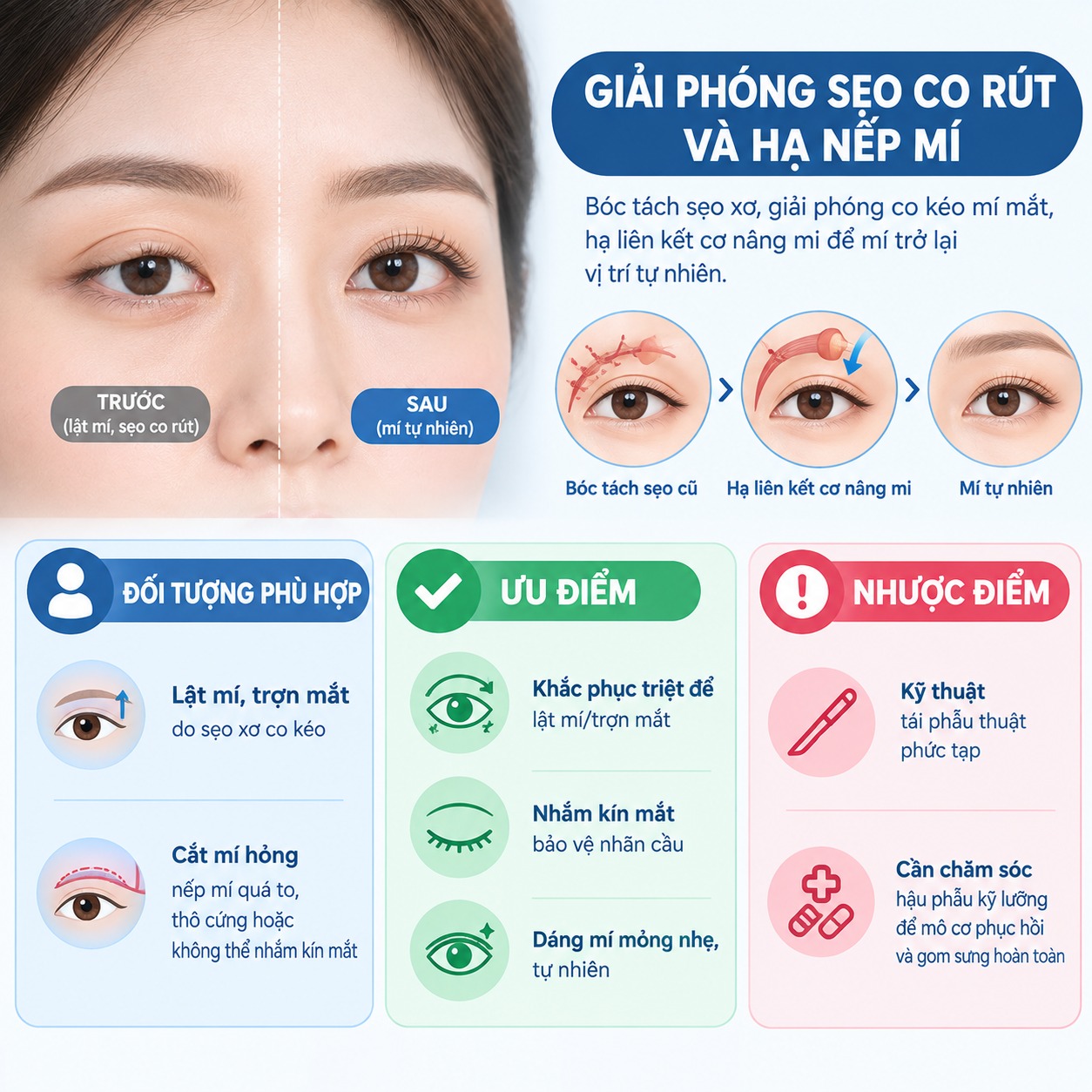
Release of cicatricial contracture and lowering of the eyelid crease
The surgeon reopens the previous incision, thoroughly releases the fibrous scar tissue that is pulling on the eyelid, and then adjusts the attachment of the levator muscle to restore the eyelid margin to its original, natural position.
- Suitable candidates: Individuals experiencing eyelid retraction or an “exposed” eye appearance (lagophthalmos) due to fibrous scar tissue; those who have undergone unsuccessful eyelid surgery, resulting in an excessively large or rigid-looking crease, or an inability to close the eyes completely.
- Advantages: Effectively corrects eyelid retraction/exposure; restores the ability to close the eyes fully—thereby protecting the eyeball—and recreates a delicate, natural-looking eyelid contour.
- Disadvantages: This is a complex revision procedure; it requires diligent postoperative care to allow the muscle tissue to recover and for all swelling to fully subside.
Autologous skin grafting
The doctor takes a thin, compatible piece of skin (usually the remaining eyelid skin or the skin behind the ear) to graft it into the defective area, compensating for the accidentally cut skin and completely releasing the eyelid traction force.
- Suitable subjects: Customers with severely damaged eyelid surgery leading to too much eyelid skin deficiency, severe bulging/bulging eyes, rolled eyelids or completely unable to close their eyes.
- Advantages: Completely compensates for the lack of skin; Completely lower the eyelids to help the eyes close completely; regain eye protection function and restore harmonious eye shape.
- Disadvantages: Microsurgical techniques are very complicated, requiring extremely skillful doctors; The grafted skin area needs time to live, match the color and be completely smooth with the surrounding skin.
Safe and reliable correction of botched eyelid surgery at Dr. Xuan Quan Aesthetic Clinic
At Dr. Xuan Quan Aesthetic Clinic, any complications involving damaged eyelids—such as ectropion (outward turning), retraction, or scarring—are personally assessed and addressed by Dr. Xuan Quan, who brings over 10 years of experience and a background from Hanoi Medical University. The doctor precisely measures the tissue deficit, down to the millimeter, to develop an accurate and safe reconstruction plan.
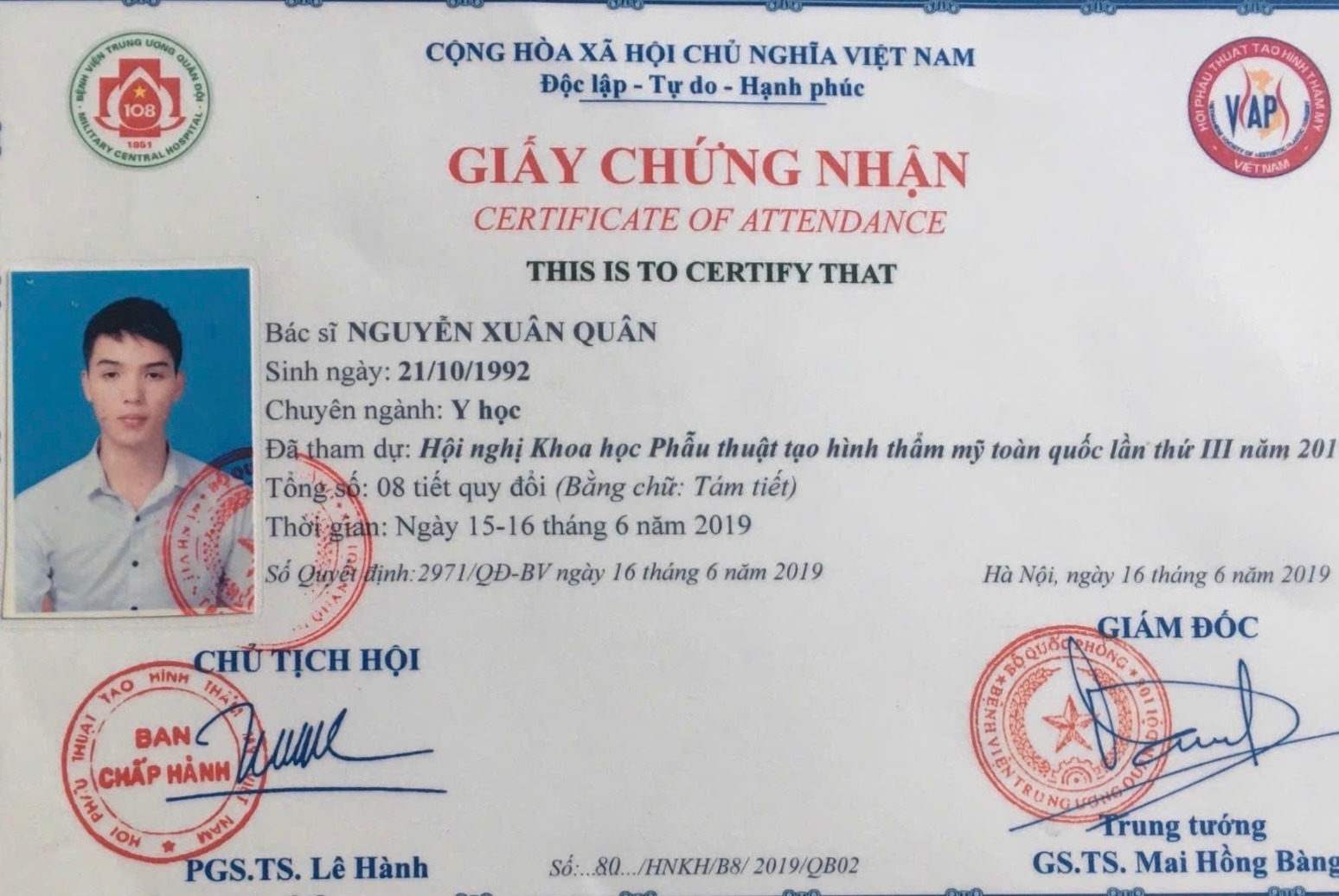
Why is Dr. Xuan Quan a trusted expert for “reviving” damaged eyes?
- Medically sound expertise: The doctor personally performs microsurgical interventions—dissecting fibrous scar tissue and restoring the levator palpebrae (eyelid-lifting) muscle—with a gentle, painless approach.
- Strictly sterile procedures: Utilizing medical-grade operating rooms and advanced anti-swelling technology, the process ensures rapid wound closure and a shorter recovery period.
- Transparency & clear guarantees: A commitment to effective results, a 6-month warranty, and dedicated post-operative care.
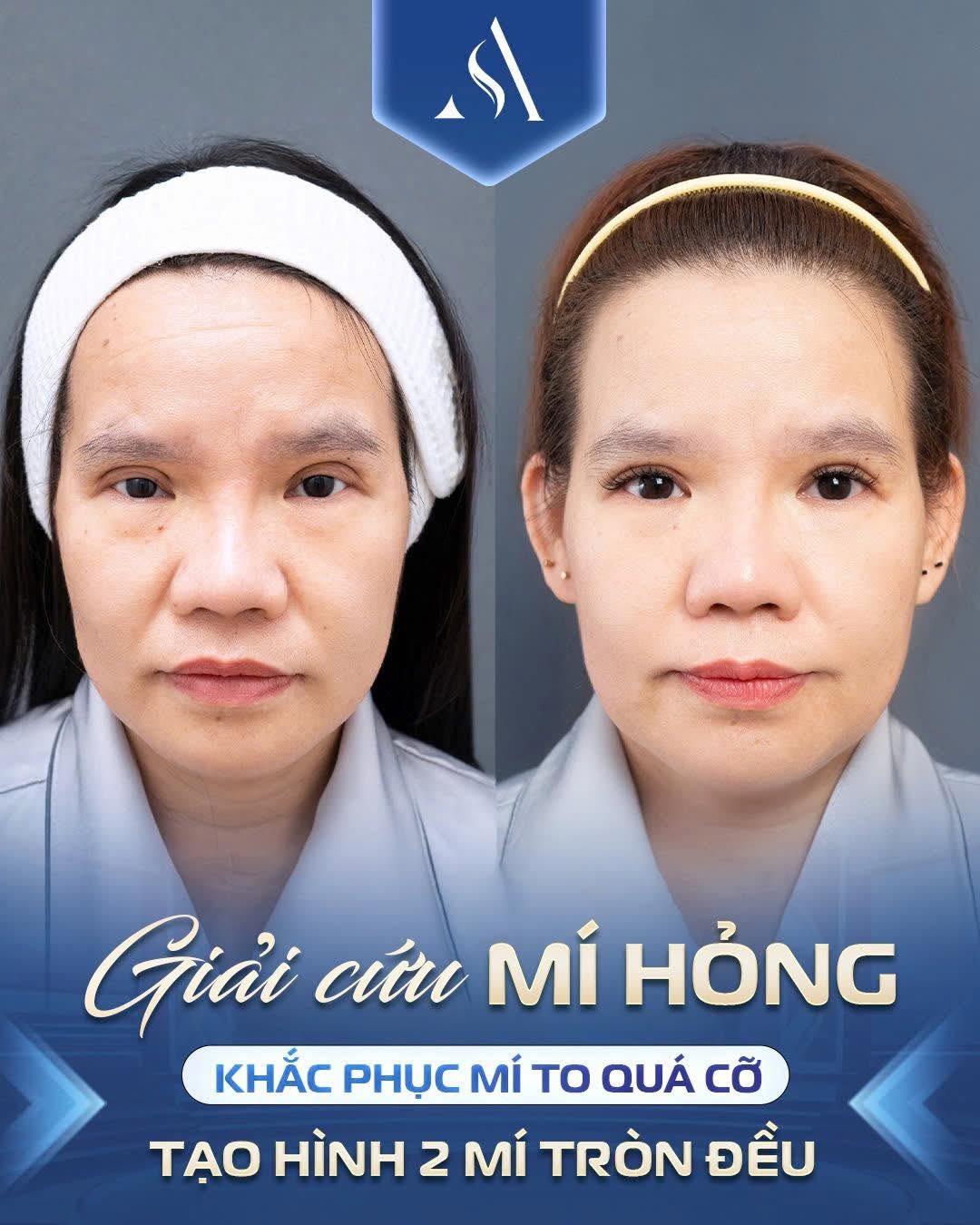
Successful “rescue” cases for botched eyelid surgeries—achieved in just a single procedure with Dr. Xuan Quan.
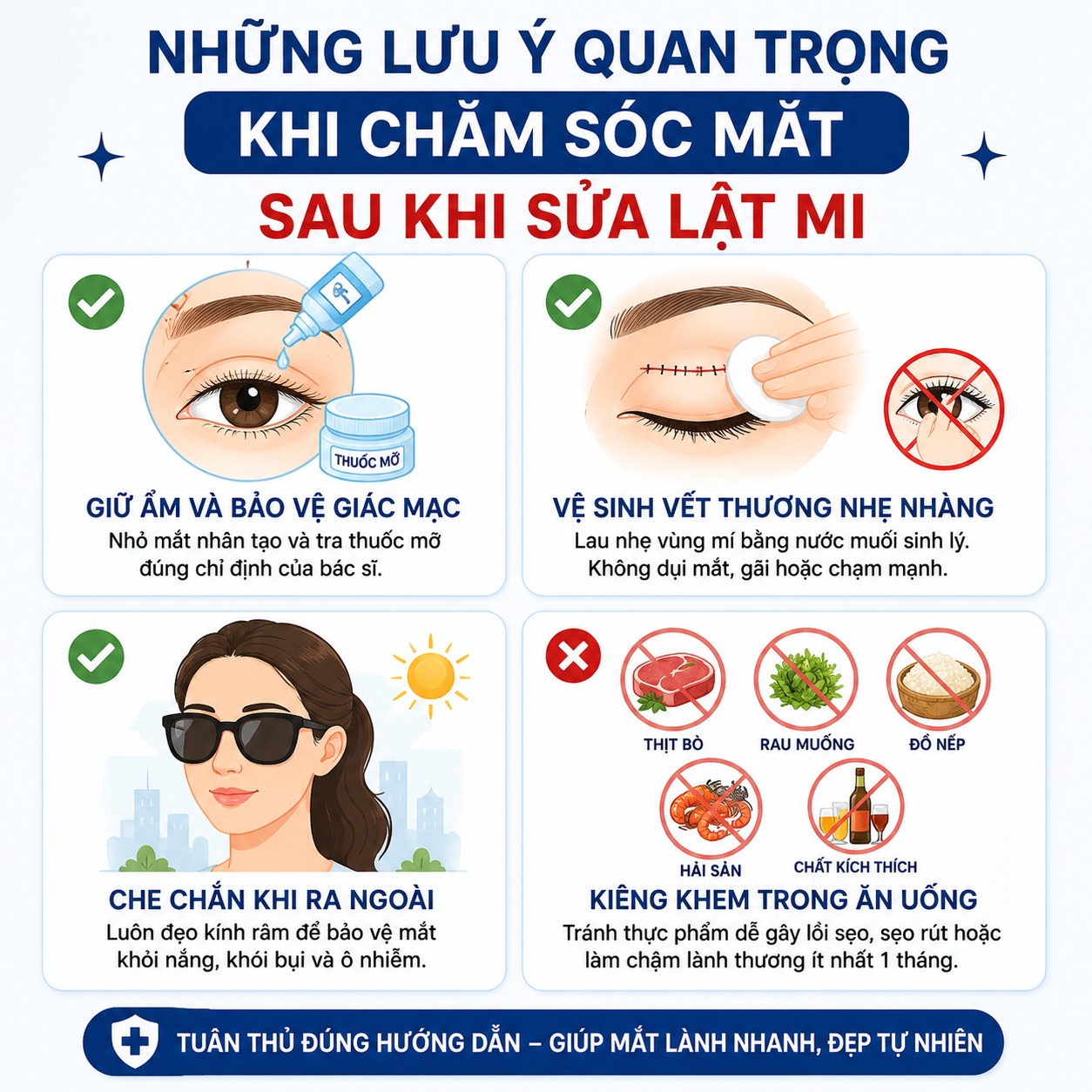
Important considerations for eye care following eyelid ectropion repair
Postoperative care plays a crucial role in the speed of healing and the prevention of recurrent cicatricial (scar-related) retraction. Following ectropion repair, you must strictly adhere to the following guidelines:
- Keep the cornea moist and protected: Use artificial tears and apply prescribed ophthalmic ointments as directed by your surgeon. This helps prevent dry eye and protects the cornea during the initial days, when the eyelids may not yet close completely.
- Clean the surgical site gently: Use gauze dampened with sterile saline to gently clean the eyelid area daily. Do not rub your eyes, scratch the area, or apply pressure to the stitches.
- Protect your eyes when outdoors: Always wear sunglasses to shield your eyes from sunlight, dust, smoke, and environmental pollutants.
- Follow dietary restrictions: For at least one month, avoid foods that may promote hypertrophic scarring, tissue retraction, or delayed healing—such as beef, water spinach, glutinous rice-based dishes, and seafood—as well as any stimulants (e.g., alcohol or tobacco).
Frequently Asked Questions about Eyelid Surgery
Below, Dr. Xuan Quan provides brief answers to common questions from patients experiencing eyelid retraction (everted eyelids) following surgery:
Is correcting an everted eyelid painful? Not at all. The procedure is performed under gentle local anesthesia, utilizing microsurgical dissection techniques that minimize invasiveness, alongside post-operative swelling-reduction technology.
How long after a botched eyelid surgery can a revision be performed? The ideal time is 3–6 months post-surgery, once the existing scar tissue has fully stabilized and softened; this allows the surgeon to perform the correction safely and with maximum precision.
Will correcting an everted eyelid leave unsightly scarring? The surgeon will carefully excise the old scar tissue and use microsuturing to align the incision with the eye’s natural crease, ensuring that once fully healed, there are no visible traces of the procedure.
The information above covers the complication of eyelid retraction following surgery, as well as the safest and most definitive solutions for correction. If you are experiencing issues such as tissue retraction, an “exposed” or wide-eyed appearance, or difficulty closing or opening your eyes after surgery, please contact Dr. Xuan Quan Aesthetic Clinic. You will be examined directly by a specialist who will assess the proportions and develop a personalized plan to restore a natural, healthy-looking eye shape as soon as possible.