
 Tiếng Việt

Many people experience drooping eyelids following eyelid surgery, resulting in a tired, lackluster appearance that detracts from their aesthetic appeal. This issue often stems from technical errors by the surgeon—such as failing to remove sufficient excess skin, creating a loose attachment for the eyelid crease, or inadvertently damaging the levator muscle during the procedure. In the following article, Dr Xuan Quan Clinic will help you understand the root causes and explore the safest, most effective solutions to restore a bright, wide-eyed, and radiant look!
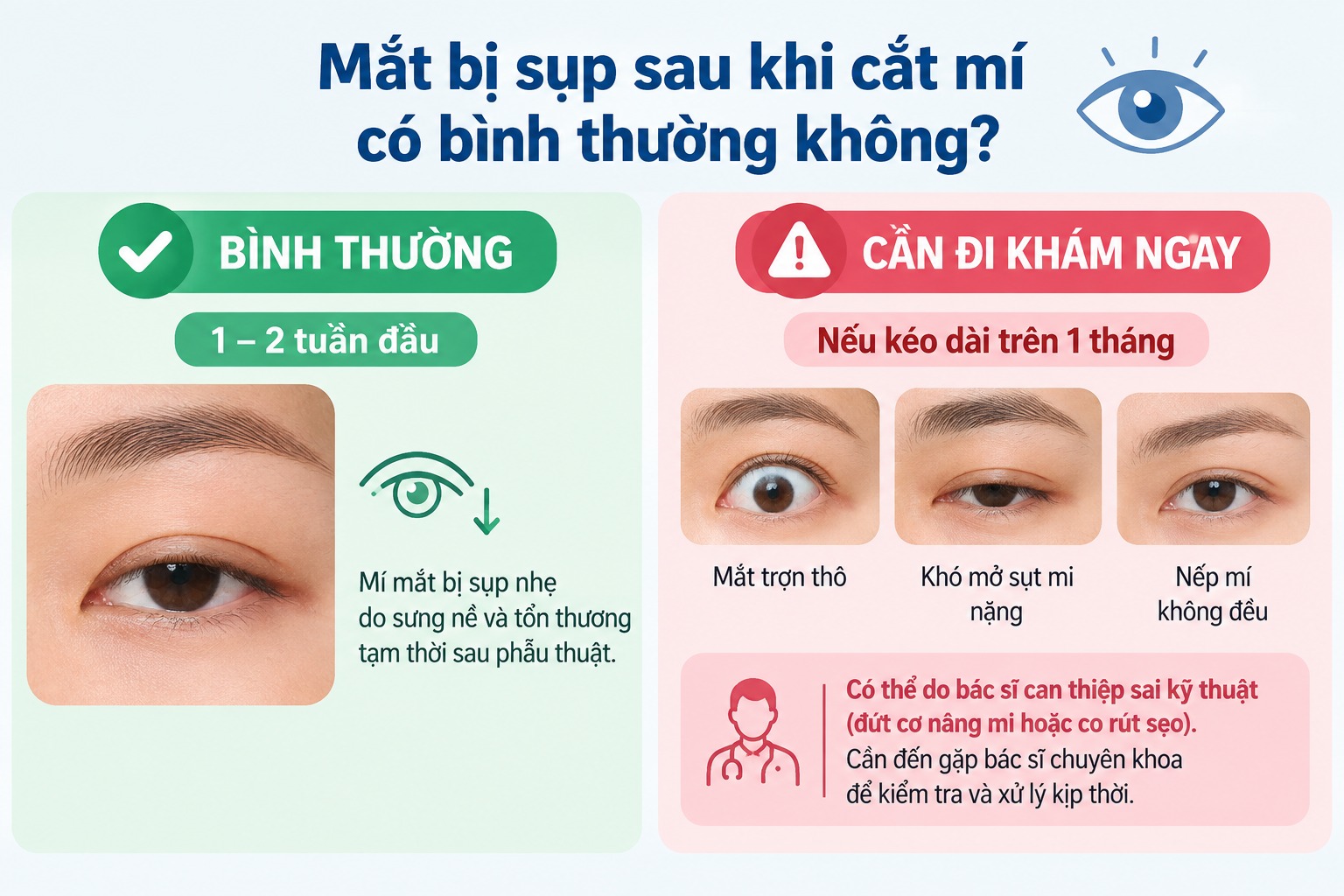
Is it normal for eyelids to droop after eyelid surgery?
During the first 1–2 weeks, mild drooping of the eyelids is completely normal, as the muscle tissue is temporarily swollen and traumatized following surgery.
However, if this condition persists for more than a month—accompanied by signs such as an unnatural, wide-eyed (staring) appearance, difficulty opening the eyes, severe drooping, or asymmetrical eyelid creases—it may indicate complications resulting from improper surgical technique (such as damage to the levator muscle or scar tissue retraction). In such cases, you should consult a specialist immediately for an evaluation and prompt corrective action.
Recognizing the signs of drooping eyelids after blepharoplasty
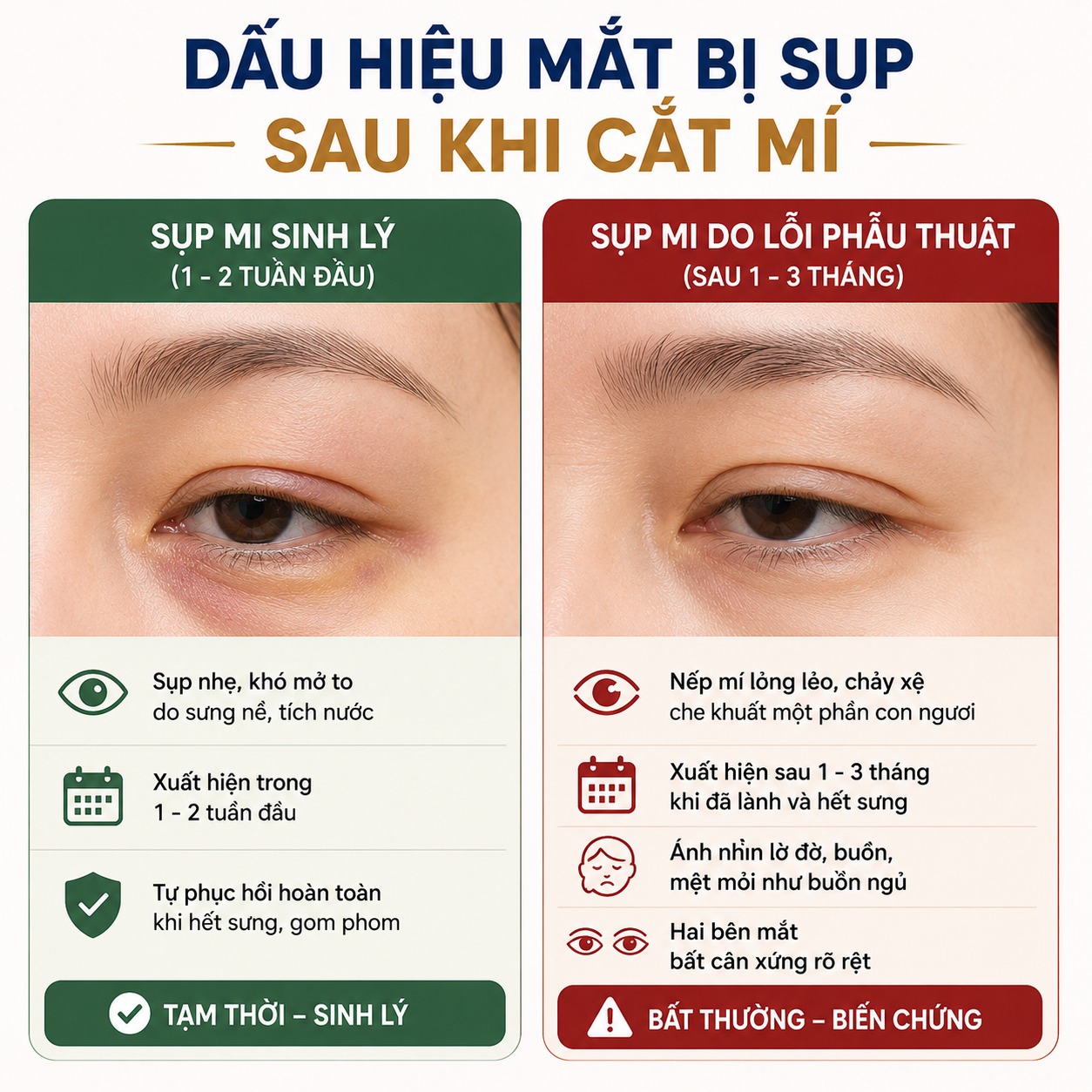
To ensure timely intervention, it is important to distinguish between physiological (temporary) ptosis and ptosis resulting from a surgical error (a complication) based on the following signs:
- Ptosis due to physiological swelling (first 1–2 weeks): The eyelids may appear slightly droopy and difficult to open fully due to natural swelling and fluid retention following the surgical trauma. This condition will resolve completely once the swelling subsides and the tissues settle into their final shape.
- Ptosis due to a surgical error (1–3 months post-surgery): This occurs when the eye area has fully healed and the swelling has completely subsided, yet the eyelid fold remains loose and sags, partially obscuring the pupil. The eyes may appear dull, sad, or fatigued—as if the person is sleepy—and there is a noticeable asymmetry between the two eyes.
Reasons why eyelids droop after blepharoplasty
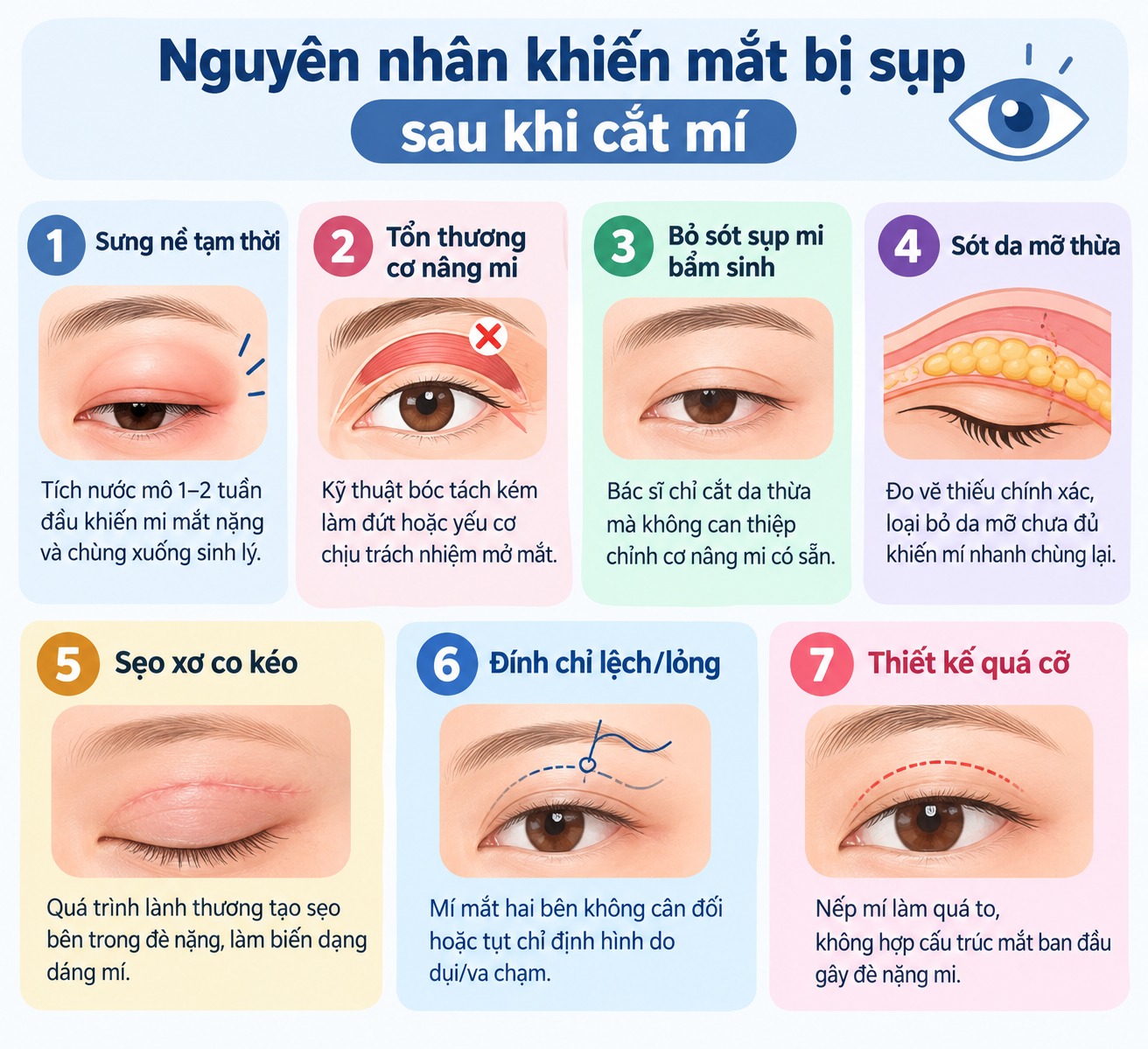
Eyelid drooping following cosmetic surgery typically stems from errors during the procedure or the post-operative care phase, specifically:
- Temporary swelling: Fluid retention in the tissues during the first 1–2 weeks can make the eyelids feel heavy and appear to sag.
- Damage to the levator muscle: Poor surgical technique—such as improper dissection—can sever or weaken the muscle responsible for opening the eye.
- Failure to address congenital ptosis: The surgeon may remove excess skin without correcting an underlying, pre-existing weakness in the levator muscle.
- Incomplete removal of excess skin or fat: Inaccurate measurements or insufficient removal of tissue can cause the eyelid to sag again quickly.
- Scar tissue contraction: The healing process may lead to the formation of internal scar tissue, which creates tension and distorts the shape of the eyelid.
- Improper or loose suture fixation: This can result in asymmetry between the two eyelids, or the sutures may come undone due to rubbing or physical impact.
- Excessive design: Creating an eyelid crease that is too large—disproportionate to the eye’s original structure—can add unnecessary weight to the eyelid.
Can droopy eyelids be corrected after eyelid surgery? Will the condition resolve on its own?
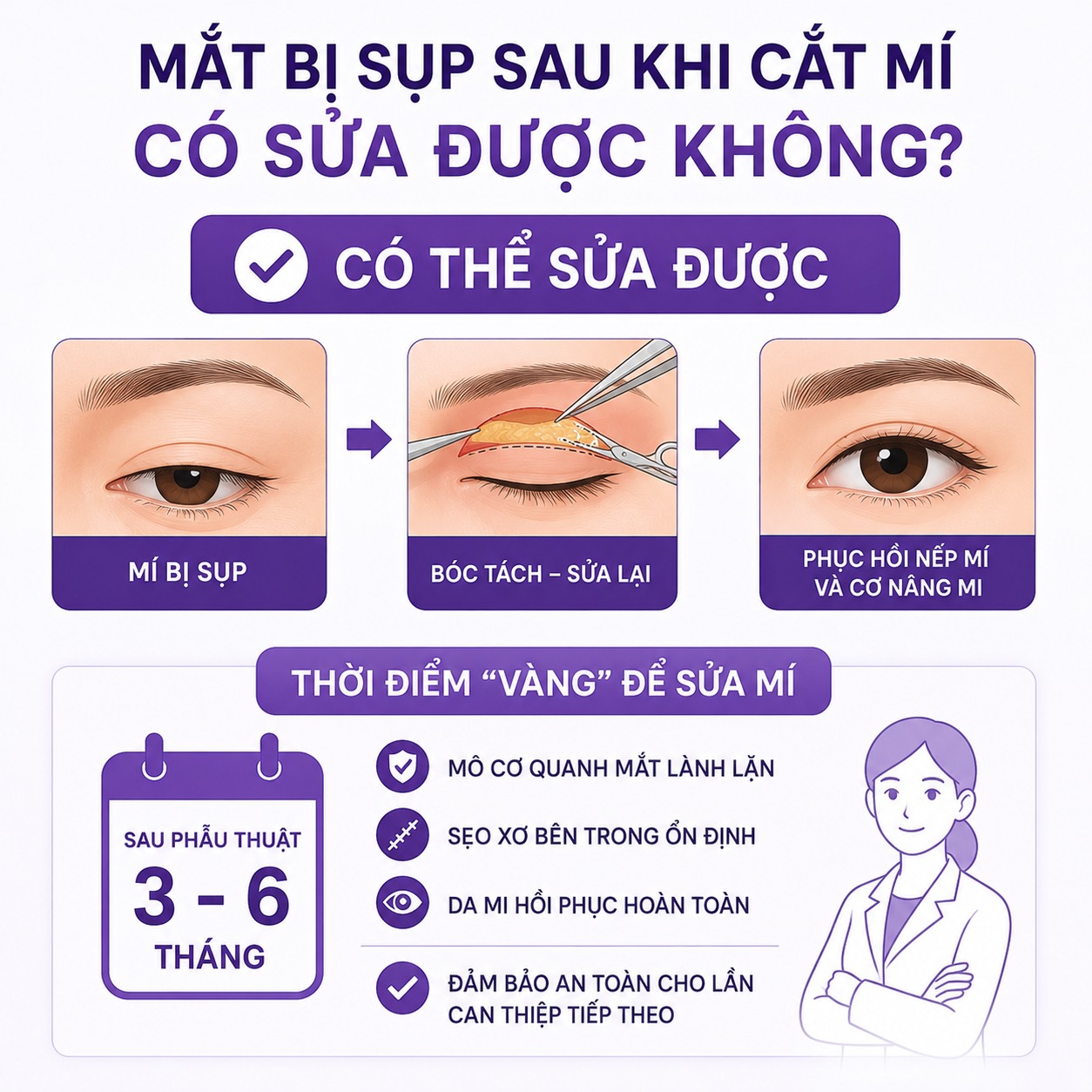
If you happen to experience this, there is no need to panic; drooping eyelids following eyelid surgery can absolutely be corrected. If the issue is merely due to normal post-operative swelling, it will resolve on its own within the first 1–2 weeks. However, if it is caused by muscle damage or scar tissue contraction (persisting for more than a month), the condition will not improve spontaneously and will require a corrective surgical procedure.
Nevertheless, any corrective intervention must be timed appropriately:
The “golden” window for revision surgery: Generally, you should wait 3–6 months after the initial procedure. This period is essential to allow the muscle tissues around the eyes to heal, the internal fibrous scar tissue to stabilize, and the eyelid skin to fully recover, ensuring the safety of any subsequent intervention.
Solutions for correcting drooping eyelids following eyelid surgery at Dr. Xuan Quan’s clinic
If you have experienced drooping eyelids for more than a month—accompanied by a tired appearance, asymmetry, or difficulty opening your eyes—you should consult a specialist immediately to assess the extent of any muscle damage.
At Dr. Xuan Quan Aesthetic Clinic, you will be personally examined by Dr. Xuan Quan (who possesses over 10 years of experience). He will identify the underlying cause and develop a medically sound treatment plan to restore the shape of your eyes.
Medically-standardized process for evaluating and correcting drooping eyelids:
- Examination and Mapping: The doctor assesses the function of the levator palpebrae (eyelid-lifting) muscle, the extent of any scarring or fibrosis, and the amount of excess skin to pinpoint the exact cause.
- Personalized Treatment Planning: A tailored approach is developed, which may include removing scar tissue, restoring the levator muscle, or realigning the eyelid crease for a balanced look.
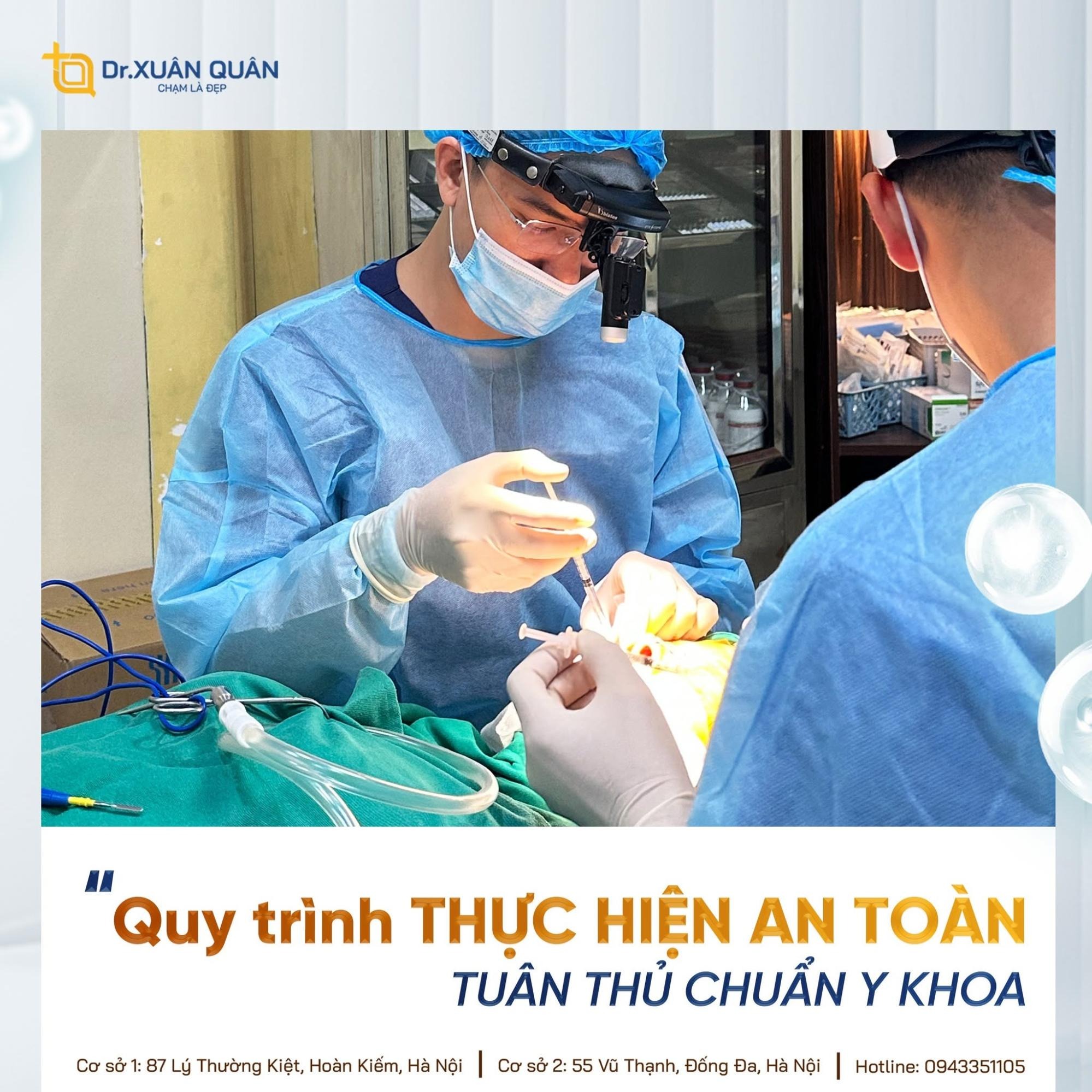
- Microsurgical Procedure: Performed with precision in a strictly sterile environment, ensuring minimal invasiveness.
- Post-operative Care: Advanced technology is used to manage swelling, with close monitoring provided until the eyes have fully settled into their ideal shape.
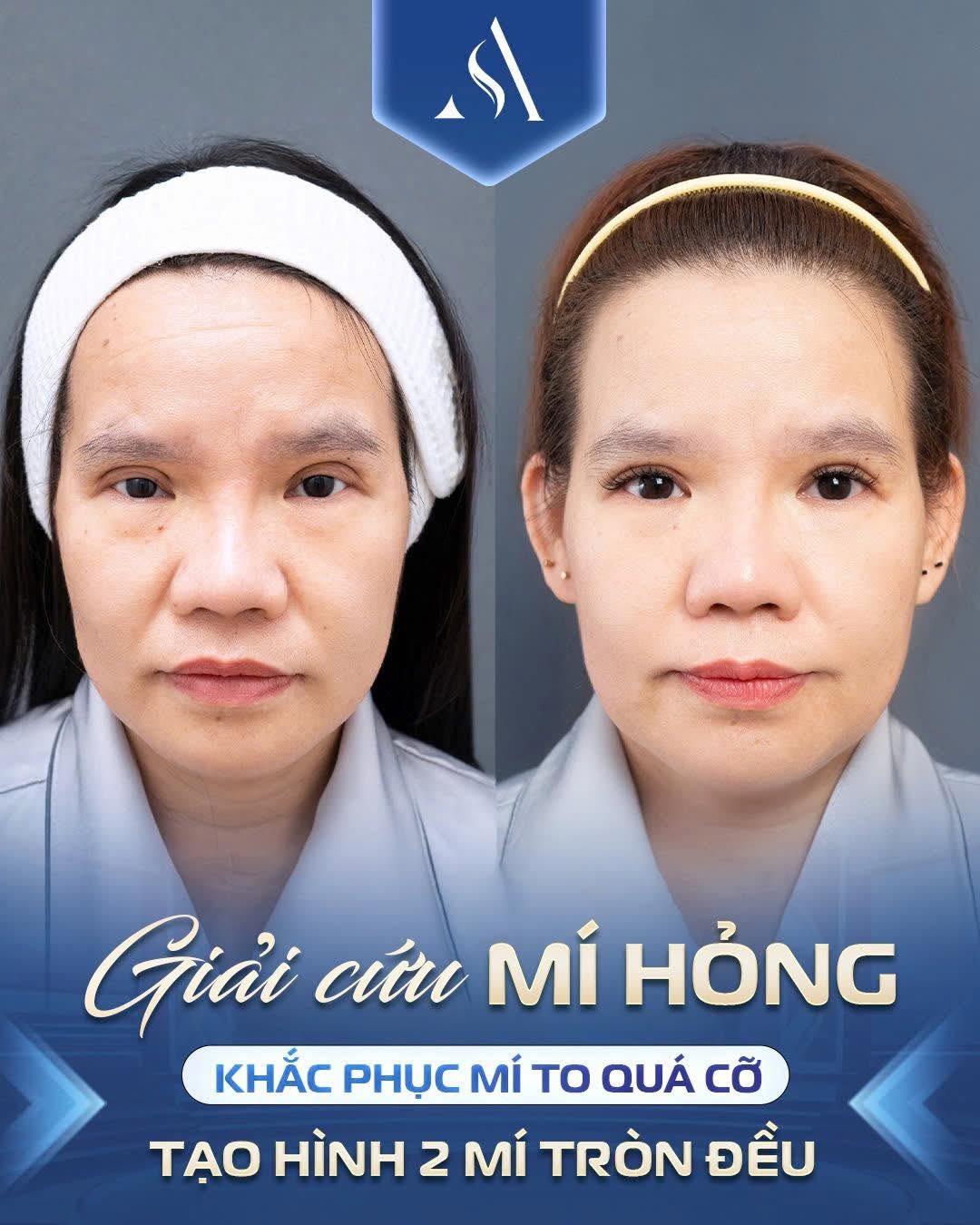
Results of corrective surgery for a botched eyelid procedure—performed 3 months after the initial, unsuccessful operation. Dr. Xuan Quan restores the levator muscle, bringing back a vibrant, youthful, and expressive gaze.
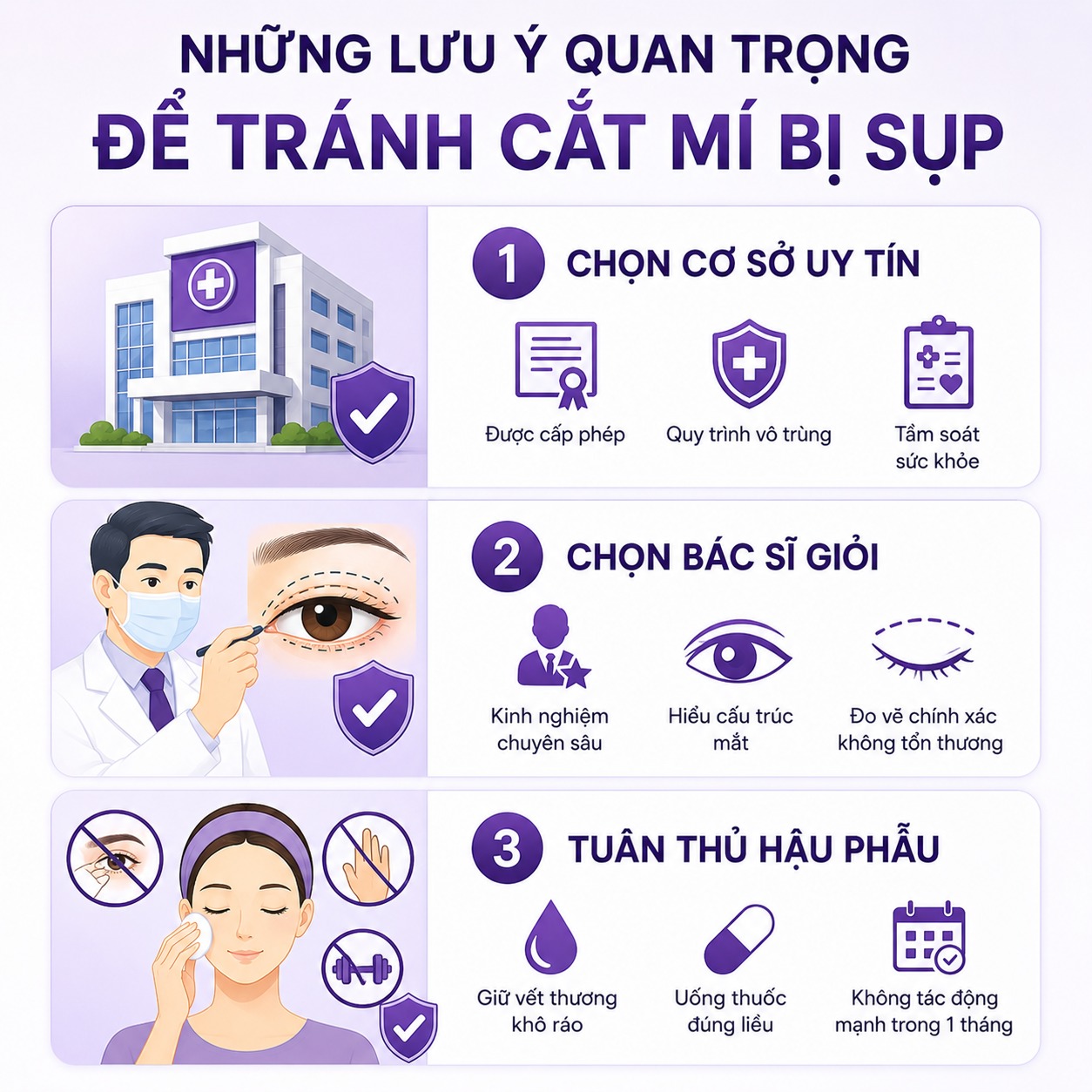
Important considerations to prevent drooping after eyelid surgery
To achieve a natural-looking eyelid crease and avoid the unfortunate complication of drooping eyelids (ptosis), keep the following essential points in mind:
- Choose a licensed facility: Never undergo the procedure at unlicensed “pop-up” spas or unauthorized aesthetic clinics. Opt for reputable centers that maintain strict sterilization protocols and conduct thorough health screenings.
- Select a highly qualified surgeon: The surgeon’s skill determines 90% of the procedure’s success. They must be experienced and possess a deep understanding of ocular anatomy to accurately measure excess skin and avoid damaging the levator palpebrae superioris (the muscle responsible for lifting the eyelid).
- Follow post-operative care instructions: Keep the incision site dry and take all prescribed medication as directed. Most importantly, avoid rubbing, scratching, or applying any strong pressure to the eyelid area during the first month, as this could cause the anchoring sutures to come loose.
The information above provides a detailed explanation regarding drooping eyelids following eyelid surgery, the underlying causes, and the appropriate timing for corrective intervention. Contact Dr. Xuan Quan Aesthetic Clinic today to have a specialist examine your condition and advise on a safe “rescue” plan to repair the compromised eyelids—helping you regain a bright, wide-eyed, and radiant look!