Tiếng Việt
When researching temple augmentation surgery, one of the most common questions concerns the types of implants available and which material is the most suitable. In reality, each type of implant has its own advantages and limitations, directly affecting biocompatibility and long-term aesthetic outcomes. In this article, join Dr Xuan Quan Clinic in exploring the details of the temple implant materials currently in popular use.
Common types of temple implants
Temple implant materials used in cosmetic surgery aim to correct hollow temples, helping the face appear fuller and more balanced. Each material possesses unique characteristics regarding biocompatibility, post-operative feel, and the ability to maintain long-term results.
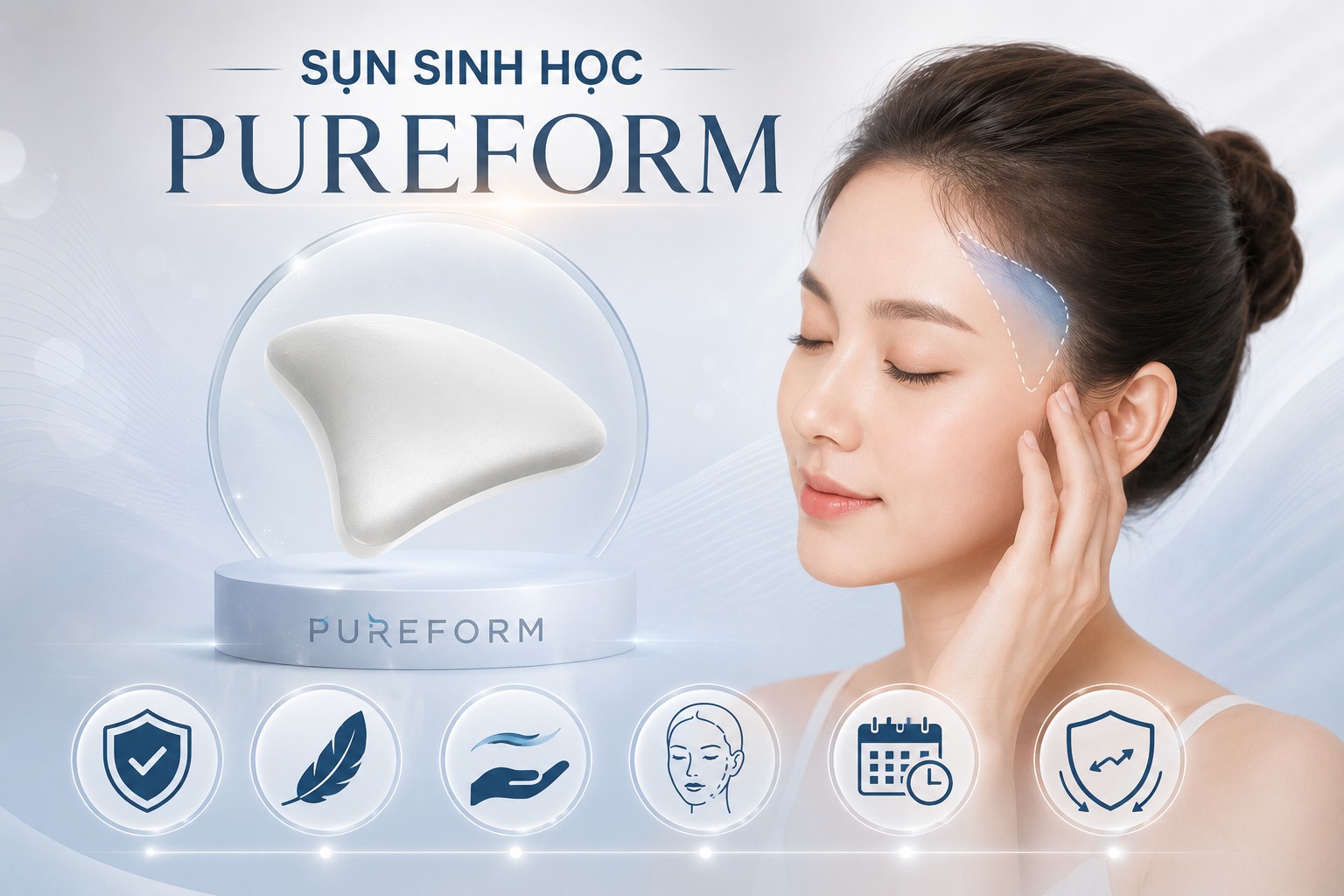
PureForm Biologic Implant
In recent years, PureForm has emerged as a modern temple implant material favored by many cosmetic surgeons.
PureForm is a premium biologic material designed with excellent flexibility and elasticity; it conforms closely to the temple structure, creating a natural feel after surgery. Unlike older-generation materials, PureForm focuses on creating a harmonious facial contour rather than simply filling in the hollow area.
Key advantages of PureForm:
- High biocompatibility.
- Soft and natural to the touch.
- Minimizes the sensation of stiffness or implant visibility.
- Easily shaped to suit individual facial contours.
- Good stability after implantation.
- Maintains long-lasting results.
- Reduces the risk of displacement when placed using the correct technique.
Limitations:
- Higher cost compared to traditional materials.
- Requires a surgeon experienced in facial contouring to achieve optimal results. Currently, PureForm is a popular choice for clients seeking temple augmentation that delivers natural, long-lasting results.
Suitable for: Individuals with mild to pronounced temple hollowing who wish to enhance their facial contours for a natural, soft look with long-lasting results.
Silicone cartilage
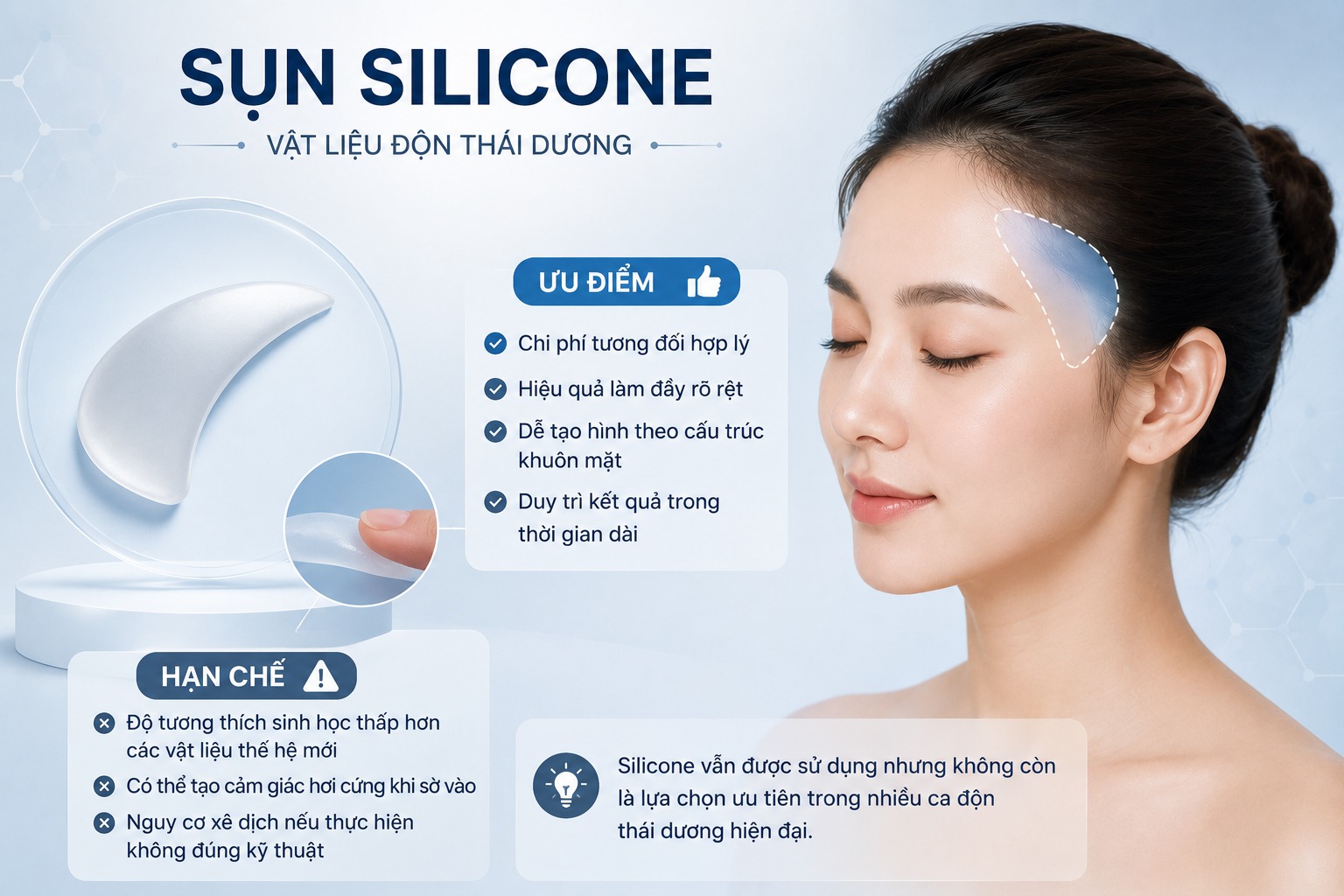
Silicone is one of the materials used quite early in facial plastic surgery. This type of cartilage is available in many different sizes and can be adjusted to fit each customer’s temple area.
Advantages:
- The cost is relatively reasonable.
- Significant filling effect.
- Easy to shape according to facial structure.
- Maintain results for a long time.
Limitations:
- Biocompatibility is lower than new generation materials.
- May feel a bit stiff to the touch.
- Risk of shifting if done incorrectly.
Currently, Silicone is still used but is no longer the preferred choice in many modern temporal implants.
Suitable for: People with mild to moderate sunken temples, who want to clearly improve the sunken area at a reasonable cost and do not require too much softness of the material.
Gore-Tex Implant
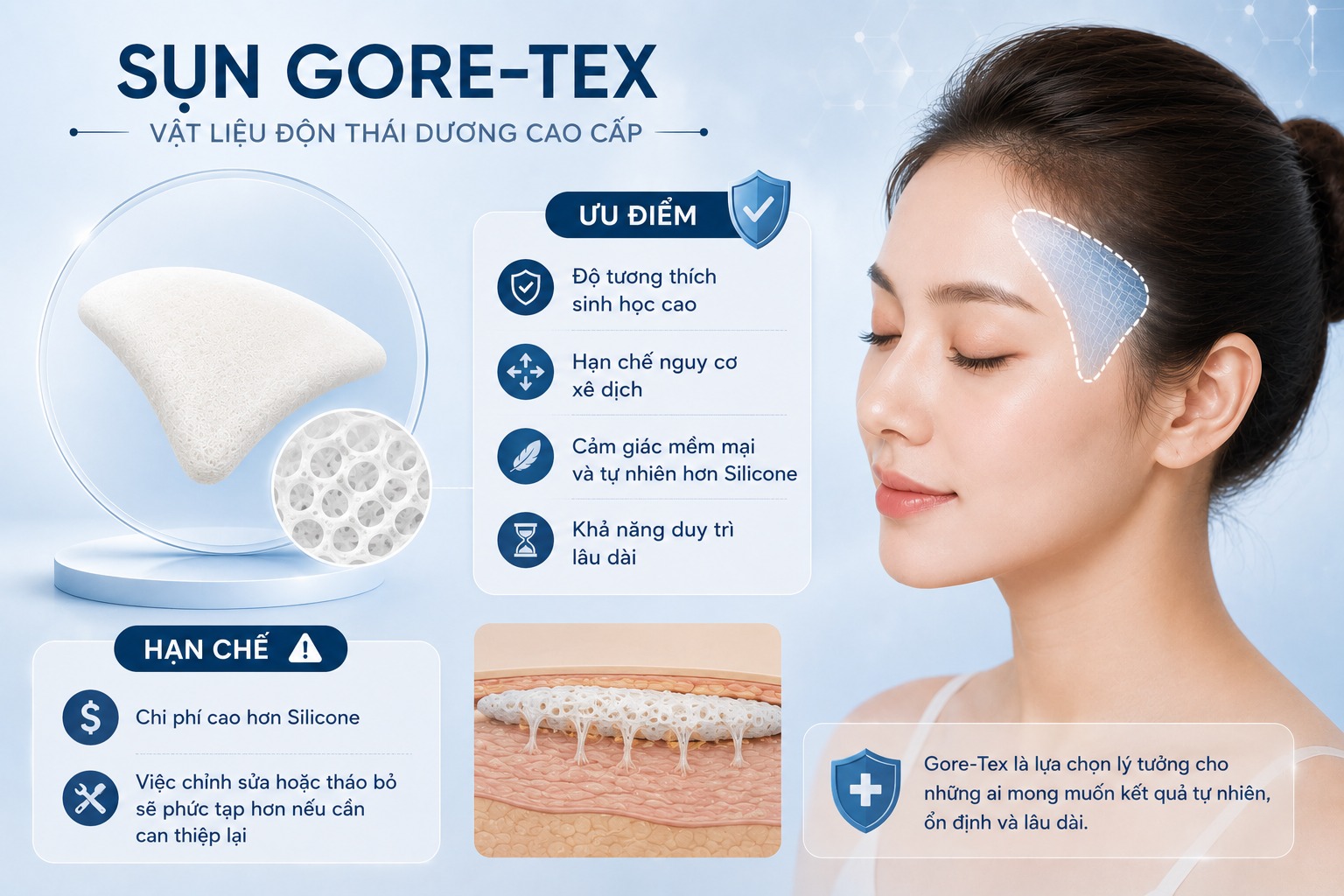
Gore-Tex is a biomaterial with a unique microporous structure that allows body tissue to grow into and bond with the material after implantation. Thanks to its excellent integration with soft tissue, Gore-Tex is highly regarded for providing natural-looking results and long-term stability.
Advantages:
- High biocompatibility.
- Minimizes the risk of displacement.
- Feels softer and more natural than silicone.
- Long-lasting results.
Disadvantages:
- Higher cost than silicone.
- Revision or removal is more complex should a follow-up procedure be required.
Suitable for: Individuals with moderate to pronounced temple hollowing who desire stable, long-term results and prioritize a material that integrates well with surrounding tissue.
Quick comparison table of temple augmentation materials
| Material | Natural look | Compatibility | Sustainability |
| PureForm | Very high | High | Long-term and stable |
| Silicone | Good | Average | Long-term |
| Gore-Tex | Good | High | Long-term |
Key Considerations When Choosing Temple Augmentation Materials
Before deciding on temple augmentation, many people focus primarily on finding the “best” type of implant. However, in reality, there is no single material that suits everyone. When selecting a material for temple augmentation, you should consider the following factors:
- Biocompatibility: Opt for materials that are widely used in cosmetic surgery and have a proven safety record. Highly biocompatible materials minimize the risk of irritation, inflammation, or rejection after the procedure.
- Softness and natural look: A key goal of temple augmentation is to achieve facial fullness without revealing obvious signs of cosmetic work. Therefore, prioritize materials that are soft, easy to shape, and maintain stability after implantation.
- Avoid choosing materials based solely on low cost: While a low price may be appealing, materials of unknown origin or poor quality can increase the risk of complications and compromise long-term results. Always thoroughly research the origin and quality of the materials being used.
- Suitability for your specific condition: If the temples are only slightly hollow, a doctor might recommend less invasive methods. Conversely, for cases of deep hollowing, it is necessary to choose a material capable of effective shaping and volume retention to ensure optimal aesthetic results.
- The surgeon’s expertise: Even with high-quality materials, the outcome may fall short of expectations if the implant is positioned incorrectly or not shaped properly. Therefore, selecting a surgeon experienced in temple augmentation is just as important as choosing the right material.

Where can you find a reputable, high-quality provider for temple augmentation?
Temple augmentation is not merely about filling in hollow areas at the temples; it is a process of balancing facial proportions to create a more harmonious, youthful, and dimensional appearance. At Dr Xuan Quan Clinic, clients receive a direct consultation and assessment of their temple hollowing from Dr. Nguyen Xuan Quan, who then recommends a contouring plan tailored to their specific facial features.

Direct examination and procedure performance
Dr. Nguyen Xuan Quan personally handles the entire process, including consultation, pre-procedure mapping, and the actual surgery. This ensures an accurate assessment of the temple hollows and allows for the selection of the appropriate implant size and placement for each client.
Customized temple contouring based on facial proportions
Since every individual has a unique facial structure, the temple area requires a tailored approach. The doctor evaluates the proportions of the forehead, cheekbones, and chin, along with the extent of the hollows, to create the ideal level of fullness for a harmonious and natural look.
Safe procedural standards
The surgery is performed in a sterile environment that strictly adheres to medical safety standards. This minimizes the risk of infection and promotes a smoother recovery process.
Post-operative care and monitoring
Following the procedure, clients receive detailed instructions on care, hygiene, and the schedule for follow-up visits. Close monitoring allows the doctor to track recovery progress and promptly address any irregularities.
Temple augmentation pricing at Dr Xuan Quan Clinic
The cost of temple augmentation depends on the client’s specific condition and the recommended technique. However, the current reference price at Dr Xuan Quan Clinic is:
| Service | Estimated Cost |
| Temple augmentation with PureForm bio-synthetic implants | 50.000.000 VND |
| Silicone temple augmentation | 20.000.000 VND |
To determine the exact cost for your specific case, it is recommended that you have an in-person consultation with Dr. Nguyen Xuan Quan. After assessing the extent of the temporal hollowing and your aesthetic goals, the doctor will advise on the most suitable approach and provide a specific cost estimate before the procedure.
Frequently Asked Questions About Temporal Implants
Before deciding to undergo a temporal augmentation procedure, many clients have questions regarding safety, the longevity of results, and how to choose the right material. Below are some of the most common questions.
Which type of implant material should be chosen for temporal augmentation?
Currently, popular materials include Silicone, Gore-Tex, and PureForm biological implants. Among these, PureForm is favored by many doctors due to its high biocompatibility, softness, and ability to produce more natural-looking results.
Are PureForm biological implants safe?
Yes. PureForm is a biological material used in cosmetic surgery; it is highly biocompatible with the body, minimizing the risk of irritation or rejection.
Do temporal implants provide permanent results?
High-quality biological and synthetic implants can maintain their effectiveness for many years, provided they are placed using the correct technique and the patient follows proper post-operative care.
Which is better: autologous fat grafting or implants for temporal augmentation?
Each method has its own advantages. Autologous fat offers a natural feel but may be reabsorbed by the body over time, whereas implants provide more stable and long-lasting volume.
How long does recovery take after temporal augmentation?
Typically, swelling subsides significantly after about 5 – 7 days. The facial appearance stabilizes after 2 – 4 weeks and settles into a more natural shape over the following months.
The various types of temporal implants differ in their characteristics and suitability; therefore, the choice of material should be based on the severity of the temporal hollowing, facial structure, and aesthetic goals. If you are considering temple augmentation, please contact Dr Xuan Quan Clinic for a consultation and to determine the most suitable method.