Tiếng Việt
Redness at the tip of the nose after rhinoplasty is one of the most worrying complications for many women after cosmetic surgery. This article, by Dr Xuan Quan Clinic with extensive experience in the field of aesthetics, will provide in-depth solutions to help you achieve a beautiful, natural-looking nose and ensure lasting stability.
Why does the tip of the nose become red after rhinoplasty? 4 most common causes
Redness at the tip of the nose after rhinoplasty not only affects aesthetics but is also a “cry for help” from the body. Understanding the root cause will help you take timely action, avoiding further damage to the nasal structure.
Excessive pressure on the implant
Placing the artificial cartilage too high or too long compared to the actual nasal skin structure will create continuous pressure on the tip of the nose. Over time, the skin in this area erodes, becomes thin and torn, and a noticeable redness appears.
Using poor-quality cartilage material
Rigid, hard cartilage of unknown origin often has poor compatibility. When introduced into the body, it is easily rejected or causes irritation to soft tissues, leading to persistent redness and swelling.
Errors in dissection technique
If the surgeon lacks experience and places the cartilage in the wrong layer (usually too close to the skin instead of under the periosteum), the cartilage can easily shift, rub against the skin, damage capillaries, and cause discoloration of the nasal tip.
Thin nasal skin
For patients with naturally thin nasal skin who undergo rhinoplasty that is too high without a protective cushion, redness of the nasal tip is very likely to occur 7-10 days after suture removal or after a short period of stabilization.
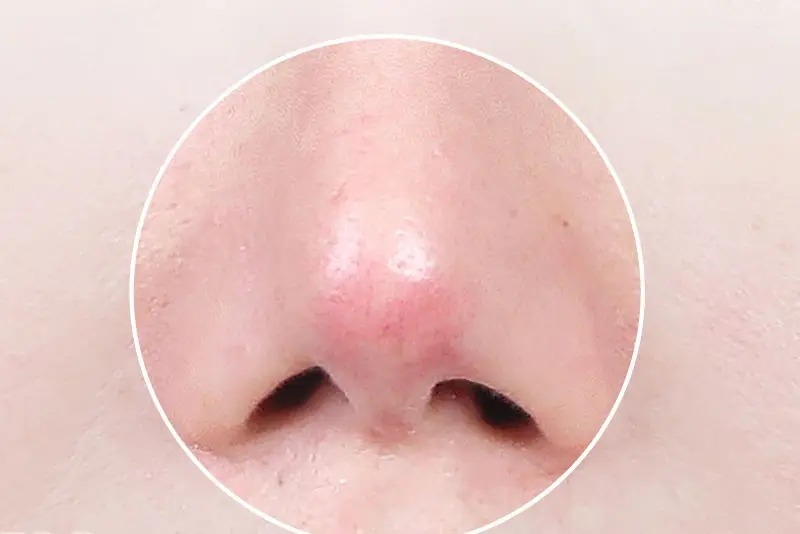
Distinguishing Levels of Redness at the Tip of the Nose After Rhinoplasty
Redness at the tip of the nose after rhinoplasty is not always the same. Identifying the correct level helps you take timely action and avoid unfortunate complications.
Level 1: Mild, temporary redness (Physiological reaction)
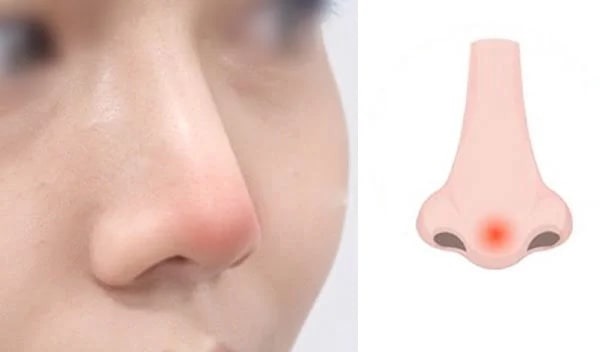
This is when the tip of the nose is slightly pink when exposed to sunlight, cold weather, or after strenuous activity. It often occurs in people with naturally thin skin. At this level, the nose remains stable, there is no swelling or pain, and it usually resolves on its own when body temperature stabilizes.
Level 2: Persistent redness (Irritation/Mild pressure)
The tip of the nose is consistently redder than normal compared to other areas of the face, even in cool environments. This could be a sign that the implant is starting to put pressure on the skin or that the body is reacting mildly to the implant material. You should closely monitor the situation after suture removal to determine the appropriate course of action.
Level 3: Redness and Swelling (Dangerous Sign)
At this stage, the tip of the nose becomes red with a feeling of tightness, slight swelling, or dull pain. The color changes to dark red or light purple. This is a warning sign that the nasal skin is being severely eroded, blood vessels are being compressed, and if not treated early, it will lead to the implant becoming visible.
Level 4: Exposed Cartilage Tip or Perforated Skin (Severe Complication)
This is the most serious stage when the skin at the tip of the nose is thin and the white cartilage underneath is clearly visible. The skin may even show signs of perforation, leakage, or severe infection. In this case, the doctor needs to immediately remove the cartilage and treat the nasal cavity to protect the nasal structure.
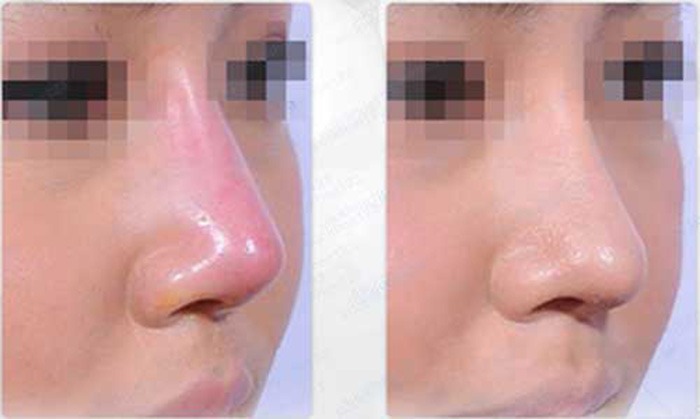
Effective Treatment for Redness at the Tip of the Nose After Rhinoplasty
When you notice redness at the tip of your nose after rhinoplasty, calmly follow these scientifically proven steps:
First Aid and Safe Monitoring at Home
In the initial stage, when the redness at the tip of the nose after rhinoplasty is mild, you can monitor and treat it at home using the following supportive measures:
- Apply cold compresses: Use a cold pack to gently apply to the forehead and sides of the nose to constrict blood vessels, reduce congestion, and soothe the irritated skin (avoid applying direct pressure to the tip of the nose).
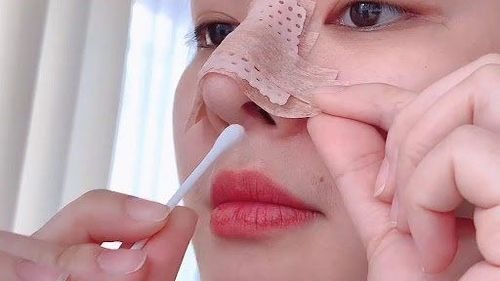
- Disinfect and clean: Use a cotton swab soaked in saline solution to gently clean the area to prevent bacterial infection and avoid the risk of worsening the wound.
- Remove pressure: Absolutely do not touch, squeeze, or wear heavy glasses. Minimizing external pressure helps protect the sensitive nasal skin and slows down skin erosion.
- Scientific dietary restrictions: Eliminate spicy foods and stimulants from your diet to stabilize blood flow. If the redness subsides after the stitches are removed, you can continue resting at home.
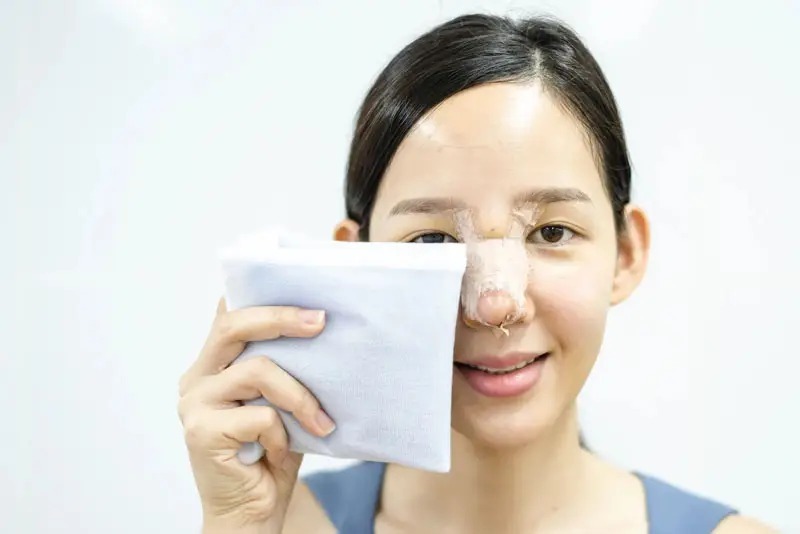
Specialized Intervention
If home remedies are ineffective or the redness shows signs of spreading, a direct consultation with a specialist is mandatory for a more in-depth treatment plan:
- Specialized Diagnosis: The doctor uses specialized equipment to check the skin thickness and cartilage placement to accurately determine whether the redness at the tip of the nose after rhinoplasty is due to mechanical pressure or a rejection reaction of the implant material.
- Corrected Surgery (Revision Rhinoplasty): In cases of thin skin or excessively high cartilage, microsurgical techniques will be applied to remove the old cartilage, lower the height, and re-cover the nasal tip with autologous cartilage or biological tissue. This solution provides maximum protection for the nasal skin, resulting in a delicate, natural appearance and achieving long-term stability.
- Treatment of Infection: If the cause is infection, the doctor will clean the nasal cavity, remove the cartilage, and administer high-dose antibiotics to stabilize the nasal structure before performing a revision surgery.
Why choose Dr. Xuan Quan for your red nose tip correction?
Addressing red nose tip after rhinoplasty requires much more complex techniques than the initial rhinoplasty procedure. Dr. Xuan Quan Aesthetic Clinic has successfully treated thousands of failed rhinoplasty cases, helping clients regain their confidence thanks to its unique strengths:
Highly qualified and experienced doctor: Dr. Xuan Quan, with nearly 10 years of experience and overseas training, will directly examine you. With a refined aesthetic sense, the doctor will accurately identify the cause of the redness to develop the optimal correction plan, helping you avoid the worry of complications.
Exclusive microsurgical cushioning technique: To thoroughly address the issue of thin nasal skin, the doctor uses a technique of cushioning the nose tip with autologous cartilage or high-grade biological tissue. This method creates a strong protective membrane, completely preventing pressure from artificial cartilage, resulting in a naturally beautiful nose shape.
Modern supporting equipment system: The use of specialized endoscopic and ultrasound equipment allows doctors to clearly observe the internal structure, perform dissection with millimeter precision, and minimize invasiveness, so that patients can confidently have their stitches removed after 7-10 days.
Absolutely compatible cartilage material: Priority is given to using genuine cartilage products with high adhesion and biocompatibility, such as Pureform, helping the nose stabilize quickly and achieve lasting stability over time.
Reputable after-sales service and warranty: Every corrective rhinoplasty case at the clinic comes with a 1-year professional warranty and a 5-year material warranty, ensuring long-term peace of mind and lasting beauty for all customers.
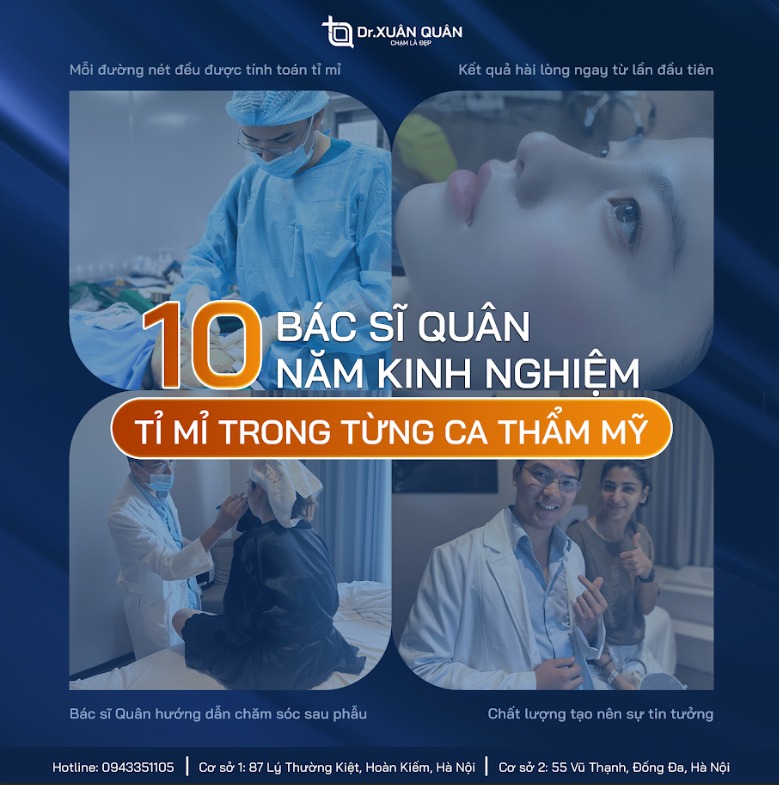
Choosing Dr Xuan Quan Clinic, you will experience dedicated care, helping you achieve the most perfect appearance.
Frequently Asked Questions about Redness at the Tip of the Nose After Rhinoplasty
Redness at the tip of the nose after rhinoplasty is always accompanied by many questions about its level of danger and how to care for it. To help you alleviate your psychological burden, Dr Xuan Quan Clinic will answer the most common questions below:
Is redness at the tip of the nose when exposed to sunlight after rhinoplasty a complication?
If the nose only turns slightly red when exposed to high temperatures and returns to normal in a cool place, this is usually due to the thin capillaries under the nasal skin reacting to heat. However, if this condition recurs continuously accompanied by visible implant edges, you should consider protective padding methods to achieve stable results over time.
What medication should I take to get rid of redness at the tip of the nose?
Medication only has a supportive effect if the cause is mild inflammation. If the tip of the nose becomes red after rhinoplasty due to mechanical pressure from the cartilage, medication alone cannot completely resolve the issue. You should absolutely not self-medicate but must strictly follow your doctor’s instructions to ensure long-term peace of mind.
Should the cartilage be removed immediately if the nose turns red?
Not all cases require immediate cartilage removal. After suture removal, the doctor will monitor the wound’s progress for 7-10 days. Only if there are signs of rejection or skin perforation will the cartilage be removed and replaced with high-quality cartilage material like Pureform to protect the nasal structure.
Is rhinoplasty with a red nose painful and how long does it take to heal?
With modern microsurgical techniques, the correction process is gentle and minimizes invasiveness. Typically, patients can have the sutures removed after 7-10 days, and the nose shape will gradually stabilize, providing lasting beauty without worrying about complications.
The above is an in-depth explanation of the causes and solutions for redness at the tip of the nose after rhinoplasty. If you are experiencing this condition or any other unusual signs after surgery, please contact us immediately so that our doctors can advise you on timely solutions to salvage your nose shape!