
 Tiếng Việt

A successful surgery accounts for only 70% of the outcome; the remaining 30% depends entirely on your post-operative care at home. Proper cleaning and following a sensible regimen are crucial for ensuring the implant adheres firmly and minimizing the risk of displacement or asymmetry. This guide from Dr Xuan Quan Clinic provides instructions on how to care for the area after a temple augmentation, helping the wound heal quickly and the results settle into a natural, aesthetic shape.
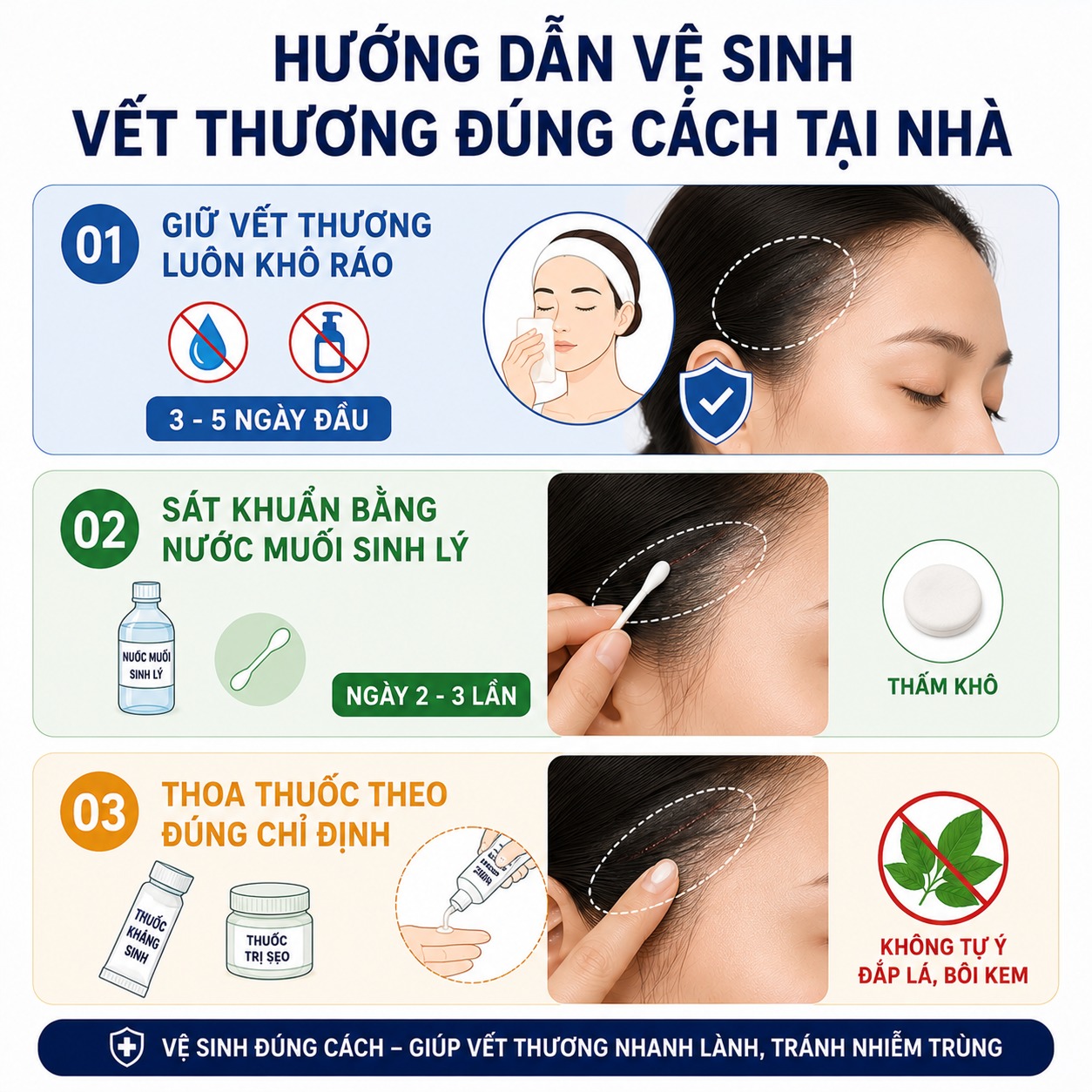
Guidelines for proper wound care at home
The incision for a temple augmentation is typically hidden within the hairline. To prevent infection, it must be carefully maintained and cared for according to the following principles:
- Keep the wound dry: For the first 3–5 days, ensure that plain water, soap suds, or shampoo do not come into contact with the incision. When washing your face, use a damp cloth to wipe gently, avoiding the area around the hairline.
- Cleanse with saline solution: Use a clean cotton swab dipped in a sufficient amount of sterile saline solution to gently wipe the incision line 2–3 times a day. This removes secretions and debris; follow by patting the area dry with a clean cotton pad.
- Apply medication as prescribed: Use only the antibiotic ointment or scar-treatment medication prescribed by your doctor. Never apply traditional herbal remedies or any creams/products not explicitly recommended by your medical team.
Lifestyle and Sleeping Posture After Temple Augmentation
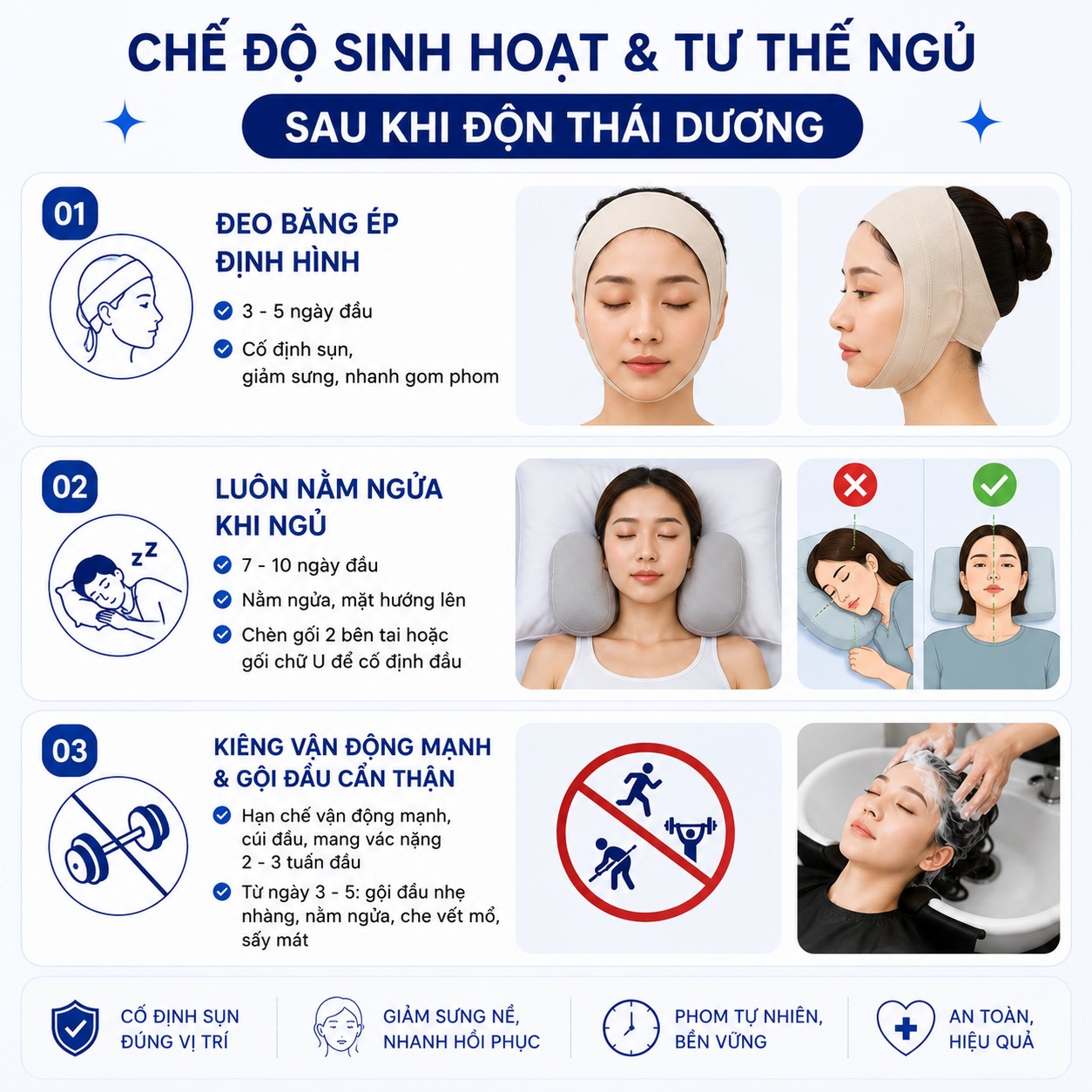
To ensure the implant integrates effectively with the surrounding tissue and remains securely in place, please follow these guidelines regarding your daily routine and sleeping posture:
- Wear a compression headband: You should wear a compression headband consistently – day and night – for the first 3–5 days. This helps keep the implant in its proper position, reduces swelling, and assists the facial contours in settling into their final shape.
- Sleep on your back: For the first 7 – 10 days, maintain a supine (back-lying) position, keeping your body straight and your face directed toward the ceiling. You may use body pillows on either side of your head or a U-shaped travel pillow to keep your head stable, preventing you from accidentally rolling onto your side or applying pressure that could displace the implant while you sleep.
- Avoid strenuous activity and exercise caution when washing your hair: Minimize physical exertion, avoid bending your head forward, and do not lift heavy objects for the first 2–3 weeks. From the 3rd to 5th day, you may wash your hair, provided you do so while lying on your back (similar to the method used in hair salons); ensure the incision site is well-protected, and use only the cool setting on your hair dryer.
What should you eat – and avoid – after a temple augmentation procedure?
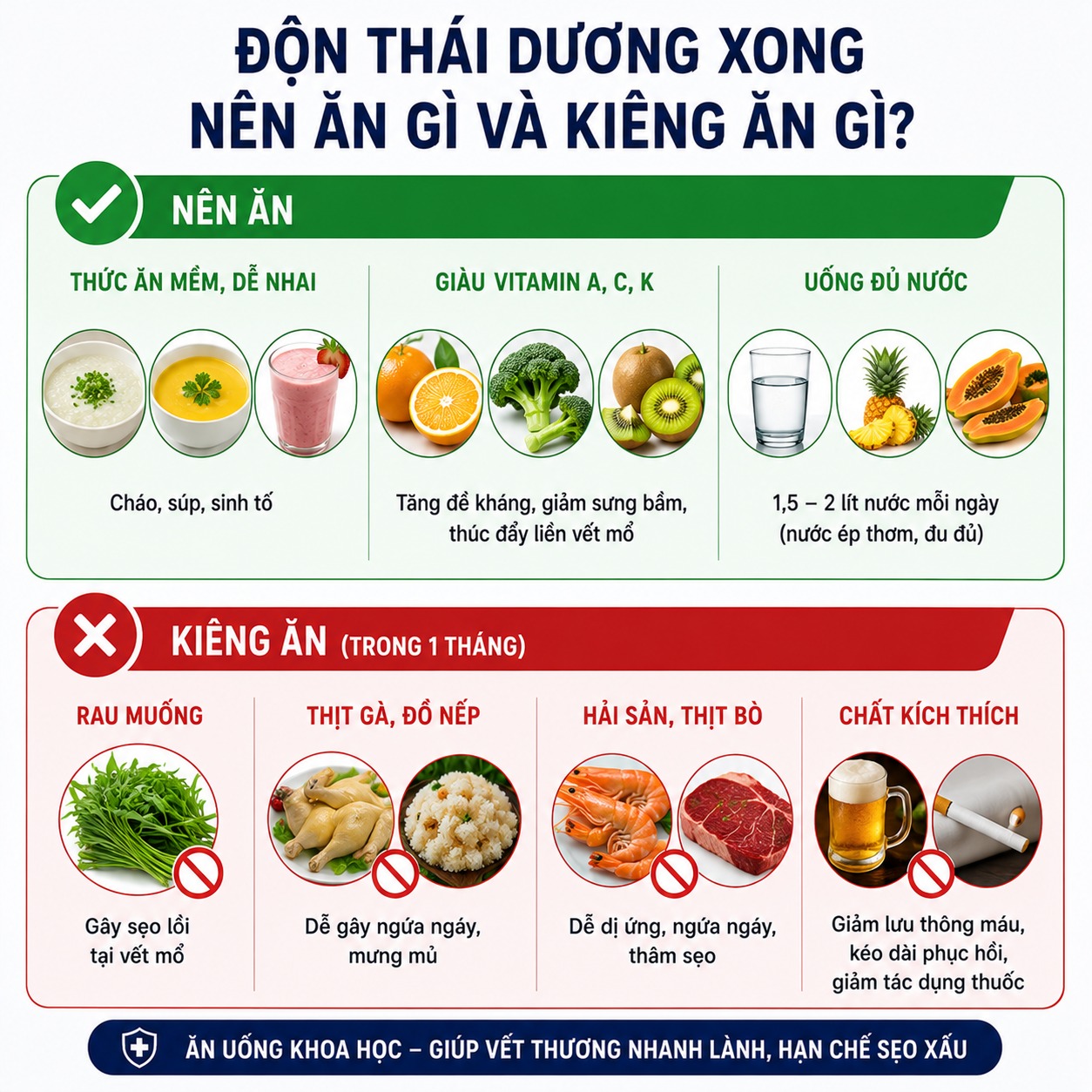
Your diet directly influences the speed of healing and helps minimize the risk of unsightly scarring. Below is a guide on what to include in your diet and what to avoid:
Foods to eat after temple augmentation
- Soft, easy-to-chew foods: During the first few days, opt for items like porridge, soup, or smoothies. This prevents excessive jaw movement, which could otherwise disturb the temple area.
- Foods rich in Vitamins A, C, and K: Consume plenty of oranges, grapefruits, cauliflower, and kiwi. These help boost your immune system, reduce swelling and bruising, and promote collagen production to heal the incision site.
- Stay well-hydrated: Drink 1.5–2 liters of water daily (you can also include pineapple or papaya juice) to help your body flush out toxins.
Foods to avoid (for 1 month)
- Water spinach (morning glory): A primary cause of keloid (raised) scars at the incision site near the hairline.
- Chicken and glutinous rice-based dishes: These can cause itching, pus formation, and delay the healing of the incision.
- Seafood and beef: These may trigger allergic reactions or itching and can cause the scarred area to darken (hyperpigmentation).
- Stimulants (alcohol, beer, and tobacco): These impair blood circulation, prolong the recovery period, and reduce the effectiveness of antibiotics.
What is the best sleeping position after a temple augmentation procedure?
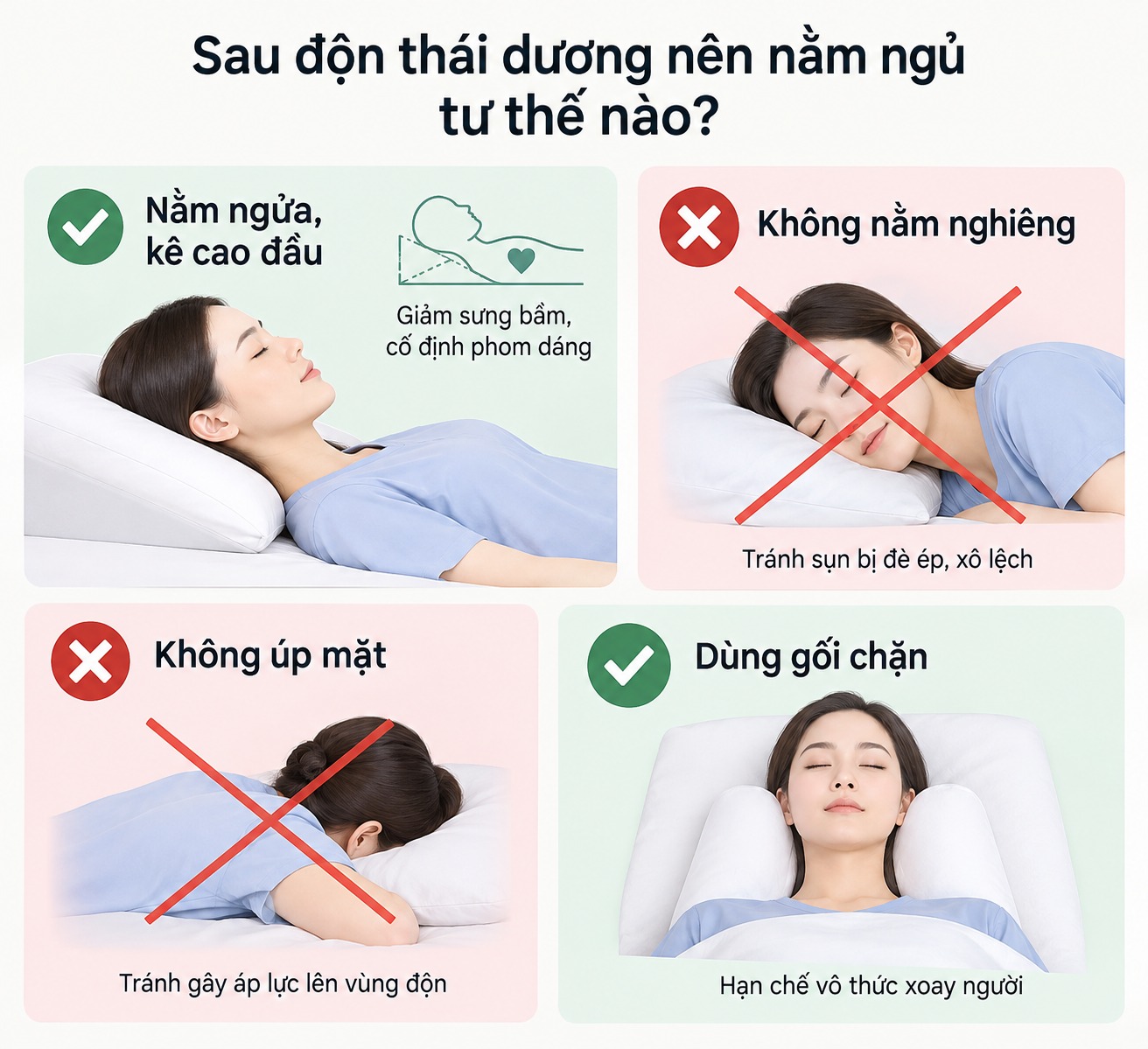
To ensure the implant settles correctly and maintains its intended shape, please follow these guidelines regarding your sleeping position post-surgery:
- Sleep on your back with your head elevated: Keep your head positioned higher than your heart for the first 1 – 2 weeks; this helps reduce swelling and bruising while ensuring the implant stays in place.
- Avoid sleeping on your side: Do not sleep on your side or face-down for at least 2–3 weeks, as this could put pressure on the implant or cause it to shift.
- Use support pillows: Place pillows on either side of your head or neck while sleeping to prevent you from rolling over or turning onto your side unconsciously during the night.
Follow-up Schedule and Key Milestones
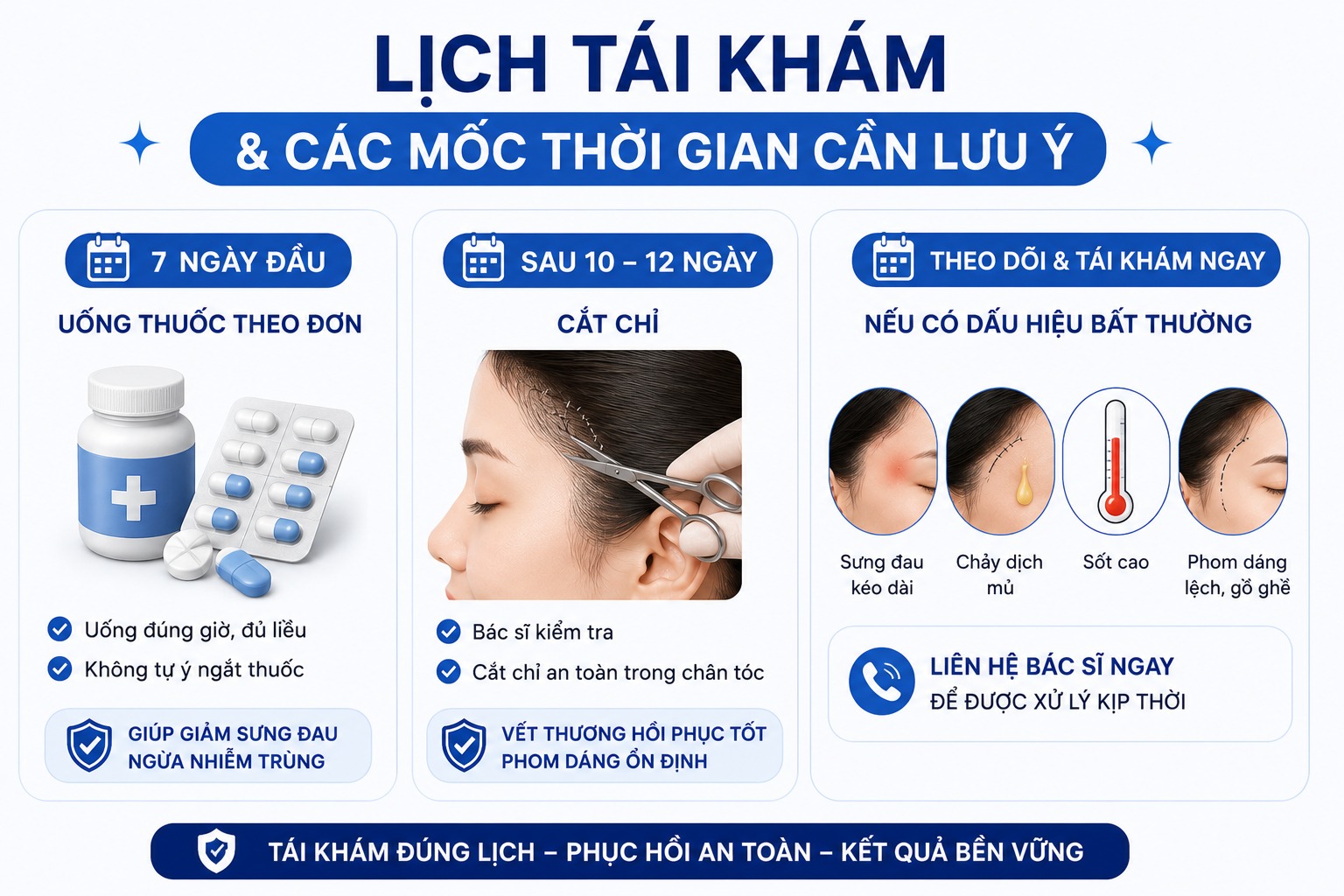
To ensure a safe recovery process and allow for the prompt management of any unusual symptoms, please keep the following key milestones in mind:
- Medication (First 7 days): Take all prescribed antibiotics, painkillers, and anti-inflammatory medication exactly as directed – on time and in the full dosage. Do not discontinue your medication on your own, even if the pain has subsided.
- Suture Removal (10 – 12 days post-procedure): Return to the clinic so your doctor can assess your healing progress and safely remove the sutures (which are located within the hairline).
- Monitoring and Follow-up: If you experience severe, persistent swelling or pain, notice pus discharge, develop a high fever, or observe any irregularities in the shape – such as asymmetry or unevenness – contact your doctor immediately for urgent care.
Dr. Xuan Quan Clinic supports you throughout your entire post-operative journey.
At Dr Xuan Quan Clinic, our post-operative care protocol follows rigorous medical standards, ensuring complete peace of mind for clients during their recovery at home:
- Comprehensive post-operative care kit: Immediately following surgery, clients are provided with all necessary oral medications, specialized cleaning supplies, and high-quality compression garments.
- 24/7 nursing support: Our medical staff proactively reaches out to remind you of medication schedules, provide guidance on wound care, coordinate suture removal appointments, and address any questions you may have at any time.
- Warranty policy and safety commitment: Dr. Xuan Quan utilizes 100% premium Pureform biological implants. Combined with Dr. Xuan Quan’s precise, bone-adjacent placement technique, this ensures rapid, secure adhesion—eliminating concerns about displacement—and is backed by a reliable 6-month warranty.
The above information provides a detailed, medically-sound guide on post-operative care following a temple augmentation procedure. Following these instructions will help your incisions heal faster, minimize swelling and bruising, and ensure your temples settle into a natural, aesthetically pleasing shape.
If you have any further questions regarding the recovery process, or if you are interested in achieving fuller temples safely, please contact Dr. Xuan Quan Aesthetic Clinic today for a consultation and guidance from our team of experts.