Tiếng Việt
Lip reduction surgery is a simple minor procedure that helps you achieve a balanced and defined lip shape. However, whether the lips achieve the desired shape and look natural depends greatly on post-operative care. Let’s explore the proper post-operative lip care and restrictions with Dr Xuan Quan Clinic in the article below.
Guide to Properly Cleaning and Reducing Lip Swelling After Lip Reduction
Proper wound care in the first few days is the “golden key” to quickly reducing swelling and preventing infection. Below is the medically approved procedure for cleaning, reducing swelling, and caring for your lips after suture removal that you need to strictly follow:
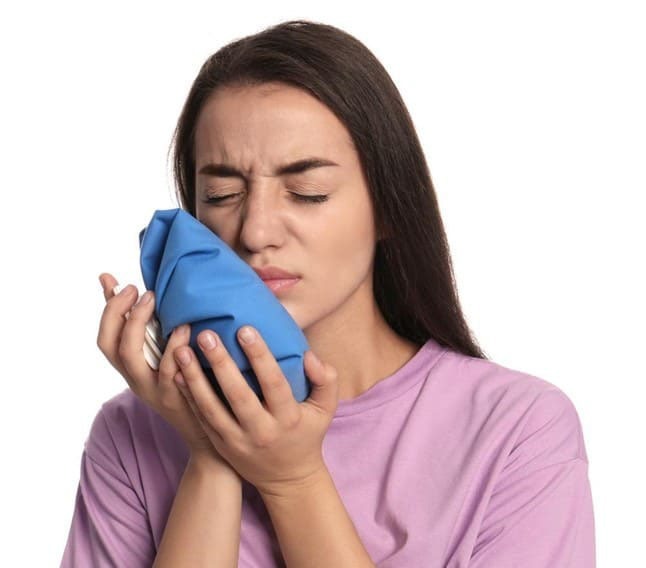
Apply cold and warm compresses at the right time
In the first two days, apply cold compresses actively 3-4 times a day to reduce swelling and soothe numbness. Note that you should use a specialized compress wrapped in a clean gauze layer; absolutely do not let ice come into contact with the wound.
From day 3 onwards, switch to gentle warm compresses to help disperse the bruising and promote faster lip recovery.
Clean the wound gently every day
Use a cotton swab or medical cotton ball soaked in a sufficient amount of saline solution to gently wipe the surface of the lips and the suture line after eating or going out. Always keep the lip area dry and clean to facilitate faster epidermal regeneration.
Take medication strictly as prescribed
Use all antibiotics, anti-inflammatory drugs, and painkillers according to the dosage and duration prescribed by the specialist. Absolutely do not buy additional medication on your own or stop taking medication when the swelling in your lips has subsided.
Dietary Care After Lip Surgery
Daily nutrition directly affects the healing speed and aesthetic appearance of the lips. To ensure the wound heals quickly and doesn’t leave unsightly scars, you should pay attention to the following dietary guidelines:
Foods to Include
Prioritize soft, liquid, and easy-to-chew foods such as porridge, soup, milk, or smoothies in the first few days to minimize strain on the lip muscles. Drink water through a straw to minimize contact with the wound.
In addition, increase your intake of vitamin C from pineapple, oranges, grapefruit, tomatoes, etc., to stimulate cell regeneration and boost immunity.

Foods to ABSOLUTELY AVOID (During the first month)
- Beef, water spinach: These foods are the leading causes of darkening of the lips and keloid scarring at the suture line.
- Sticky rice, chicken: Easily cause pus formation, swelling, slow wound healing, and increase the risk of infection.
- Seafood, raw fish, silkworm pupae: Easily cause itching, allergies, or irritation to the sensitive lip skin.
- Stimulants, spicy foods: Alcohol, beer, cigarettes, chili peppers, black pepper… dilate blood vessels, causing prolonged lip swelling and slowing down the healing process.

Important Notes for Protecting Your Lip Shape After Surgery
To protect the cosmetic sutures and help your lips quickly achieve the ideal golden ratio shape, you need to pay special attention to the following:
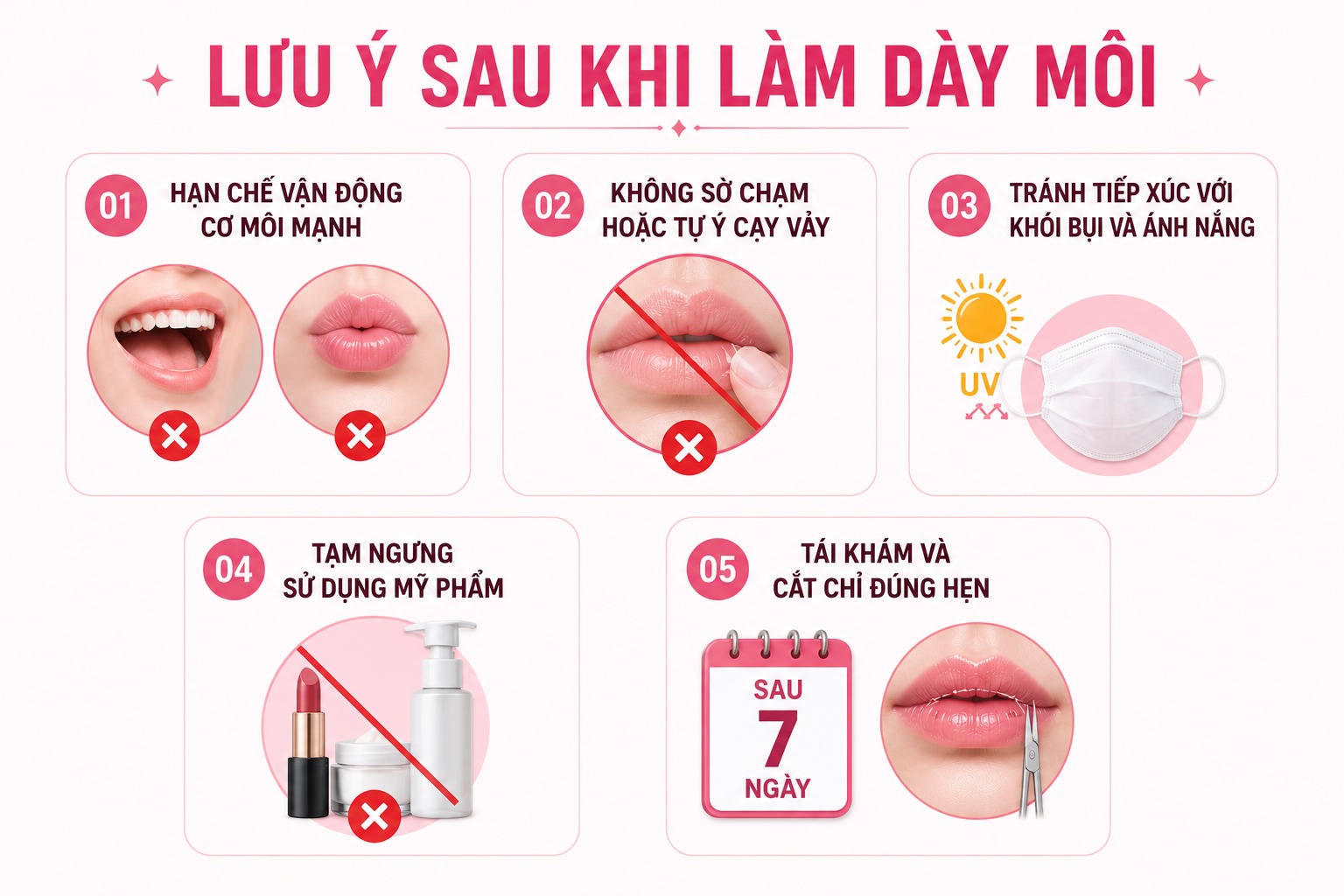
- Limit strong lip muscle movements: Avoid laughing loudly, opening your mouth too wide, or pursing or tightly pressing your lips together in the first few days to avoid stretching the sutures, causing them to come undone or deforming the lip shape.
- Do not touch or pick at scabs: Absolutely do not touch, scratch, or rub the lip area with your hands while the wound is healing. Let the scabs fall off naturally to avoid infection and unsightly scarring.
- Avoid exposure to dust and sunlight: Always wear a clean medical mask when going outside to protect your lips from bacteria, dust, and the harmful effects of UV rays that can cause darkening of the incision.
- Temporarily stop using cosmetics: Do not apply colored lipstick, moisturizers of unknown origin, or allow facial cleansers or makeup remover to come into contact with the lip area until the wound has completely healed.
- Follow-up appointments and suture removal on schedule: Make sure to return to the aesthetic clinic for gentle suture removal after 7 days. Leaving the sutures in for too long can create visible lines that affect the aesthetic appearance of your lips.
Common Symptoms After Lip Surgery and Effective Treatments
After a minor surgical procedure, the lips will experience some normal physiological reactions during the recovery process. You need to understand these symptoms to handle them correctly:
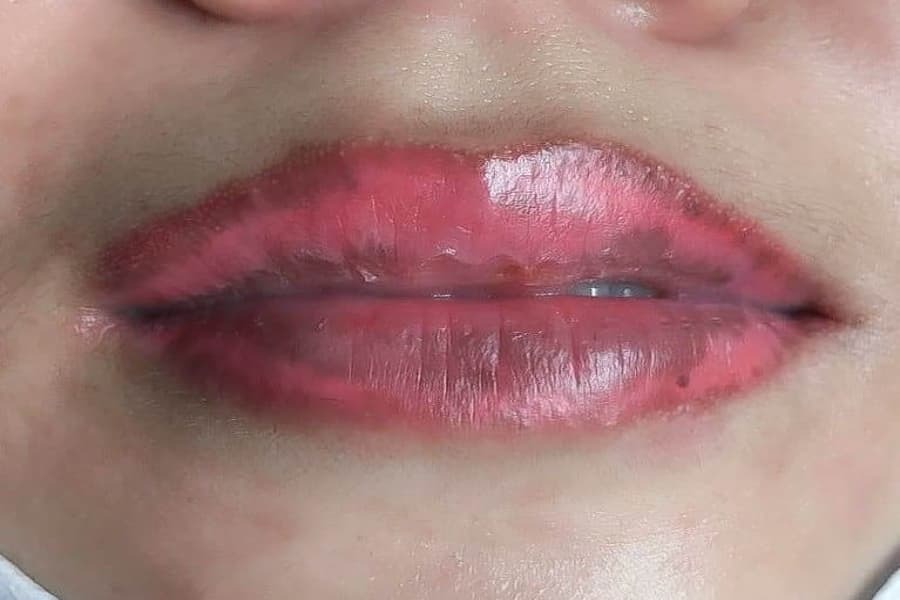
Swelling and mild bruising of the lips
This is a completely normal phenomenon due to the body’s reaction after surgical intervention.
Treatment: Apply cold compresses actively for the first two days and switch to warm compresses from the third day to reduce bruising. This condition will significantly improve after 3-5 days.
Lips feeling stiff and temporarily numb
This is due to the anesthetic not wearing off completely or sensory nerve damage not yet recovering.
Treatment: Don’t worry too much; this sensation will disappear after a few days. The lips may feel slightly stiff for the first few weeks and will become completely soft and natural from the second to the fourth week.
Abnormal signs (See a doctor)
If the lips show signs of pus, continuous bleeding, severe pain, or unusual swelling after several days.
Treatment: Contact a specialist immediately or go directly to the cosmetic clinic for examination and treatment to avoid complications such as scar contracture.
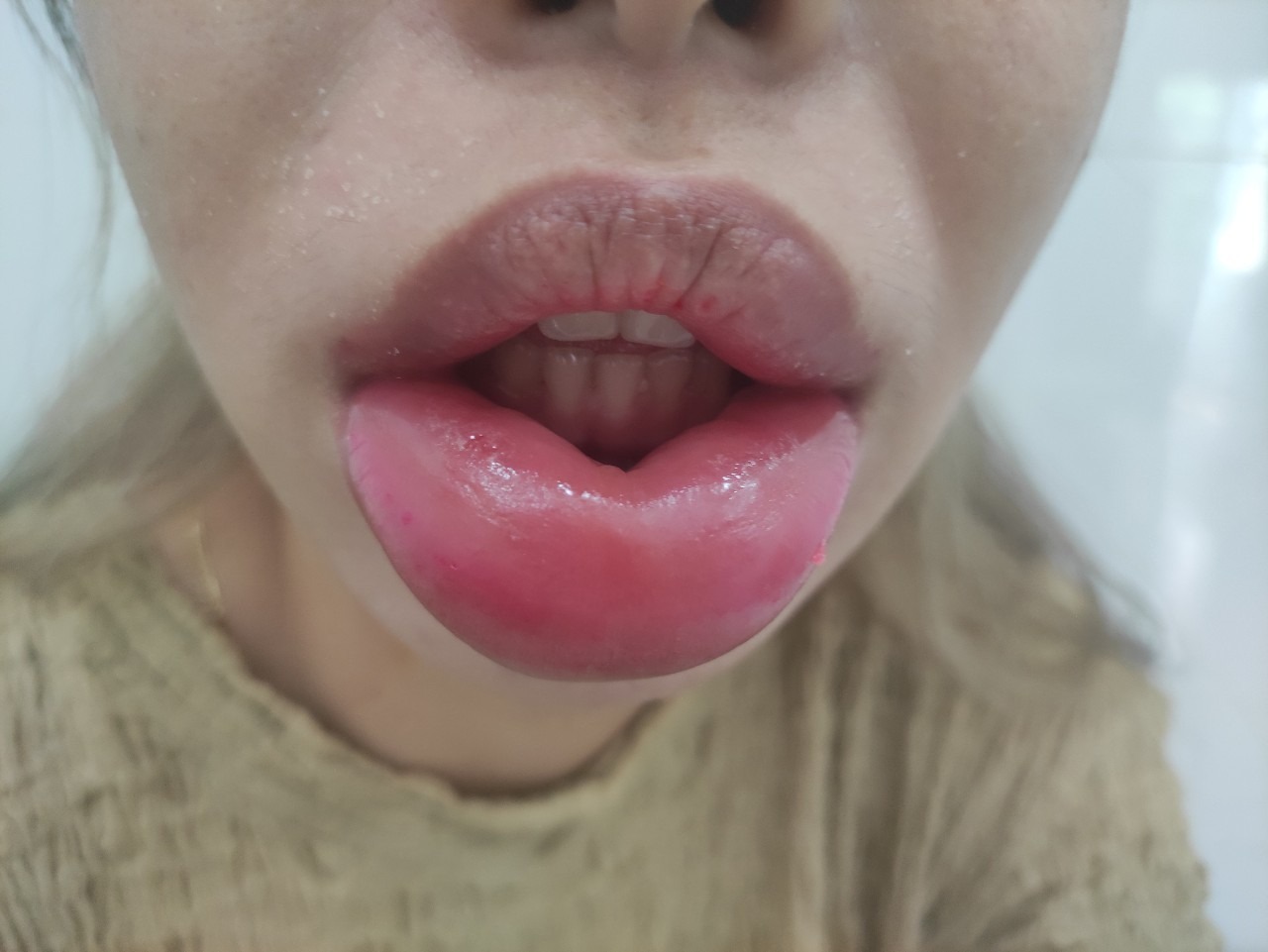
Above is a detailed guide on how to care for your lips after a medically approved lip augmentation procedure, helping the wound heal quickly and achieve the best possible shape.
Dr Xuan Quan Clinic is proud to be a reputable address trusted by many customers for lip enhancement. With exclusive microsurgical techniques performed directly by Dr. Nguyen Xuan Quan, the minor surgery always ensures absolute safety, minimizing swelling and bruising so you can return to work immediately. Contact us today for expert advice!