
 Tiếng Việt

Full temples contribute to a more refined and youthful facial appearance; however, many people wonder: is a temple augmentation procedure painful? In reality, the process is completely painless, thanks to the use of medically standardized anesthesia. Once the anesthesia wears off, you may experience a mild, manageable sensation of soreness or tightness, which typically subsides within a few days. In this article, Dr Xuan Quan Clinic provides a detailed breakdown of what to expect at each stage and reveals the techniques that ensure a gentle, worry-free aesthetic experience!
Is temple augmentation painful? At which stage is the discomfort most intense?
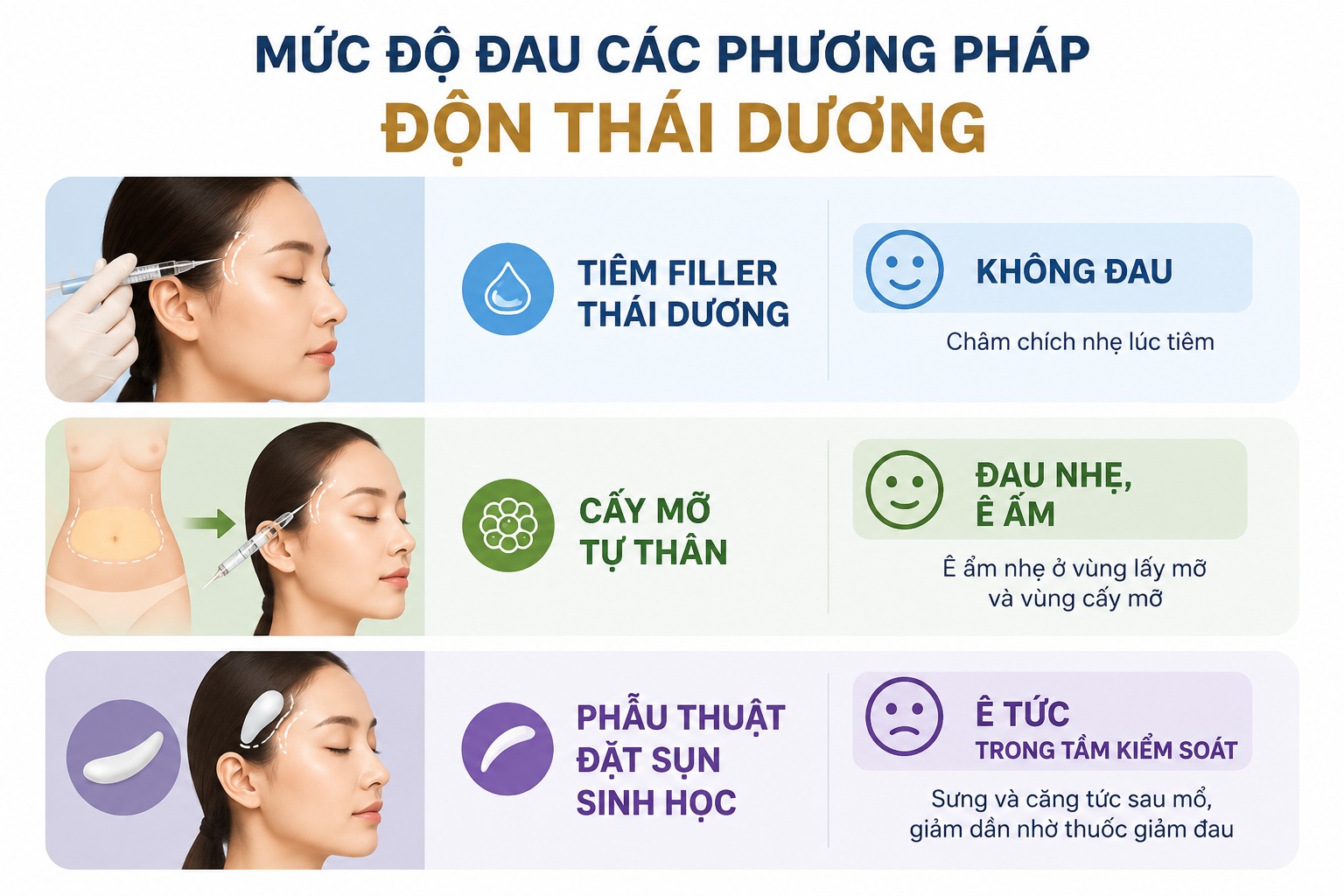
Each method for addressing hollow temples involves a different level of intervention, and consequently, the sensations experienced will vary:
- Temple Filler Injections (Painless): This is the gentlest approach. A doctor uses an ultra-fine needle to inject a filler substance into the skin; you may feel a slight prick – similar to an ant bite – during the injection, but there is no sharp pain, and no recovery period is required.
- Autologous Fat Grafting (Mild soreness/aching): This method involves two areas of the body (the site where fat is harvested and the site where it is grafted). Once the anesthesia wears off, you may feel some mild soreness or aching in both areas, but this will quickly ease after a few days.
- Surgical Implantation of Biological Implants (Manageable soreness/tightness): Because the procedure requires tissue dissection to create a pocket for the implant, you may experience more swelling and a greater sense of tightness in the temple area post-surgery. Nevertheless, this sensation remains well within a tolerable range, supported by the use of specialized pain-relief medication.
Factors Influencing Pain Levels During Temple Augmentation
The degree of discomfort or ease experienced during temple augmentation varies from person to person, depending largely on the following key factors:
- The surgeon’s skill and technique: With over 10 years of experience, Dr. Xuan Quan employs precise and skillful dissection techniques. Accurately placing the implant material into the correct pocket – while minimizing invasiveness and tissue trauma – is the most effective way to reduce pain.
- Anesthesia techniques and supportive technology: Standardized medical protocols for topical and local anesthesia, performed in a sterile operating room, completely block pain sensations, ensuring the patient remains comfortable and relaxed throughout the procedure.
- Individual physiology and pain threshold: Every person has a unique nervous system and recovery capacity. Those with a body that heals well and a higher pain threshold will generally find the post-operative period to be very manageable and quick.

What level of pain is normal after a temple augmentation procedure, and when should you seek medical attention?
Recognizing the different levels of pain allows you to monitor your recovery process effectively and feel more at ease following the surgery:
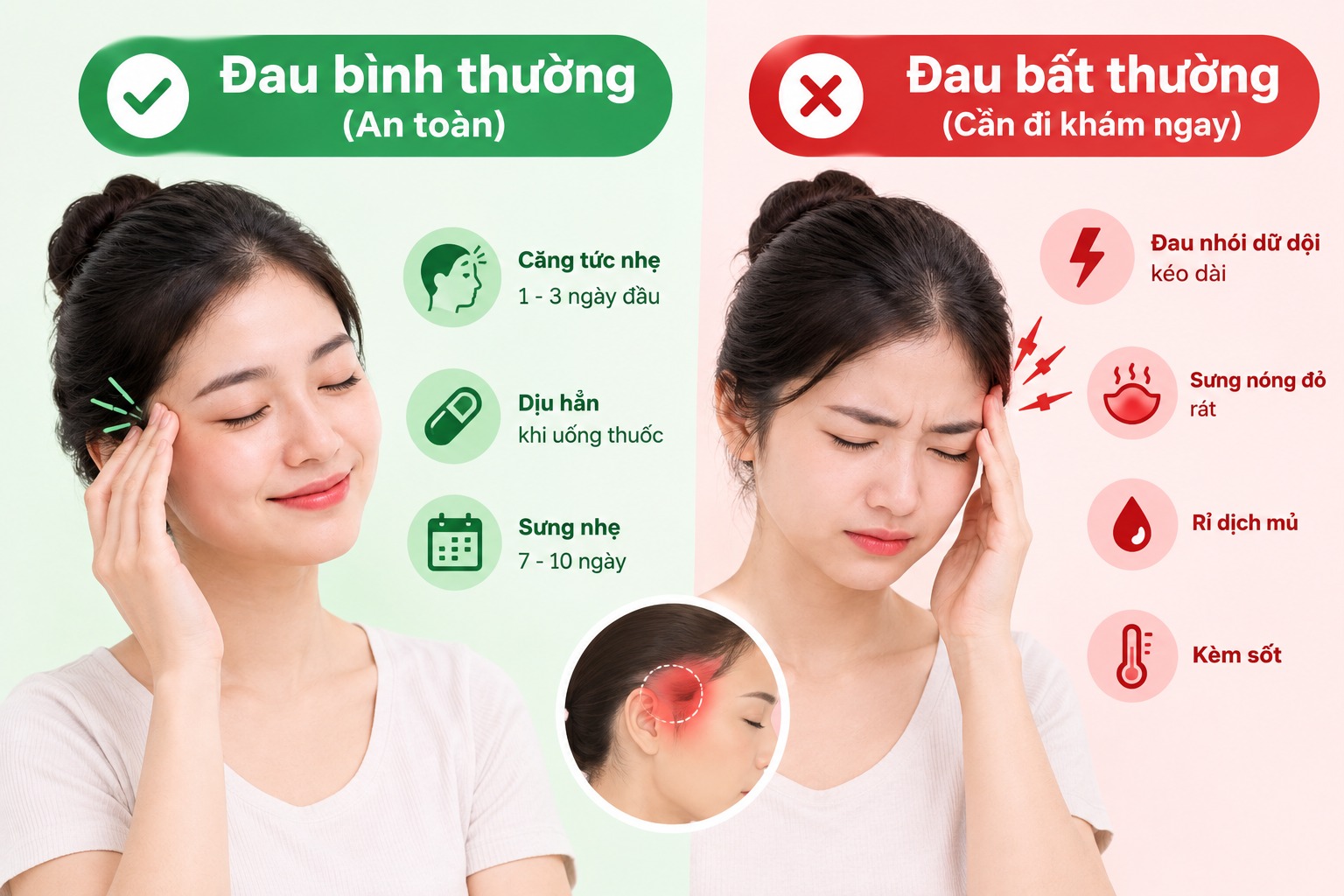
- Normal pain (Safe): A mild feeling of tightness or discomfort during the first 1–3 days, which subsides after taking prescribed medication. The surgical area may experience slight swelling, typically resolving completely within 7–10 days.
- Abnormal pain (Requires immediate medical attention): Intense, sharp, or persistent pain that does not subside; the surgical area becomes hot, red, and painful to the touch; there is discharge or pus; or you develop a fever.
The level of pain experienced depends significantly on the surgeon’s skill and the techniques employed. At Dr Xuan Quan Clinic, you can be assured of a comfortable surgical experience; precise subperiosteal dissection ensures minimal trauma to blood vessels and soft tissues.
Every client receives a personal consultation with Dr. Xuan Quan, who meticulously tailors the procedure to your specific needs and provides close, dedicated support throughout the post-operative period – backed by a 6-month warranty. Choosing Dr. Xuan Quan means choosing complete peace of mind, ensuring a balanced, harmonious appearance that lasts.
Post-operative care tips for pain relief and faster recovery
To minimize tightness and help the temple area settle into a natural, well-defined shape, keep the following post-operative care guidelines in mind:
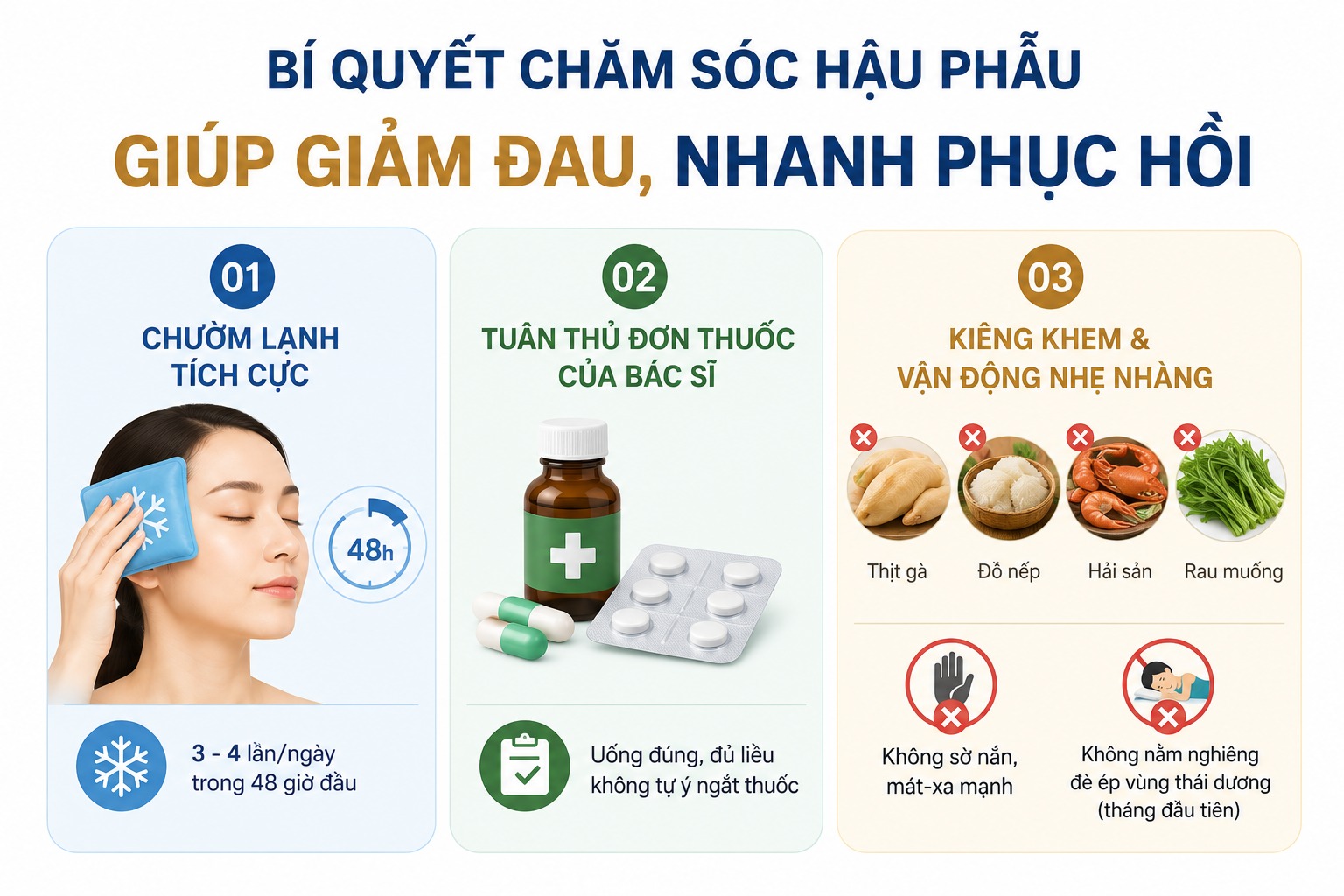
- Apply cold compresses diligently: During the first 48 hours, apply cold compresses around the temple area 3–4 times a day. The low temperature helps constrict blood vessels, reduce swelling, and effectively soothe any soreness or aching.
- Follow your doctor’s prescription: Take all prescribed pain relievers and anti-inflammatory medications exactly as directed. Do not stop taking your medication or start any new, unprescribed medication without consulting your doctor.
- Observe dietary restrictions and engage in gentle activity: Strictly avoid foods known to trigger swelling, pain, or suppuration (such as chicken, glutinous rice dishes, seafood, and water spinach). Additionally, refrain from touching, massaging, or sleeping on your side in a way that puts pressure on the temple area during the first month.
Frequently Asked Questions About the Post-Procedure Experience Following Temple Augmentation
To help alleviate any concerns before your aesthetic procedure, here are brief answers to the most common questions regarding what to expect during the recovery period:
How long do swelling and soreness typically last after temple augmentation?
Swelling and mild soreness are most noticeable during the first 2–3 days. By the fifth day, any discomfort should subside completely as the temple area stabilizes and begins to settle into its final shape.
Is it normal to still feel some tightness or tension even after taking pain medication?
Yes, this is a normal reaction as your body adjusts to the new implant material. The sensation is generally mild, well within a manageable range, and will resolve on its own after a few days.
Do I need to avoid talking or laughing out loud after the procedure?
You do not need to avoid talking or laughing; however, for the first 10 days, it is best to avoid opening your mouth too wide or laughing with intense facial expressions, as this could affect the temple muscles while they are healing.
What should I do if I experience headaches after temple augmentation?
Mild headaches may occur during the first few days because the sensory nerves around the temple area can be slightly stimulated during the procedure. Simply take the pain medication prescribed by your doctor and apply cold compresses; the discomfort will soon pass.
The information above addresses common concerns regarding pain during temple augmentation and offers tips for achieving fuller temples with minimal discomfort and complete peace of mind. Contact Dr Xuan Quan Clinic today for a professional consultation and a personalized, safe treatment plan!