
 Tiếng Việt

Many people considering temple augmentation—a procedure to address hollow or sunken temples—often wonder about its safety. In reality, this is a minor surgical procedure with a very high safety profile; it poses no risk of harm or damage to nerves, as the implant is placed deep within the muscle space, directly against the bone. The following article from Dr Xuan Quan Clinic provides the information you need to feel confident in achieving a fuller, more harmonious facial appearance.
Is temple augmentation safe?
Temple augmentation is a very safe minor surgical procedure, provided it is performed according to established medical protocols. By utilizing microsurgical dissection techniques and high-quality, highly biocompatible synthetic cartilage implants, this procedure effectively fills in hollow or sunken temples without damaging nerves or altering the underlying facial structure.
Nevertheless, the safety of the surgery remains heavily dependent on several key factors: the skill of the surgeon, the use of implants from verified, reliable sources, and a strictly sterile surgical environment.

Potential risks when using services at an unlicensed “underground” facility
Choosing unlicensed, substandard spas or aesthetic clinics—where practitioners lack knowledge of human anatomy—exposes you to a range of dangerous complications:
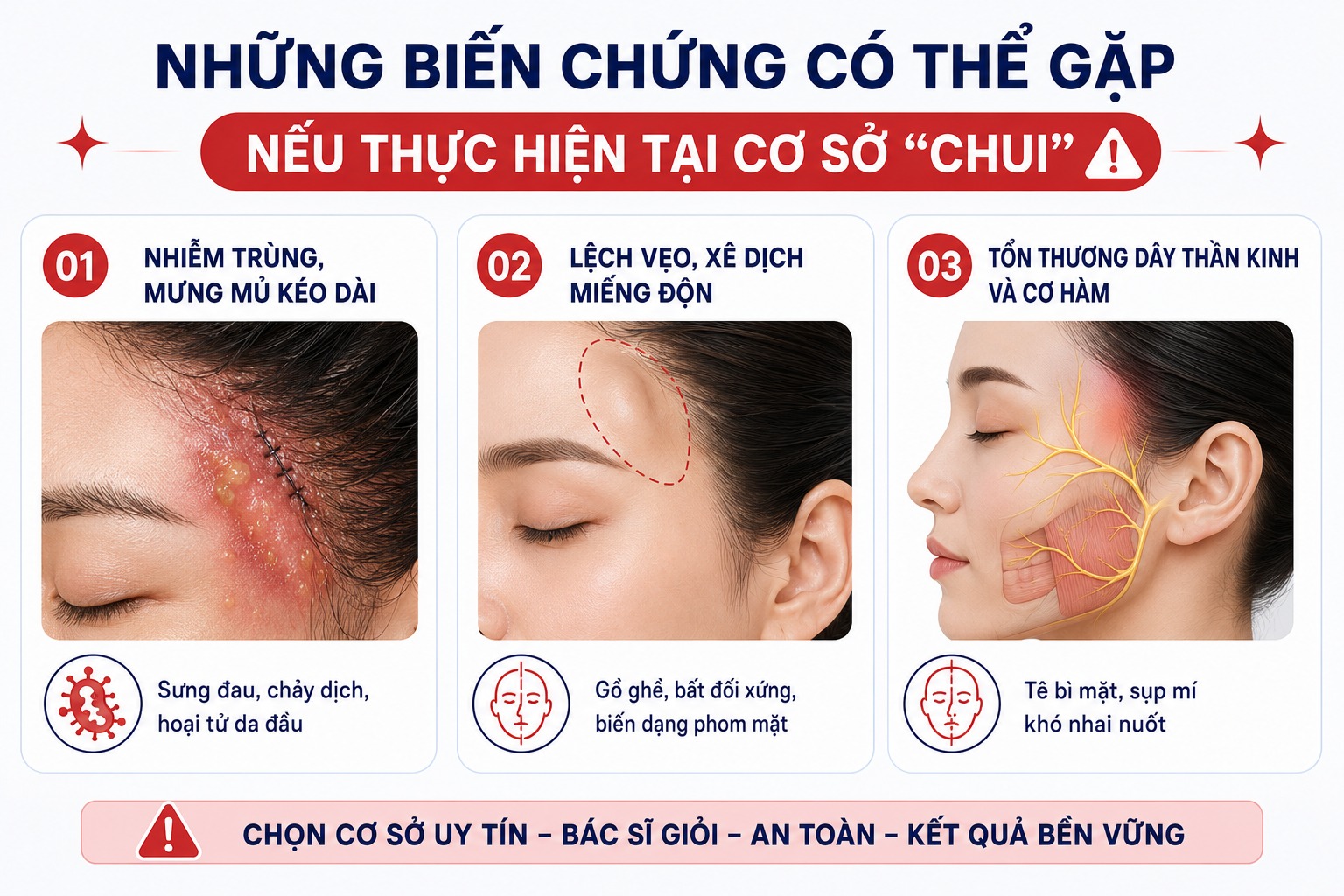
- Persistent infections and suppuration: Failure to properly sterilize operating rooms and instruments can lead to complications such as fluid discharge from the incision site, severe swelling, and even necrosis of the scalp tissue.
- Displacement or misalignment of implants: Poor surgical technique—such as improper dissection or the incorrect, loose placement of cartilage—can cause the temple implant to shift, resulting in an uneven, asymmetrical appearance that distorts the contours of the face.
- Damage to nerves and jaw muscles: Inaccurate dissection—cutting into the wrong tissue layers—can sever blood vessels or strike nerves, leading to facial numbness, drooping eyelids, or difficulty with chewing and swallowing.
Does temple augmentation affect the nerves?
The answer is no. The filler material is placed only within the space beneath the temporal periosteum—a location entirely separate from the network of nerves and blood vessels situated in the more superficial layers beneath the skin.
When performed by an experienced physician, the microsurgical dissection is executed with extreme precision, ensuring there is no compression or damage to the facial muscles or the nervous system.

Who is at a higher-than-normal risk of complications?
Although it is a simple minor procedure, the risk of complications following temple augmentation is higher in the following cases:
- Individuals with underlying medical conditions: Poorly controlled diabetes or blood clotting disorders increase the risk of infection and delay wound healing.
- Use of stimulants or anticoagulants: Tobacco, alcohol, or medications like aspirin can lead to prolonged bleeding.
- Predisposition to keloid scarring or excessively thin skin: These factors increase the likelihood of the implant edges becoming visible or the formation of unsightly scars.
- Previous unsuccessful temple surgery: The tissue structure may have become fibrotic, making dissection more difficult.

What signs after a temple augmentation procedure warrant an early medical consultation?
During your recovery, you should contact your doctor immediately if you experience any of the following warning signs:
- Increasing pain and swelling: Severe, intensifying pain or significant swelling that persists beyond 5–7 days without improvement.
- Pus or fluid discharge: The incision site oozes yellow fluid or emits a foul odor; the skin around the temple area becomes red, irritated, or hot to the touch.
- Displacement of the implant: The temple area appears visibly distorted or asymmetrical, or the implant shifts or protrudes, creating a hard ridge under the skin.
- Persistent high fever: Signs of an infection, accompanied by a fever and fatigue.

To ensure complete peace of mind and minimize the risk of complications, choosing a reputable surgical clinic from the very start is the most critical factor.
At Dr. Xuan Quan Aesthetic Clinic, you can rest assured, knowing you are in the hands of Dr. Xuan Quan—a graduate of Hanoi Medical University with extensive clinical experience in the fields of cosmetic surgery and facial plastic surgery.

Procedures are performed directly by the doctor, who utilizes precise microsurgical dissection techniques to ensure any incisions remain discreetly hidden—all within a strictly sterile environment. Backed by a 6-month warranty, Dr. Xuan Quan guarantees both your safety and a natural, full appearance for your temples.
At-home care regimen to ensure the absolute safety of the cartilage shape
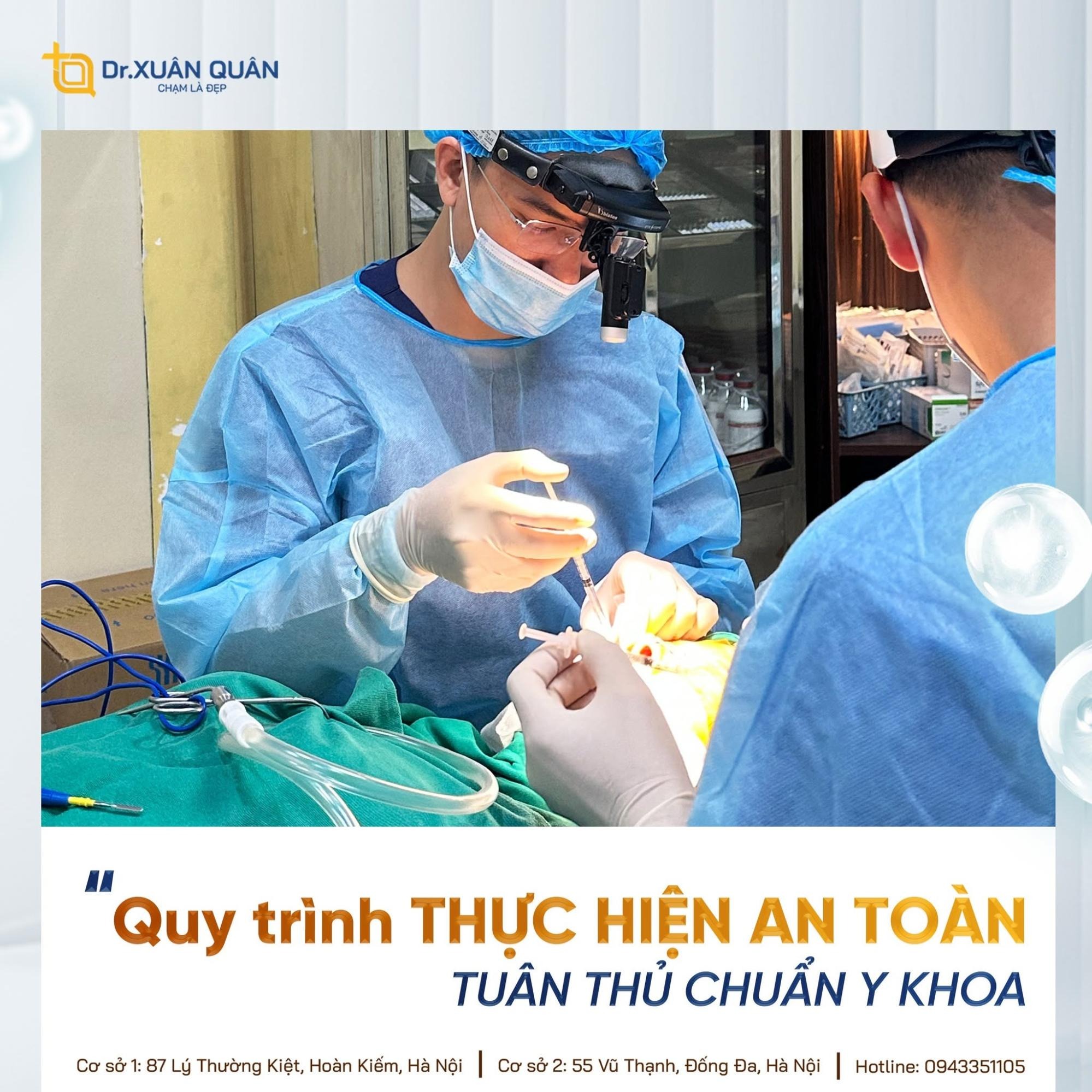
To ensure proper healing and to keep the temple implant securely in place, you must strictly follow these post-operative care instructions at home:
- Medical-grade wound care: Keep the surgical area completely dry for the first 24 hours. Afterward, use a cotton swab dampened with sterile saline to gently clean around the incision site 2–3 times a day to prevent infection.
- Wear a compression bandage and maintain proper sleeping posture: Wear the compression bandage continuously for the first 3–5 days to help the implant settle and minimize swelling. Always sleep on your back; do not sleep on your side or apply pressure to the temple area, as this could cause the implant to shift.
- Avoid foods that may cause scarring or suppuration: For one month, strictly exclude the following from your diet: water spinach (which can cause keloid scars), chicken, glutinous rice-based dishes (which may lead to pus formation), seafood, and beef (which can cause itching and dark scarring).
- Follow medication and suture removal schedules: Take all prescribed antibiotics and pain relievers as directed. Return to the clinic for a follow-up examination and to have your sutures removed.
Frequently Asked Questions About Temple Augmentation
Below are quick answers from experts to common questions:
Does temple augmentation affect the nerves?
No. The implant is placed deep within a pocket beneath the muscle, directly against the bone; it does not interfere with or cause any damage to the nerves in the head and facial region.
Will the temple implant shift or move out of place over time?
No. When performed by a skilled surgeon who ensures precise tissue dissection—using high-quality, medical-grade implants like Pureform—the surrounding tissues and blood vessels will quickly integrate and adhere to the implant, securing it firmly in place and preventing any displacement or misalignment.
How long do the results of temple augmentation last?
A lifetime. These high-quality, medical-grade implants are highly biocompatible; they do not degrade or get rejected by the body over time, providing a lasting and sustainable aesthetic result.
We hope these detailed answers regarding the safety of temple augmentation help ease any concerns, allowing you to move forward with greater confidence on your journey toward enhancing your appearance. If you are looking for a solution to address hollow or sunken temples, please contact Dr. Xuan Quan Aesthetic Clinic today for a consultation.