
 Tiếng Việt

Is it a cause for concern if your nose feels itchy after a rhinoplasty? In most cases, this is nothing to worry about; it simply indicates that the wound is healing and new skin is forming. However, if the itching is intense and accompanied by redness, swelling, pain, or discharge, it could be a warning sign of an infection or an allergic reaction to the cartilage implant material. The following article, provided by Dr Xuan Quan Clinic, will help you identify the exact cause and explain how to handle the situation safely.
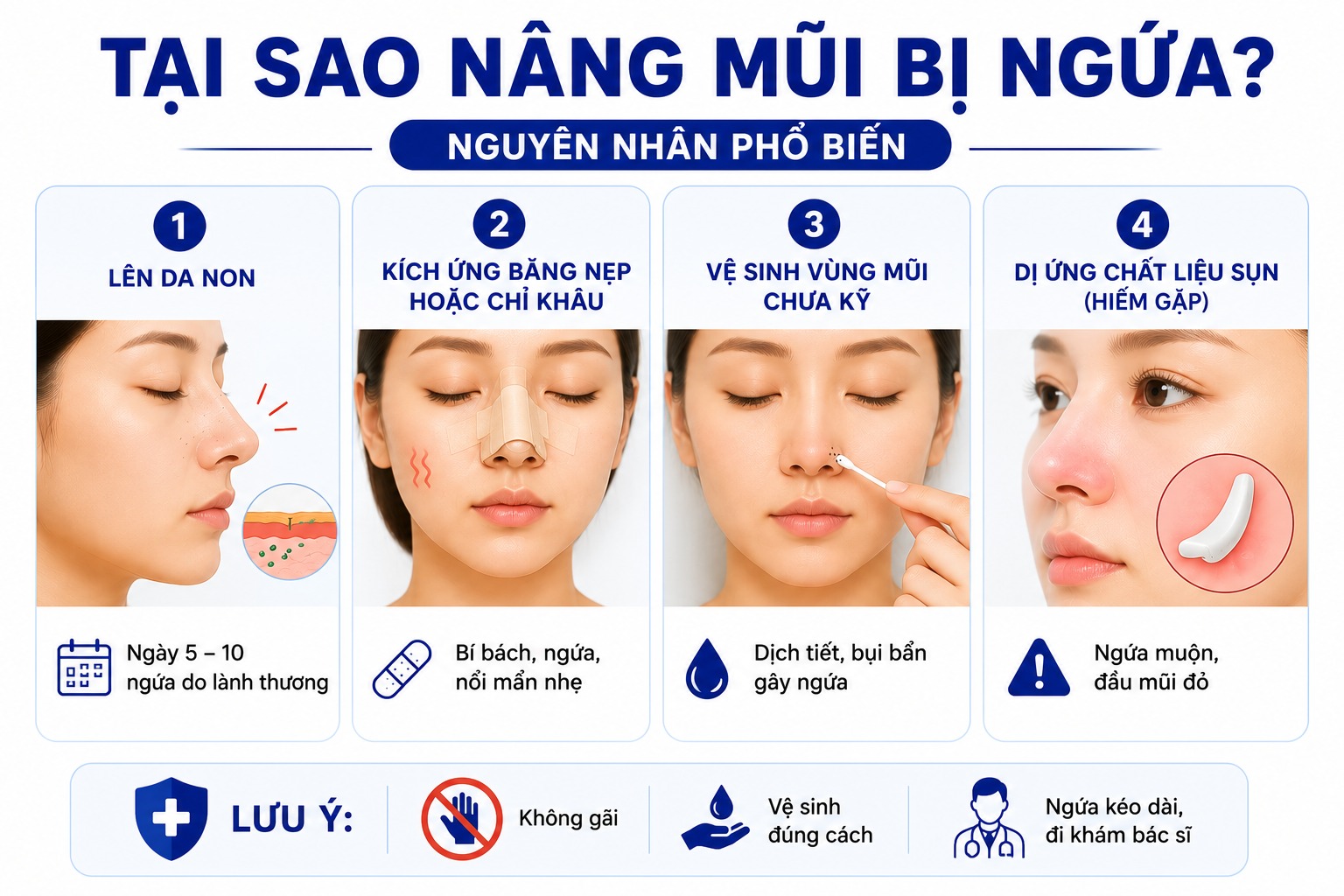
Why does a nose after rhinoplasty become itchy? Common causes
Itching after a rhinoplasty (nose job) typically stems from the following primary causes:
- The healing process (Natural tissue repair): This is a common cause, usually occurring between the 5th and 10th day post-surgery. As connective tissues regenerate to close the wound, the body releases histamine, which triggers an uncomfortable, tingling itch.
- Irritation from dressings, splints, or sutures: Post-operative skin is extremely sensitive. The prolonged presence of adhesive dressings, stabilizing splints, or surgical sutures can easily cause the skin to feel stifled, itchy, or develop a mild rash.
- Inadequate cleaning of the nasal area: The accumulation of fluid, dried blood, or debris around the incision site—if not properly cleaned with a saline solution—can cause itching and create an environment for bacterial growth.
- Allergy to the cartilage material (Rare): If itching occurs later (after several weeks or months) and is accompanied by redness at the tip of the nose, it may indicate that the body is rejecting an incompatible artificial cartilage implant.
How to safely manage an itchy nose following a rhinoplasty procedure
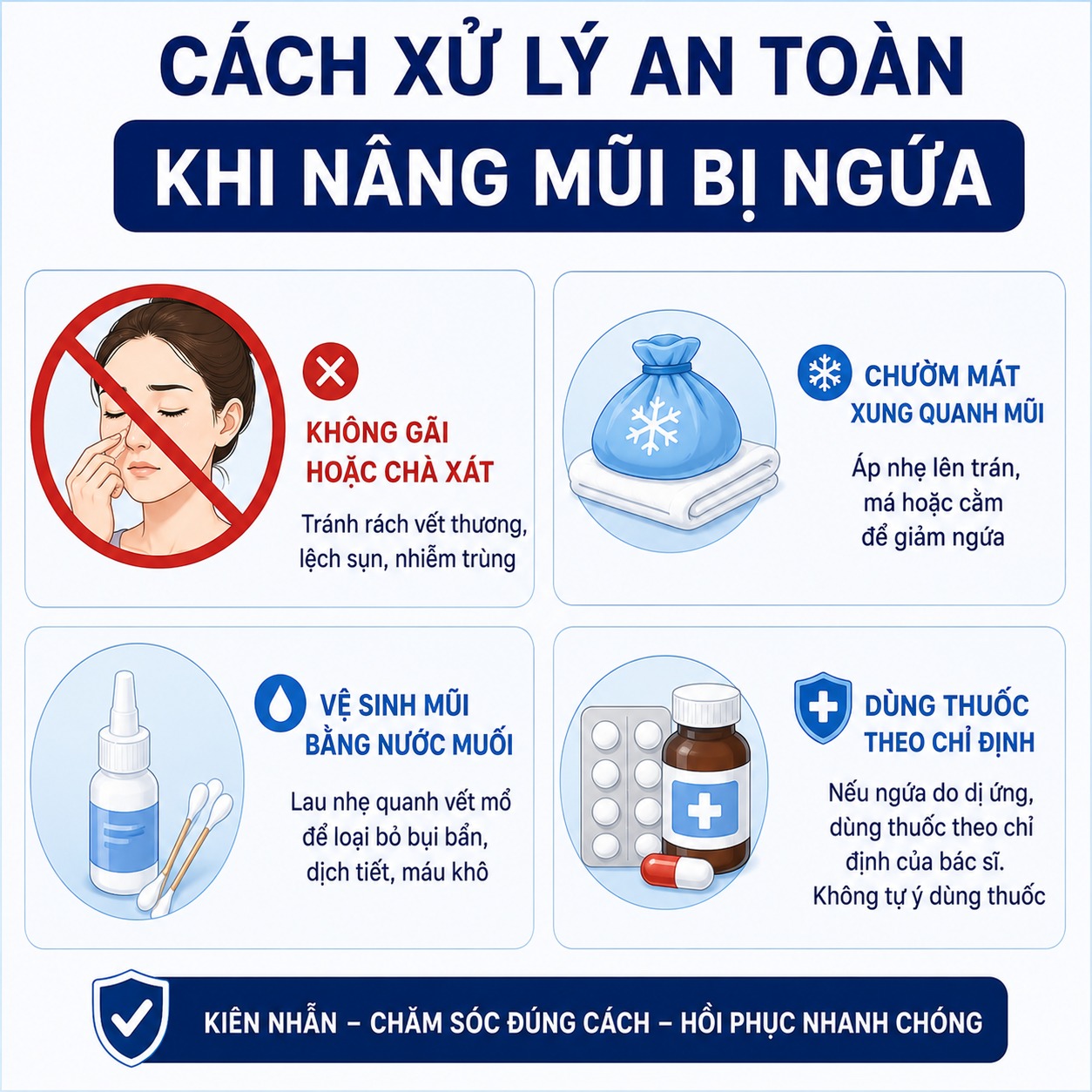
To alleviate discomfort without compromising the shape of your nose, follow these safe management practices:
- Avoid scratching or rubbing: Scratching or picking at your nose can reopen healing wounds, displace the cartilage, and introduce bacteria from your hands, potentially leading to an infection.
- Apply a cold compress: Wrap an ice pack or cold pack in a soft towel and gently apply it to the forehead, cheeks, or chin area near the nose. The cold temperature will quickly soothe any itching or tingling sensations.
- Clean the area with saline solution: Use a cotton swab dampened with saline solution to gently clean around the incision site, removing dirt, secretions, and dried blood—all of which can cause irritation and itching.
- Follow your doctor’s prescribed treatment: If the itching is caused by an allergic reaction to the splint or dressing, your doctor may prescribe an antihistamine. Do not use any topical or oral medications without your doctor’s explicit approval.
When should you see a doctor if you experience itching after a nose job?
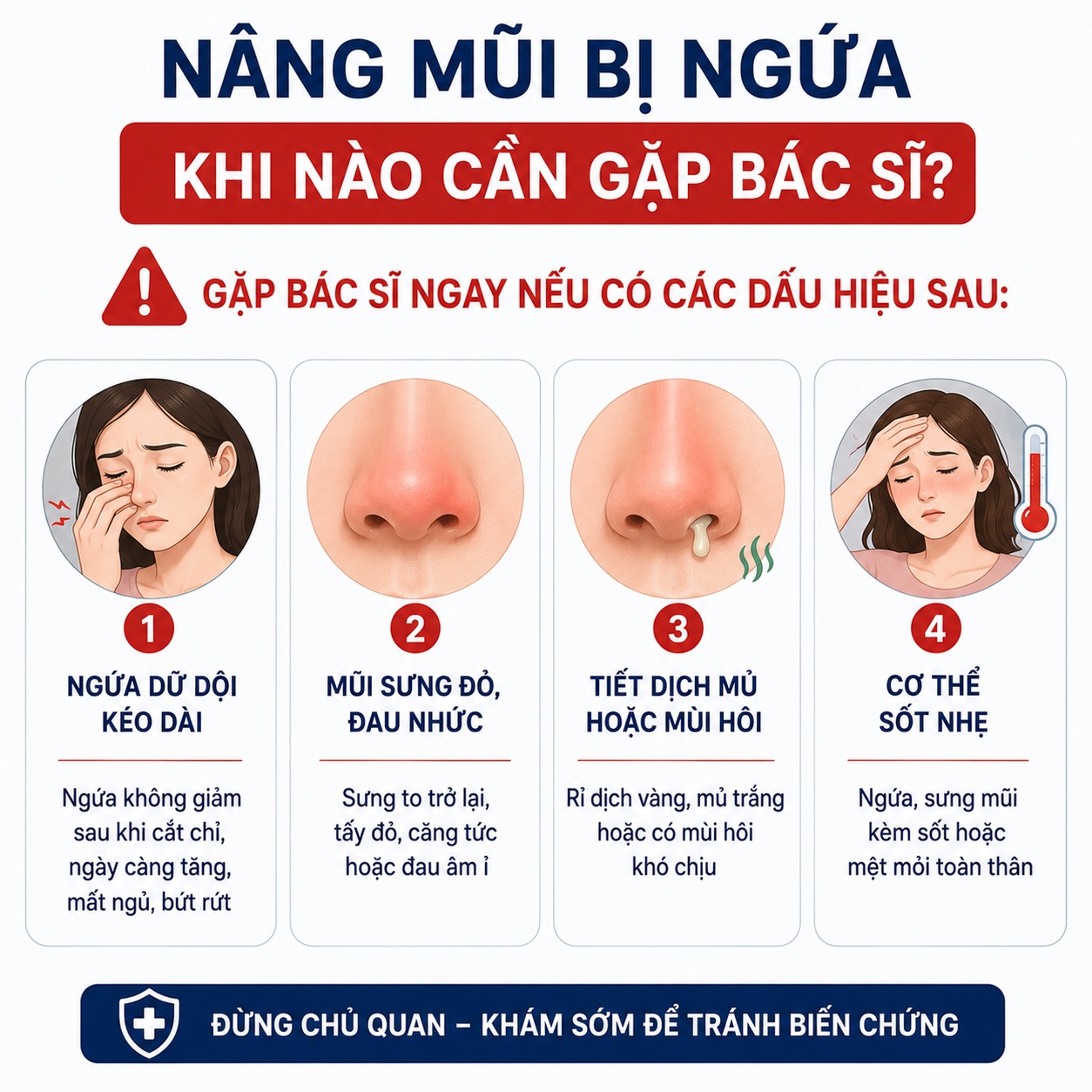
Although an itchy nose is often a benign sign of the skin healing, you should consult a doctor immediately if the itching is accompanied by any of the following concerning symptoms:
- Persistent, intense itching: The itching does not subside after the stitches are removed but instead worsens, causing sleep disturbances or significant restlessness.
- Redness, swelling, and pain: The nose or nasal tip becomes swollen again, appears red, and feels tight or persistently painful.
- Discharge or foul odor: The incision site oozes yellow fluid or white pus, or emits an unpleasant odor—clear indicators of an infection.
- Mild fever: Itching and swelling of the nose accompanied by a fever or general fatigue suggest that your immune system is responding to a serious infection.
Rigorous Postoperative Care Protocol at Dr. Xuan Quan Aesthetic Clinic
At Dr. Xuan Quan Aesthetic Clinic, any concerns regarding itching or post-rhinoplasty complications are effectively managed through a medical-standard, 1:1 post-operative care protocol:
- Use of premium materials: All splints, bandages, and bio-absorbable sutures used are of the highest quality, minimizing the risk of skin irritation or itching.
- Dedicated, close-monitored support: A team of professional nurses provides 1:1 guidance on proper wound care at home and monitors your recovery progress on a daily basis.
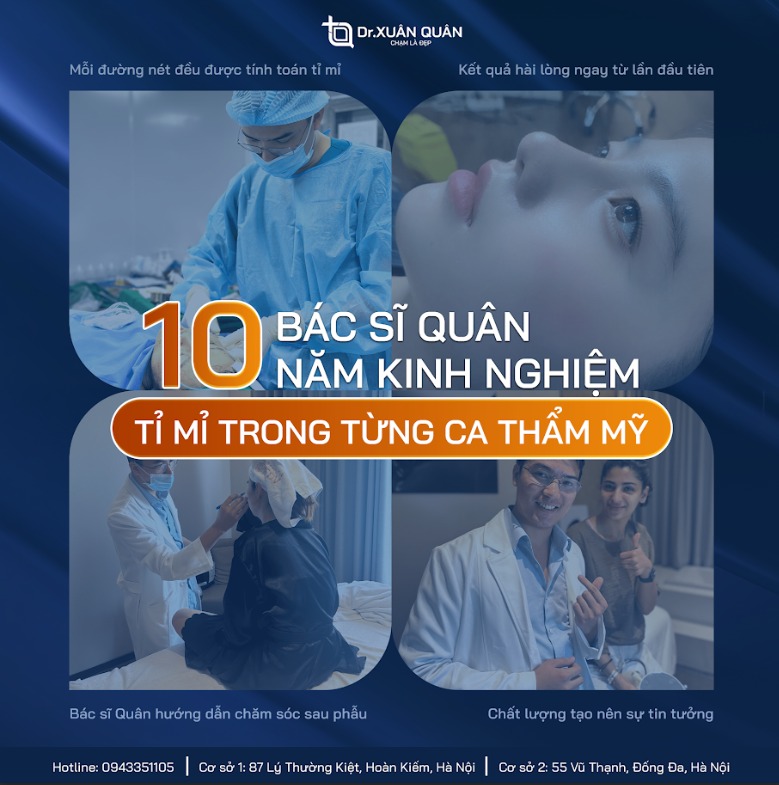
- Direct follow-up by a specialist: Dr. Xuan Quan—an expert with over 10 years of experience—personally conducts follow-up consultations, suture removal, and routine check-ups, ensuring your nose heals into its intended shape safely and without the risk of complications.
Frequently asked questions about itching after a nose job
Below are brief answers from Dr. Xuan Quan regarding common concerns patients have about itching following rhinoplasty:
Should you scratch your nose if it itches after rhinoplasty? You must not scratch, as doing so can easily shift the shape of the nose, damage the sutures, and increase the risk of infection.
Is it a problem if the inside of the nose itches after rhinoplasty?
It is nothing to worry about. This is a sign that the internal mucous membrane is healing and forming new tissue. However, you must strictly avoid using your fingers or cotton swabs to probe or scratch inside the nasal cavity.
How long does the itching typically last?
Itching caused by the formation of new tissue usually occurs between the 5th and 10th day post-surgery and will completely disappear on its own within 1–2 weeks after the stitches are removed.
Can you take allergy medication if your nose itches after rhinoplasty?
Antihistamines may be used to provide relief, but you should never purchase or take them on your own. Please consult your doctor to receive a prescription for a safe and appropriate medication.
The information above provides a detailed explanation of post-rhinoplasty itching, helping you distinguish between the normal healing process—where new tissue forms—and potential warning signs of complications. To ensure a smooth and safe recovery, please contact our hotline or schedule an appointment with Dr. Xuan Quan’s aesthetic clinic for a personal consultation and examination by Dr. Xuan Quan himself.