 Tiếng Việt

A stiff nasal tip following rhinoplasty is a completely normal physiological response; the tip will typically begin to soften after 3 to 6 months, depending on the individual. However, if this stiffness is accompanied by persistent swelling, pain, or redness, it may be a warning sign of a serious complication. In the following article, Dr Xuan Quan Clinic provides an expert perspective, detailing the causes of this condition and how to address it.
Is it normal for the nasal tip to feel hard after a rhinoplasty?
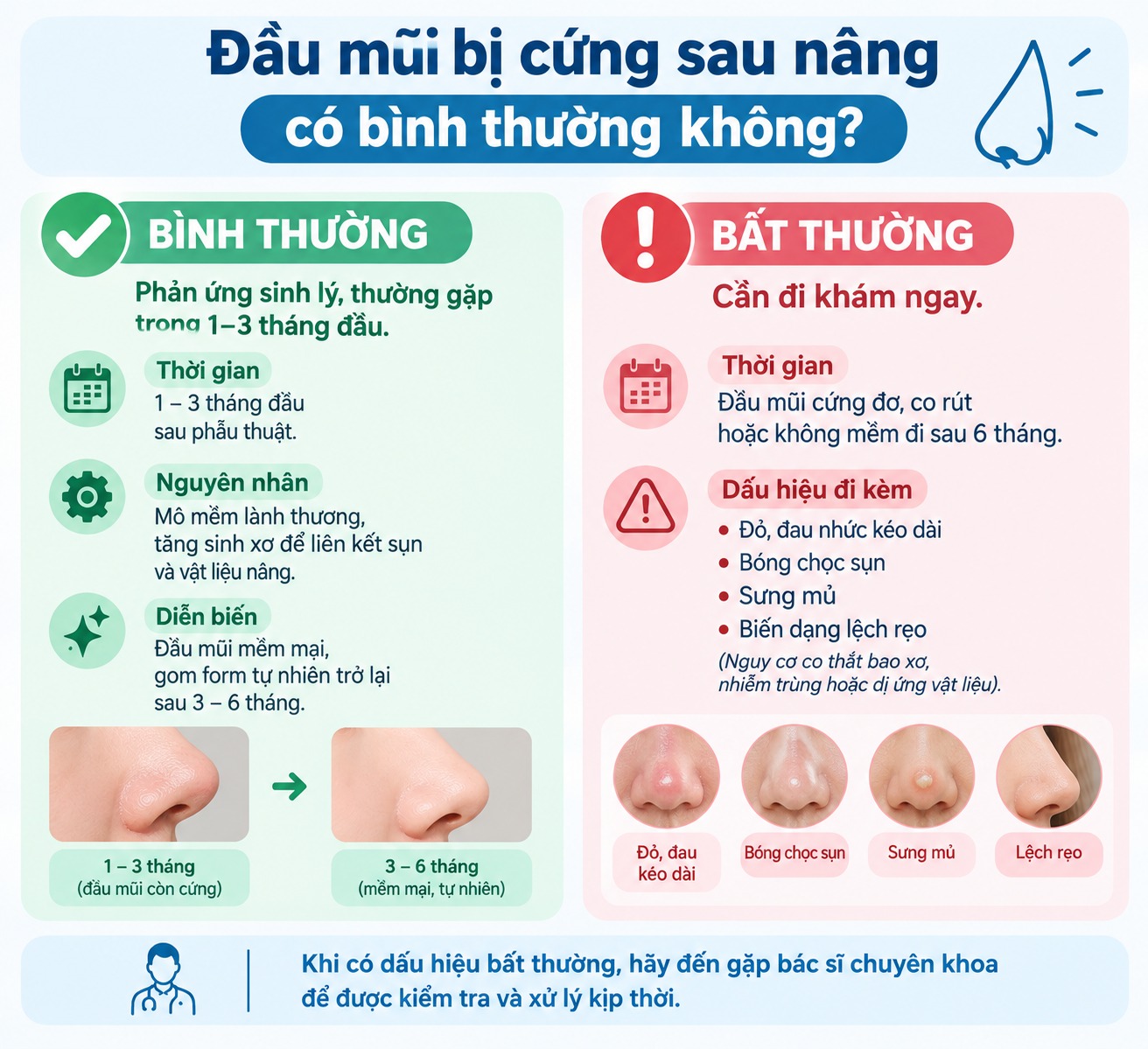
A firm nasal tip following rhinoplasty is a completely normal physiological response; however, depending on the duration and accompanying symptoms, it may also indicate an abnormal condition.
NORMAL cases:
- Timing: Occurs within the first 1–3 months post-surgery.
- Cause: Soft tissues are in the healing process, with fibrous tissue proliferation occurring to integrate the cartilage and the implant material. The nasal tip will gradually soften and settle into its natural shape over 3–6 months.
ABNORMAL cases (Require immediate medical attention):
- Timing: The nasal tip remains rigid, undergoes retraction, or shows no signs of softening after 6 months.
- Accompanying symptoms: Persistent redness, prolonged pain, the implant becoming visible through the skin, pus discharge, or deformity/scarring (indicating a potential risk of capsular contracture, infection, or an allergic reaction to the implant material).
How long does it take for the nasal tip to become soft and natural again after a rhinoplasty?
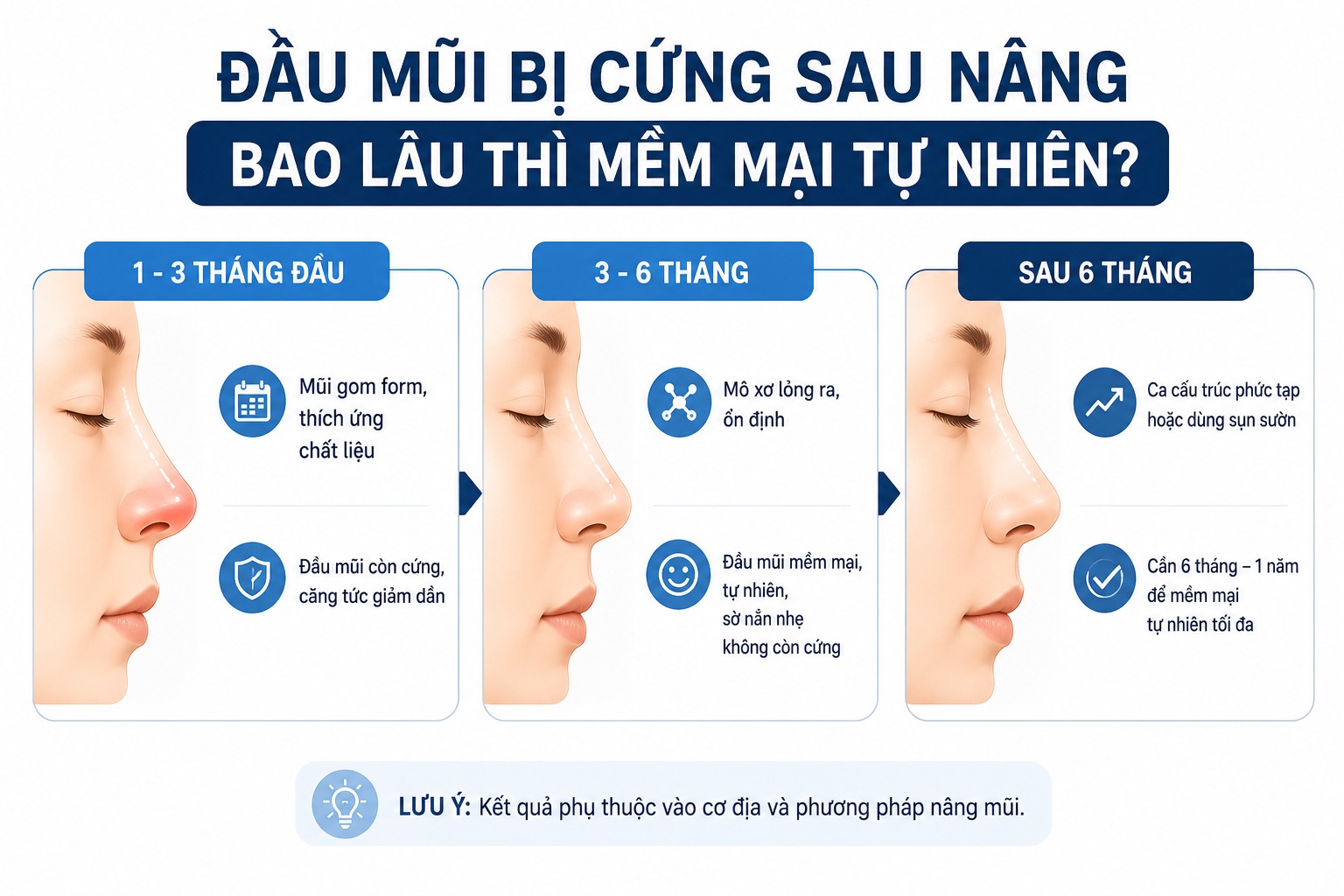
The time it takes for the nasal tip to lose its stiffness and regain natural softness and elasticity varies depending on the individual’s physiology and the specific rhinoplasty technique used. Generally, the process unfolds in the following stages:
- First 1–3 months: During this period, the nose settles into its shape and adapts to the implant material. The nasal tip will remain quite stiff and rigid, though any feelings of tightness or tension will gradually subside week by week.
- 3–6 months: Internal fibrous tissues begin to loosen and reach full stability. The nasal tip regains its softness and takes on a natural shape; you may gently touch or manipulate it without feeling any lingering hardness.
- After 6 months: In cases involving complex structural rhinoplasty or the use of costal (rib) cartilage, it may take anywhere from 6 months to a year for the nasal tip to achieve a level of softness and natural feel comparable to an authentic, unaltered nose.
Reasons why the nasal tip becomes stiff after rhinoplasty
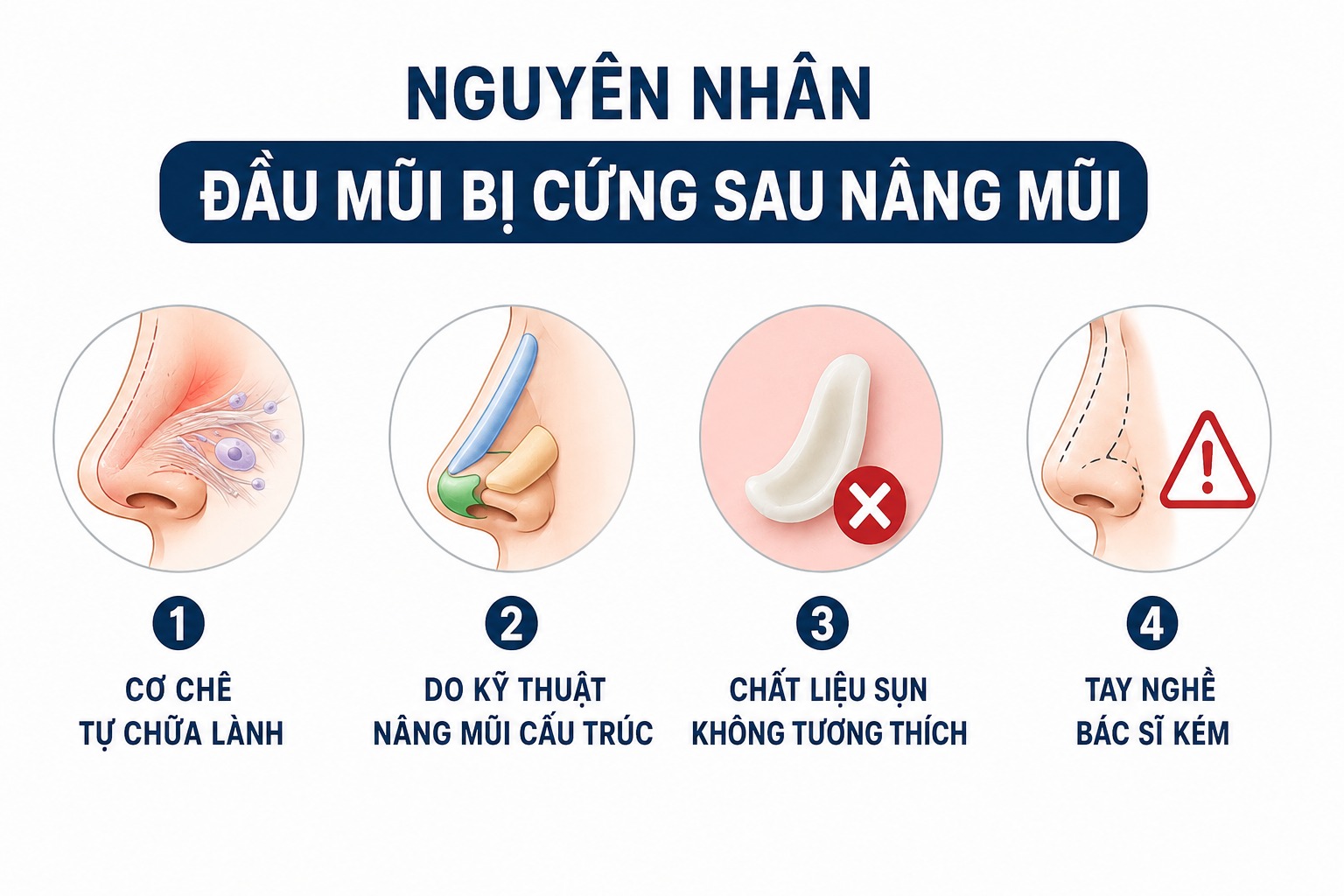
A stiff or rigid nasal tip following rhinoplasty typically stems from the following common causes:
- The body’s natural healing process: Following surgical intervention, the body may produce excess fibrous tissue around the implant or graft to secure it in place, resulting in a temporary sensation of stiffness.
- Structural rhinoplasty techniques: This approach utilizes autologous cartilage (such as septal or rib cartilage) to construct a stable nasal framework. Because this structural cartilage is inherently rigid, the nasal tip requires more time to regain its natural softness.
- Incompatible materials: The use of low-quality synthetic implants, or a patient’s hypersensitivity, can trigger an immune rejection or capsular contracture, leading to a stiff and potentially deformed nasal tip.
- Poor surgical technique: If a surgeon places an implant too high or too close to the skin of the nasal tip, or if the tissue layers are dissected incorrectly, it can cause deep tissue trauma, often resulting in the formation of internal fibrous scar tissue.
How to address the issue and provide care to help the nasal tip soften more quickly
To accelerate recovery and help the nasal tip soften and settle into a natural shape, consider the following post-rhinoplasty care practices:
- Gentle nasal massage: Approximately one month after surgery—once the nasal structure has become relatively stable—you may perform gentle massages, as directed by your surgeon, to help break down internal fibrous tissue.
- Healthy nutrition: Incorporate plenty of foods rich in vitamins C and E (such as green vegetables and fresh fruits) and ensure adequate daily water intake to promote cell regeneration and soften scar tissue more quickly.
- Avoid applying strong force: During the initial months, refrain from actions such as vigorous touching, twisting the nose, sleeping face-down, or wearing heavy-framed glasses, as these can cause the nasal shape to become distorted or shifted.
- Follow-up appointments and medical instructions: Adhere strictly to your prescribed medication regimen and attend all scheduled follow-up appointments so your surgeon can closely monitor your recovery progress.

When does a stiff nasal tip become a warning sign that requires a visit to the doctor?
While a stiff nasal tip is a normal physiological occurrence, you should consult a doctor immediately if this condition persists for more than 3 months and is accompanied by any of the following signs:
- Prolonged swelling, redness, and pain: The nasal tip appears swollen, red, or persistently painful—a potential warning sign of infection or cartilage rejection.
- Nasal retraction or an upturned appearance: The nasal tip is pulled upward, exposing the nostrils, or the skin at the tip becomes wrinkled due to severe capsular contracture.
- Deviation or exposed cartilage: The nose appears crooked or shifted to one side, or the implant/cartilage graft presses against the skin, causing it to thin or even perforate.
- Discharge or foul-smelling pus: The wound oozes yellow fluid, blood, or pus, accompanied by an unpleasant odor—an indication of a severe internal infection.
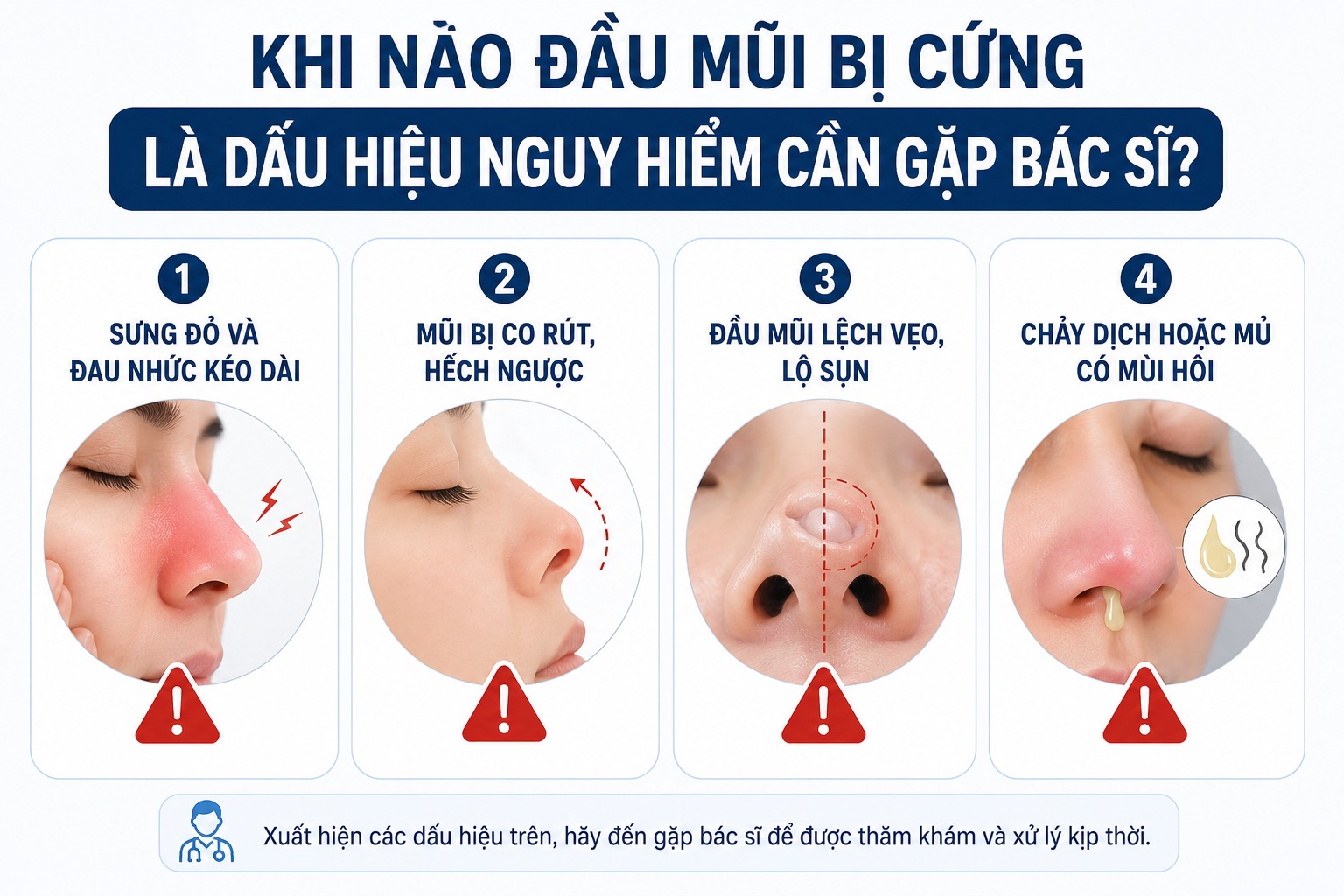
Should any of the aforementioned warning signs appear, please visit Dr. Xuan Quan Aesthetic Clinic. Dr. Xuan Quan—who possesses over 10 years of experience—will personally conduct an examination and screen for capsular contracture. Utilizing microsurgical techniques, he will thoroughly address the site of inflammation, safely remove the existing implant, and restore a natural shape to your nose.

Frequently asked questions about a firm nasal tip after rhinoplasty
To help ease any concerns during your recovery, here are some brief expert answers to the most common questions:
Is it normal for the nasal tip to feel stiff and slightly sore after rhinoplasty?
Yes, this is normal. During the first 1–2 months, the soft tissue has not yet fully integrated with the cartilage; this sensation will resolve on its own once the nose stabilizes.
Will a stiff nasal tip after surgery affect my ability to gently wiggle or move my nose later on?
No. After 6 months to a year, once the nasal structure has fully integrated and softened, you will be able to wiggle or move your nose gently.
What medication should I take to help the nasal tip soften faster?
Do not take any medication on your own. Simply follow your doctor’s prescribed regimen and incorporate Vitamin C and E—found in various foods—into your diet to help soften scar tissue.
The information above covers the causes of a stiff nasal tip following rhinoplasty, along with care tips to help your nose settle into its final shape and become naturally soft. If you have any further questions, please contact Dr. Xuan Quan Aesthetic Clinic for prompt professional advice!