
 Tiếng Việt

Bruising around the eyes following a rhinoplasty is a completely normal and harmless occurrence. It is simply a natural reaction that happens when blood vessels in the nasal area are affected during surgery, causing blood to spread into the loose skin surrounding the eyes. To better understand how these bruises evolve and to discover effective tips for speeding up their fading at home, read on—this article from Dr Xuan Quan Clinic provides all the details!
How does bruising around the eyes progress following rhinoplasty?
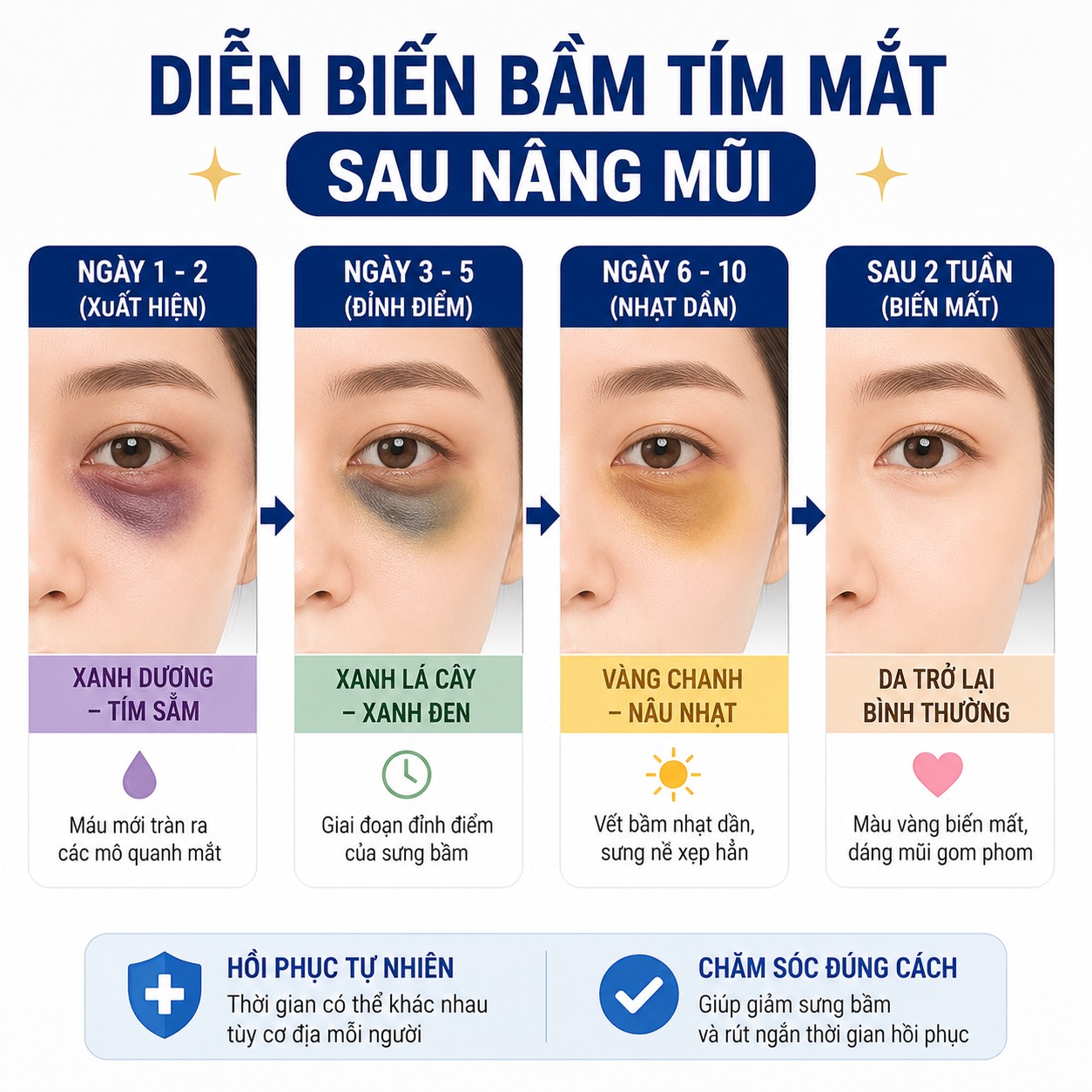
Following rhinoplasty, bruising around the eyes will undergo continuous color changes as the red blood cells trapped beneath the skin naturally break down. The progression typically unfolds as follows:
- Days 1–2 (Onset): The area around the eyes begins to swell slightly, and blue or deep purple bruises appear. This occurs as fresh blood spreads into the loose tissues surrounding the eyes.
- Days 3–5 (Peak): The bruises shift to a green or blue-black hue as the red blood cells break down. While this marks the peak of the swelling and bruising, there is no need for undue concern.
- Days 6–10 (Fading): The bruising gradually dissipates, transitioning to a yellowish or light brown color. The swelling around the eyes subsides completely, and the sensation of heaviness in the eye area disappears.
- After 2 weeks (Resolution): The yellow discoloration fades away entirely, the skin around the eyes returns to its normal state, and the nose begins to settle into its refined, final shape.
Why does bruising around the eyes occur after a rhinoplasty?
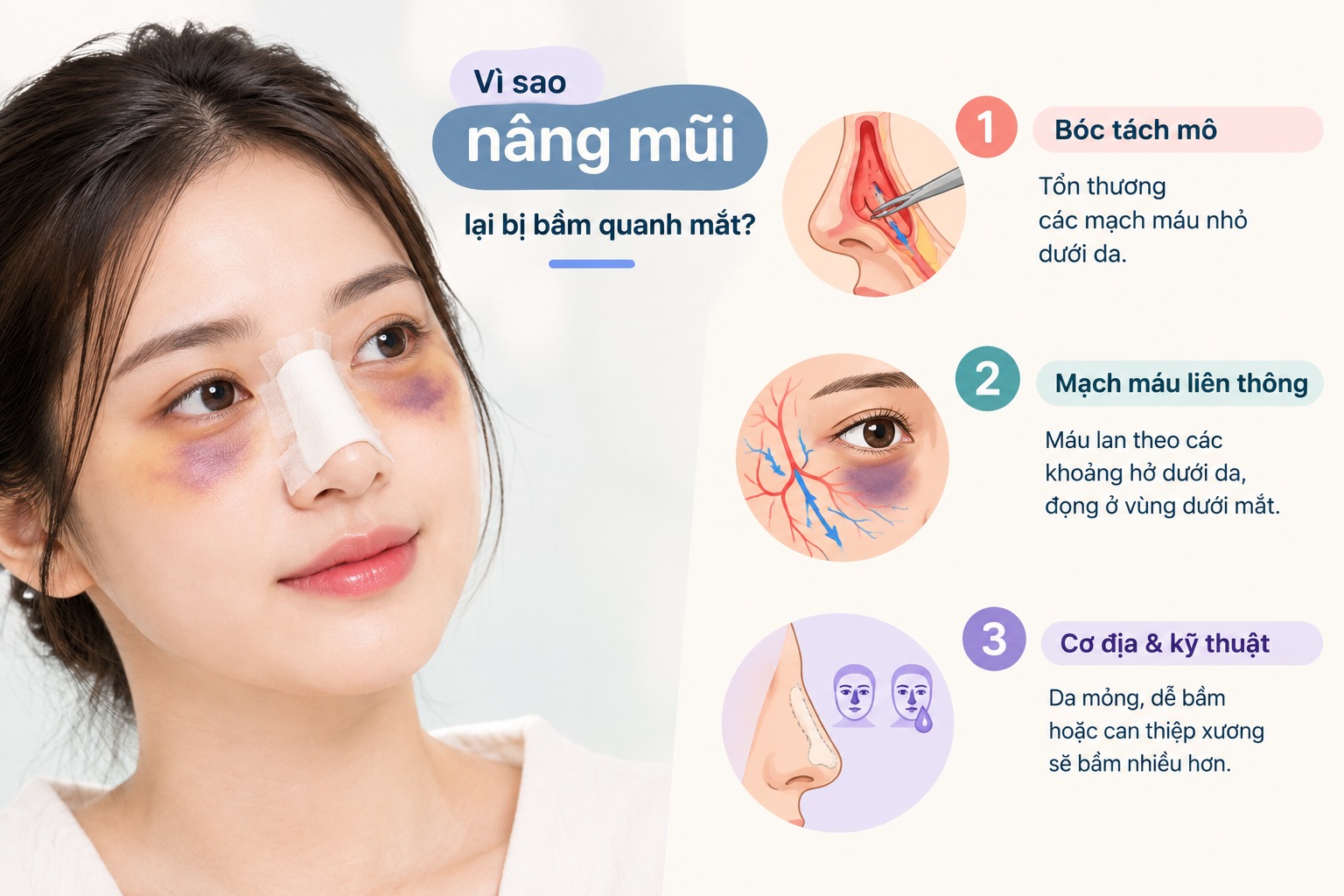
Bruising around the eyes following rhinoplasty is a completely normal physiological response, occurring for the following reasons:
- Dissection of the nasal cavity: The process of separating tissues and the periosteum (membrane covering the bone) to insert cartilage causes damage to tiny blood vessels beneath the skin.
- Interconnected facial blood vessels: Blood leaking from damaged capillaries travels through the subcutaneous spaces and accumulates in the area where the skin is thinnest—the under-eye region.
- Individual constitution and surgical technique: Individuals with thinner skin or a predisposition to bruising, as well as those undergoing procedures involving bone manipulation (such as reducing a nasal hump or narrowing the nasal alae), are likely to experience more extensive bruising.
When is bruising around the eyes after a rhinoplasty considered an abnormal sign?
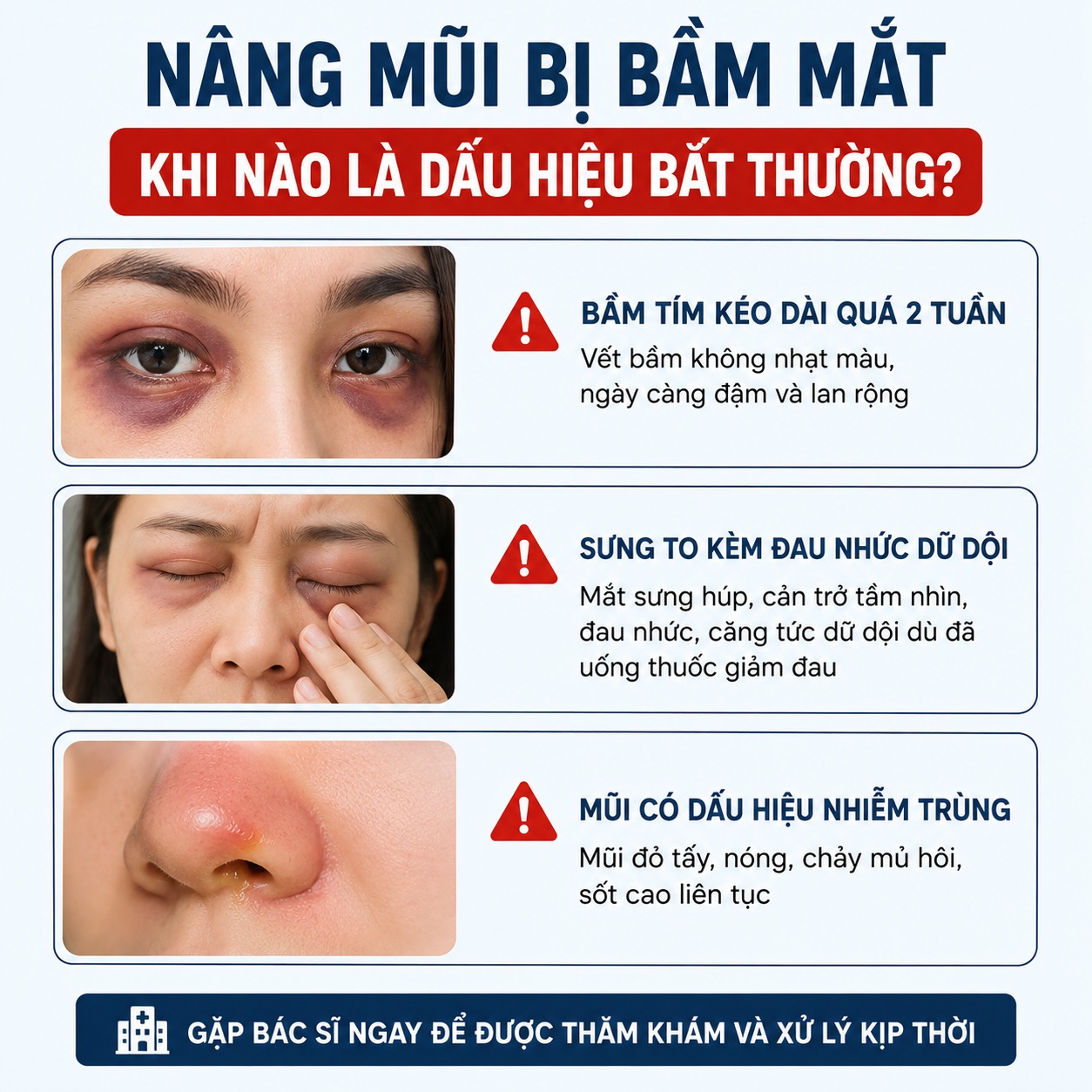
Although a black eye is a common occurrence, you should seek immediate medical attention if you notice any of the following warning signs around the eye or nose:
- Bruising that persists for more than 2 weeks: The bruise shows no signs of fading or turning yellow; instead, it becomes darker and spreads further.
- Severe swelling accompanied by intense pain: The eye is so swollen that it obstructs your vision, accompanied by severe pain or a feeling of intense tightness, even after taking prescribed painkillers.
- Signs of infection in the nose: The nasal area appears red and feels hot to the touch, there is a discharge of foul-smelling pus, or you develop a persistent high fever. These may be indicators of a serious accumulation of clotted blood (hematoma) or a post-operative infection.
Choosing a skilled surgeon is the decisive factor in minimizing swelling and bruising, as well as avoiding the risk of complications. At Dr. Xuan Quan Aesthetic Clinic, Dr. Xuan Quan employs precise microsurgical dissection techniques that limit invasiveness and prevent damage to small blood vessels. With a medically standardized, sterile surgical process and attentive, ongoing post-operative care, your new nose will settle quickly, look naturally beautiful, and ensure complete safety.

Tips for fading bruises around the eyes at home
To make bruises around your eyes vanish rapidly, you can follow this simple and effective care routine:
Apply an ice pack (first 48 hours)
Wrap the cold pack in a soft cloth or towel and apply it gently around the eye area (taking care to avoid direct contact with the surgical incision on the nose). The cold temperature helps constrict blood vessels, reduce swelling, and limit the spread of bruising.
Warm compress (From day 3 onwards)
Once the blood vessels have stabilized, switch to applying warmth using a clean towel or a warm compress. The warmth stimulates blood circulation, helping the body absorb and break down bruises more quickly.
Sleeping with your head elevated
For the first 5 days, maintain a supine (lying on your back) position and keep your head elevated above your chest while sleeping. This facilitates the downward flow of fluids and blood, reducing the pressure buildup that causes swelling and bruising in the facial area.
Eat plenty of pineapple and take Vitamin C supplements
Incorporate pineapple into your daily diet, as it is rich in bromelain—an enzyme with excellent anti-inflammatory and thrombolytic (blood-clot-dissolving) properties.
Additionally, consume orange or mandarin juice to strengthen the walls of your blood vessels.

Frequently asked questions about bruising around the eyes after rhinoplasty
Below are brief answers from Dr. Xuan Quan to some of the most common questions:
Does bruising around the eyes after rhinoplasty affect vision?
No. The bruising is simply an accumulation of blood within the skin and the loose soft tissue around the eyes; it does not penetrate or cause any damage to the internal structures of the eyeball.
Should I apply anti-bruising creams (such as those containing Hirudoid or Heparin) to the eye area?
You may, but only on the bruised areas around the eyes, and you must wait until at least 48 hours have passed since the surgery. Be extremely careful to ensure the cream does not get into your eyes or come into contact with the surgical incision on your nose.
Does a bruise turning yellow indicate dangerous pus formation?
No; in fact, this is a very positive sign. The yellow color indicates that the body is breaking down and reabsorbing the pooled red blood cells—a sign that the bruising is about to disappear completely.
The information above provides a detailed explanation of bruising following rhinoplasty, along with tips to help bruises fade more quickly at home. If you wish to achieve a refined, natural-looking nose without worrying about swelling or bruising, please contact Dr. Xuan Quan Aesthetic Clinic today for a personal consultation!