
 Tiếng Việt

A crooked nose not only disrupts facial symmetry and undermines self-confidence but can also lead to a deviated septum, nasal congestion, snoring, and chronic sinusitis. Identifying the specific type of deviation and its root cause is essential for finding an effective, long-term solution. In this article, Dr Xuan Quan Clinic provides expert insights and safe, professional approaches to correcting a crooked nose.
What is a crooked nasal bridge? Common types of crooked nasal bridges
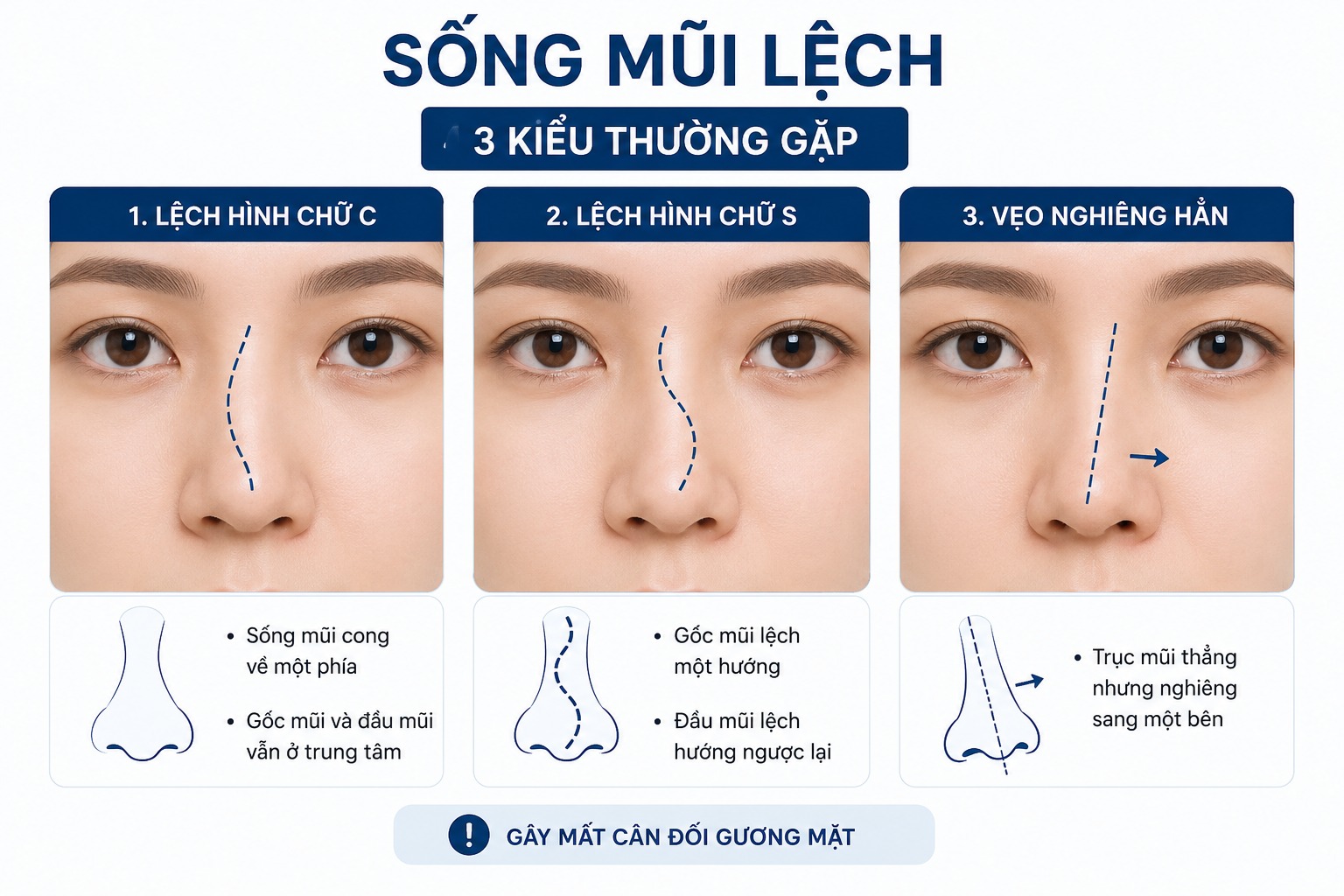
A deviated nasal bridge is a condition in which the bone or septal cartilage structure of the nose is displaced or crooked, failing to align with the central axis of the face. This typically manifests in one of the following three common forms:
- C-shaped deviation: The entire nasal bridge curves toward one side (left or right), while the nasal root and the nasal tip remain relatively centered.
- S-shaped deviation (complex deviation): The nasal bridge follows a wavy, S-like curve—often with the nasal root leaning in one direction and the nasal tip in the opposite—resulting in significant facial asymmetry.
- Lateral deviation (tilting): The axis of the nasal bridge remains relatively straight, but the entire structure tilts toward one side (left or right), often causing one nostril to appear more upturned or collapsed than the other.
The main causes of a deviated nasal bridge
A crooked nasal bridge does not occur in isolation; rather, it is typically the result of various factors—ranging from inherent anatomical development to external forces:
- Congenital or genetic factors: Uneven development of the nasal bone structure and the septal cartilage during fetal growth can result in a nasal bridge that is crooked or slightly curved from birth.
- Trauma or accidents: Strong impacts—such as those sustained during sports, falls, or traffic accidents—can fracture the nasal bones or cause a deviated septum, shifting the nasal bridge out of its original position.
- Failed cosmetic surgery: This may stem from imprecise cartilage placement, a pocket that is too large (allowing the implant to shift), or physical impact during the recovery period before the cartilage has firmly bonded to the bone.
- Improper lifestyle habits: Frequently sleeping on one side or resting one’s hand against the nose for extended periods—particularly in children during their developmental stages—can gradually cause the nasal bridge to become deformed over time.

Does a deviated nasal bridge affect breathing? Is it dangerous?
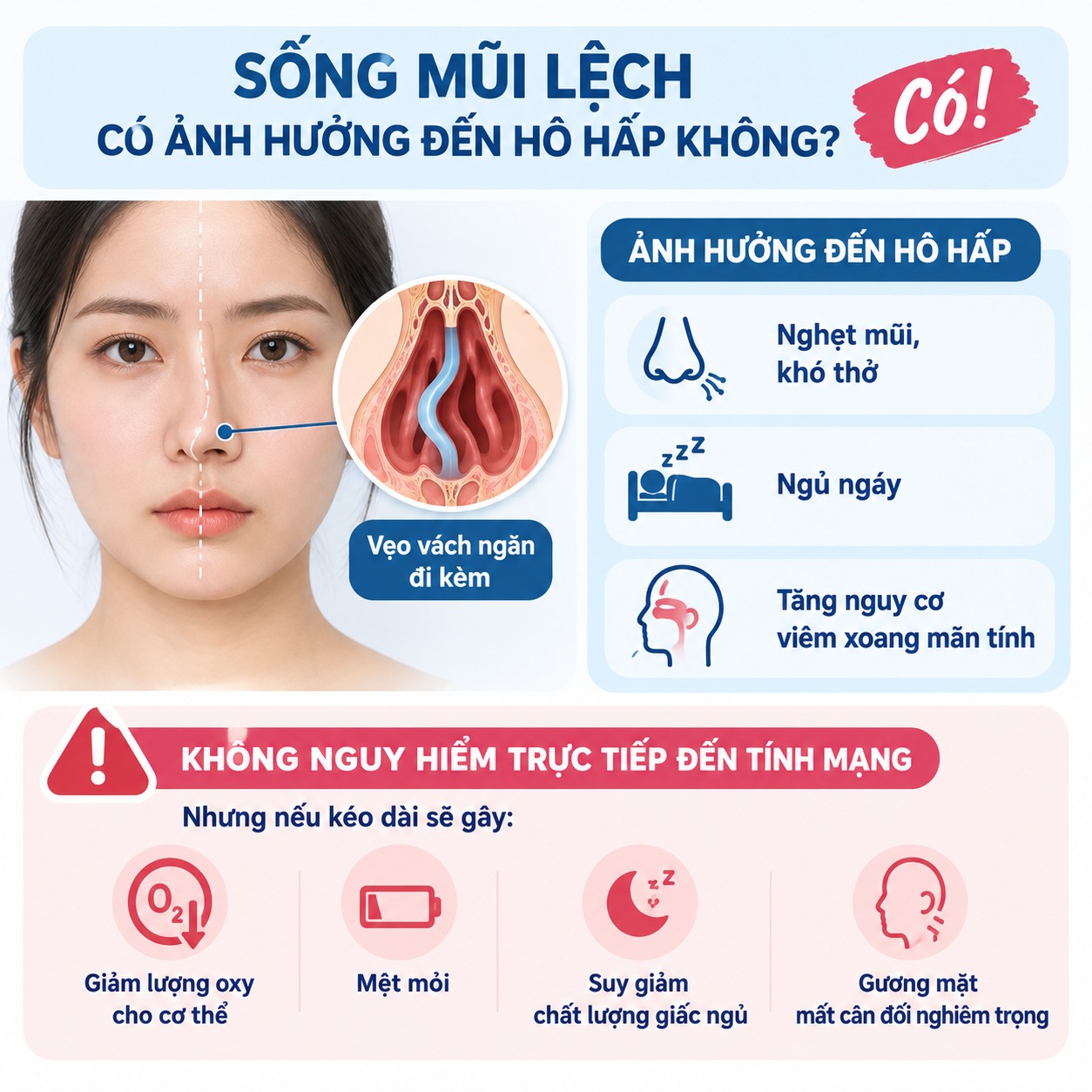
Yes. A crooked nasal bridge is often accompanied by a deviated septum, which narrows the airway and leads to nasal congestion, difficulty breathing, snoring, and an increased risk of chronic sinusitis.
While this condition does not pose an immediate, life-threatening danger, it can—if left unaddressed—reduce the amount of oxygen supplied to the body, resulting in fatigue, poor sleep quality, and significant facial asymmetry.
When is it necessary to correct a crooked nose?
You should seek intervention to correct a crooked nasal bridge as soon as possible if you encounter any of the following situations:
- A visibly crooked nose that affects aesthetics: The nasal axis is clearly misaligned, causing facial asymmetry and significantly undermining your self-confidence in daily interactions.
- Respiratory symptoms: A crooked nasal bridge or deviated septum leads to issues such as one-sided nasal congestion, difficulty breathing, snoring, a diminished sense of smell, or recurrent sinusitis.
- Following an injury or accident: The nose has sustained a severe impact, resulting in deformity, fractures, or structural cartilage displacement that cannot be resolved through simple manual realignment.
- A failed rhinoplasty: The nose has become distorted due to capsular contracture, or the implant has shifted or slipped to one side—often caused by improper surgical technique or an impact during the recovery period.

Can a crooked nose be corrected?
It is entirely fixable. With the advancements in aesthetic medicine, a crooked nasal bridge—whether caused by congenital factors, trauma, or complications from a previous, unsuccessful surgery—can be effectively corrected, restoring both the aesthetic shape of the nose and its respiratory function.
Depending on the degree of deviation and the individual’s specific condition, a surgeon will recommend one of the three common approaches outlined below:
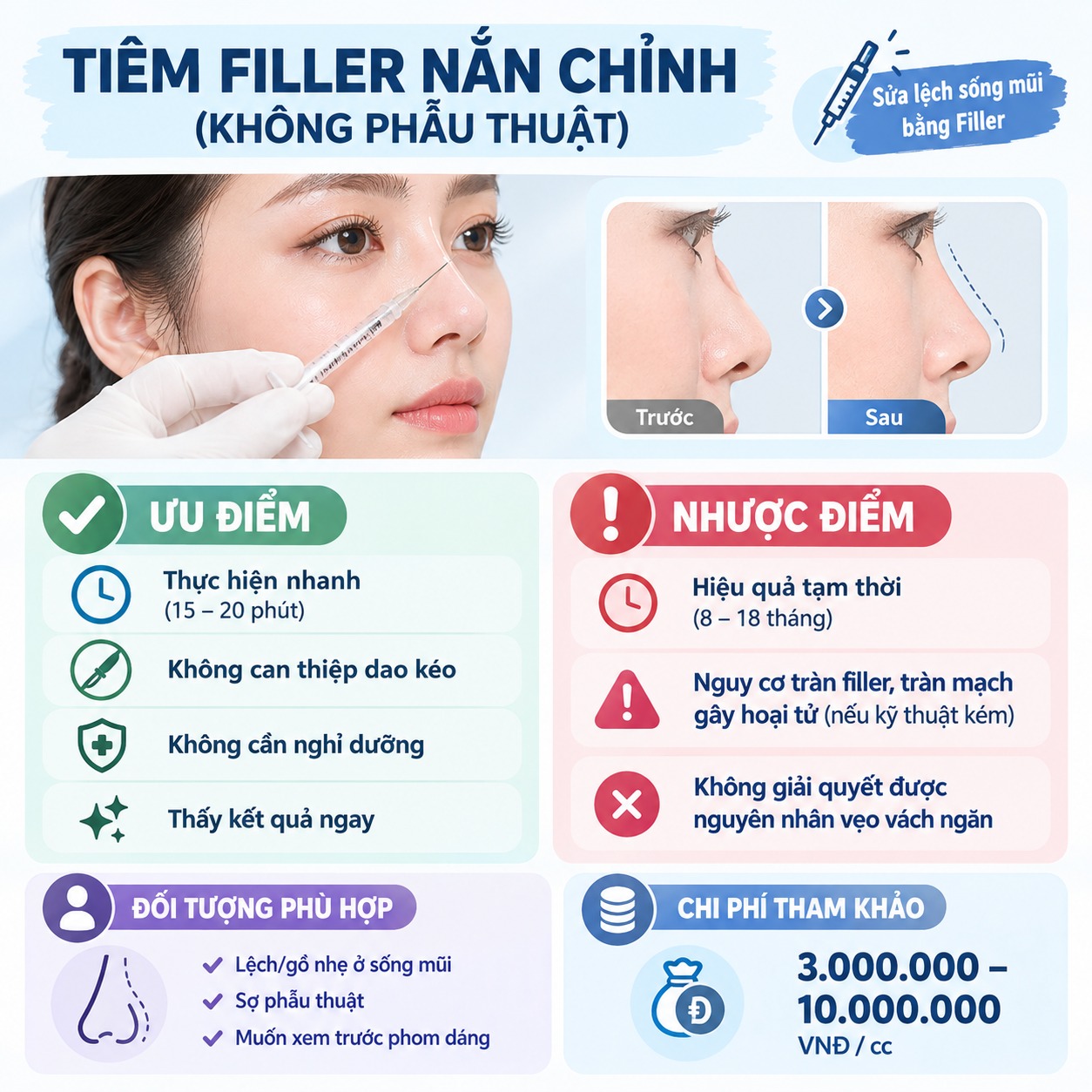
Filler Correction (Non-surgical)
- Pros: Quick procedure (15–20 minutes), non-surgical (no incisions), requires no downtime, and provides immediate results.
- Cons: Effects are only temporary (8–18 months); carries risks such as filler migration or vascular occlusion (which can lead to tissue necrosis) if performed with poor technique; does not address the underlying structural cause of a deviated septum.
- Suitable candidates: Individuals with a mild deviation or a small hump on the nasal bridge who wish to avoid surgery or want to preview a potential new nose shape.
- Estimated cost: 3,000,000 – 10,000,000 VND per cc.
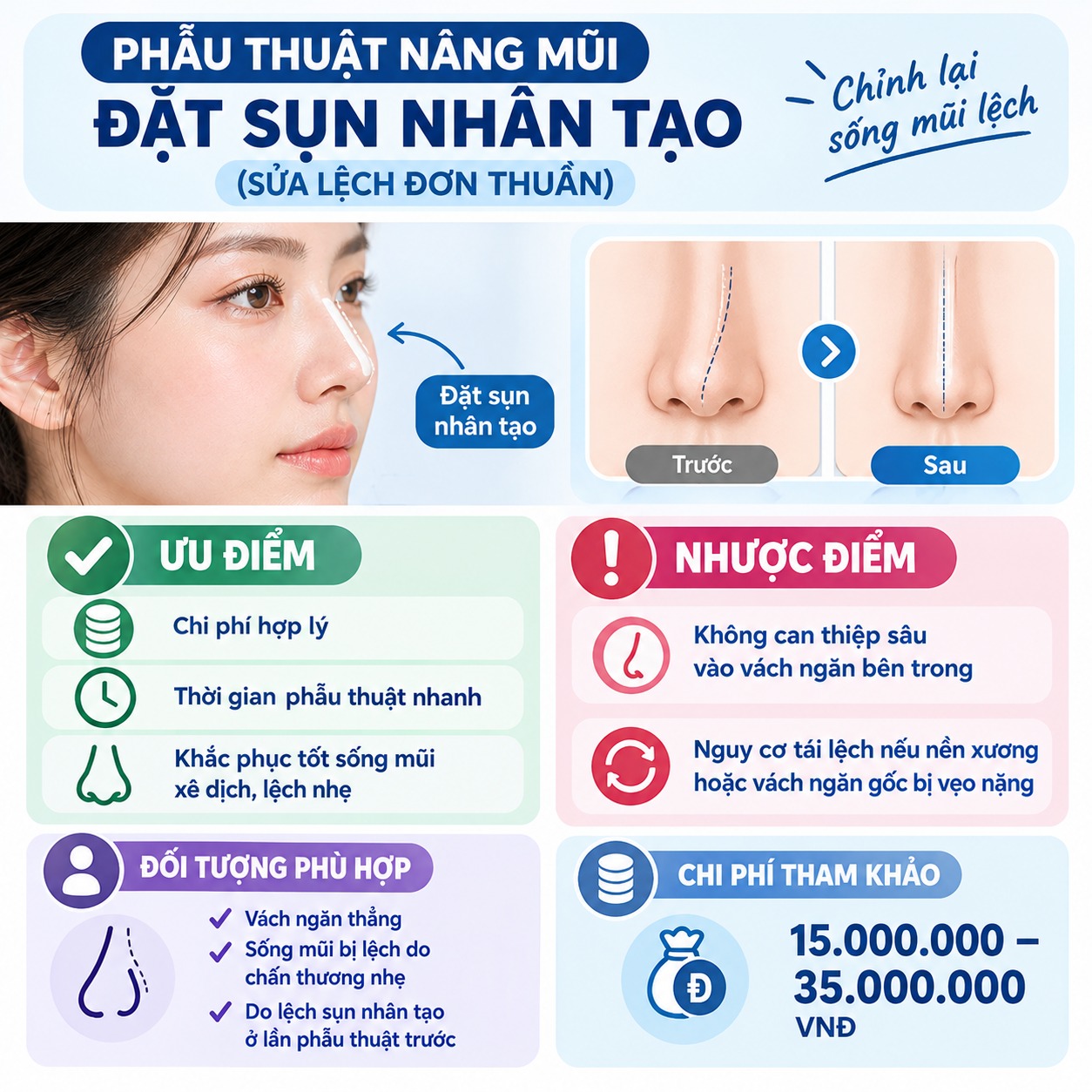
Rhinoplasty with artificial cartilage implant (Correction of simple deviation)
- Advantages: Reasonable cost, quick surgical procedure, and effective for correcting a displaced or slightly crooked nasal bridge caused by the improper placement of a previous implant.
- Disadvantages: Does not involve deep intervention into the internal septal structure; carries a risk of the deviation recurring if the underlying bone base or the original nasal septum is severely crooked.
- Suitable candidates: Individuals with a straight nasal septum who have a crooked nasal bridge resulting from minor trauma or the displacement of an artificial implant from a previous surgery.
- Estimated cost: 15,000,000 – 35,000,000 VND.
Structural Rhinoplasty / Reconstruction
- Advantages: Effectively corrects all degrees of deviation—including congenital septal deviation or complications such as retraction and scarring/adhesions resulting from multiple failed prior surgeries—reconstructs a stable nasal framework, ensures symmetrical nostrils, and provides long-lasting, permanent results.
- Disadvantages: The technique is complex, requiring a highly skilled surgeon with extensive experience; the recovery period is longer compared to conventional methods.
- Suitable candidates: Individuals with severe septal deviation causing breathing difficulties, complex congenital nasal asymmetry, or a damaged/retracted nose resulting from previous unsuccessful surgeries.
- Estimated cost: 40,000,000 – 90,000,000+ VND (depending on whether autologous cartilage or high-end synthetic cartilage is used).

Correcting a Misaligned Nasal Bridge to Achieve the Golden Ratio at Dr. Xuan Quan Aesthetic Clinic
If you are seeking a definitive solution for a crooked or misaligned nose, Dr. Xuan Quan Aesthetic Clinic stands out as a premier, trusted destination, offering several key advantages:
- Expert-led procedures: Dr. Xuan Quan—a graduate of Hanoi Medical University with advanced specialized training in South Korea and Singapore—personally assesses your nasal structure, identifies the root cause (whether related to bone, the primary cartilage, or existing cartilage from previous procedures), and develops a comprehensive treatment plan to address the issue at its source.
- Microsurgical techniques for reduced discomfort: By employing gentle dissection and minimizing invasiveness, the procedure reduces swelling and bruising by up to 80%, accelerating recovery within a sterile operating environment that meets the strict standards of the Ministry of Health.
- Reliable 6-month warranty: We provide a transparent quality guarantee and remain closely engaged with you throughout the post-operative period, ensuring a perfectly straight, balanced nose—crafted according to the “golden ratio”—while safeguarding long-term respiratory health.

Frequently asked questions about a deviated nasal bridge
To help you better understand this condition and find an appropriate solution, Dr. Xuan Quan Aesthetic Clinic has compiled and provided concise answers to the most frequently asked questions below:
Will a crooked nasal bridge straighten out on its own over time?
No. A crooked nasal bridge is caused by a misalignment in the bone or cartilage structure; it cannot straighten itself without medical intervention.
Can manually adjusting the nose at home fix a crooked nasal bridge?
It is ineffective. The force applied by hand is insufficient to shift the rigid nasal bone structure. Furthermore, improper manipulation can damage soft tissue and lead to cartilage inflammation.
Does correcting a crooked nasal bridge affect one’s sense of smell?
No. Rhinoplasty procedures focus on adjusting the bone and cartilage framework to reshape the nose; they do not affect the olfactory nerve cells located deep within the nasal cavity.
The information above provides an overview to help you better understand a crooked nasal bridge and the methods available for a definitive correction. If you would like to determine whether your specific condition stems from the bone structure or the septal cartilage, please schedule an appointment with Dr. Xuan Quan Aesthetic Clinic for a professional examination and consultation regarding the optimal solution!