Tiếng Việt
How long does it take for a mole removal site to heal? Typically, it takes 7 to 14 days for the wound to fully heal and the scab to completely fall off. However, achieving smooth, evenly toned skin at the treatment site requires 4 to 8 weeks of careful aftercare. Dr Xuan Quan Clinic outlines the recovery timeline and provides care instructions to help you avoid unsightly scarring.
Skin recovery timeline after mole removal
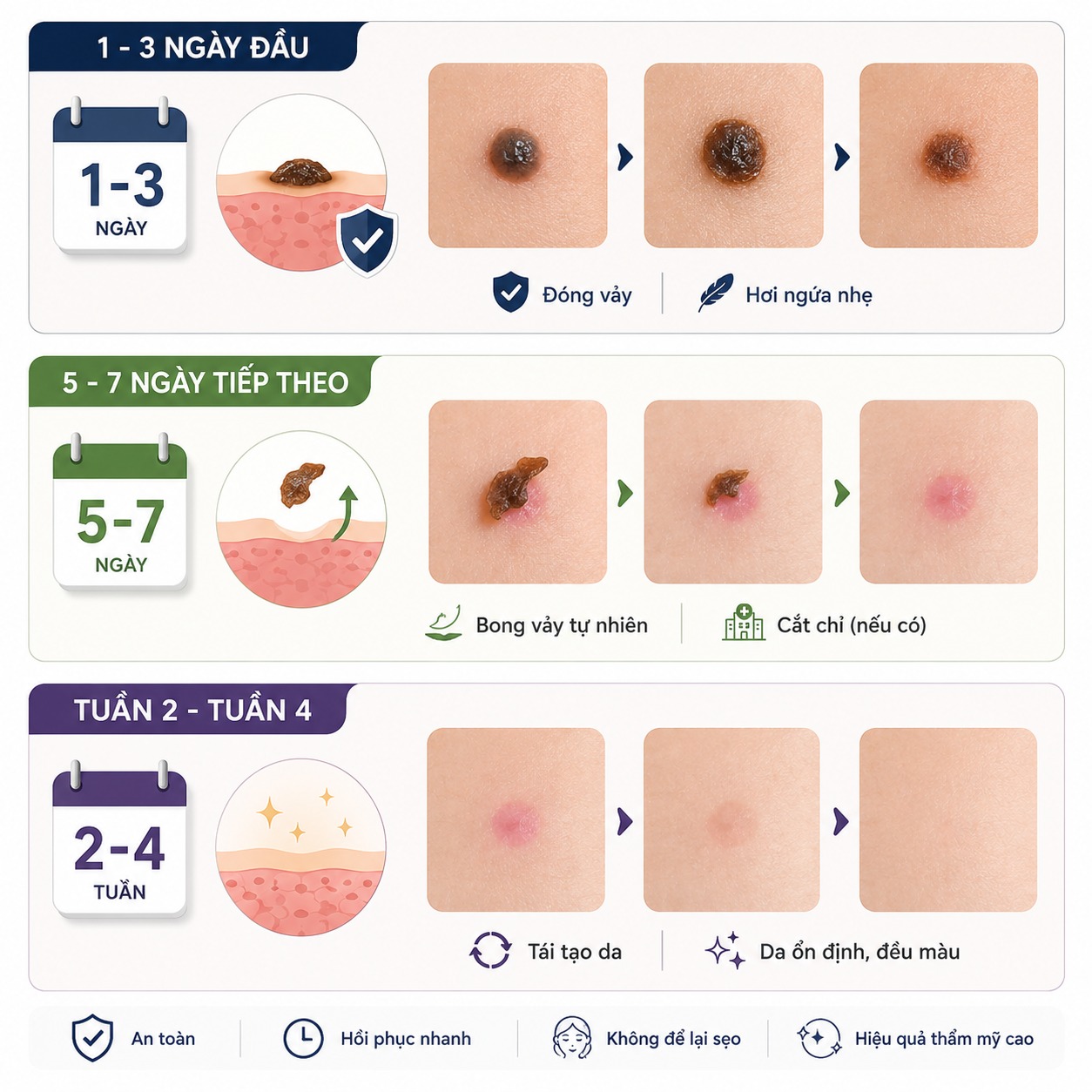
How long does healing take? The skin’s regeneration and healing process following mole removal generally involves three main stages:
- Stage 1 – The first 3 days (Scab formation): The wound begins to close and dry out, forming a thin brown or black scab to protect the new skin regenerating underneath. You may experience mild itching during this stage.
- Stage 2 – The next 5 to 7 days (Scab detachment): The scab dries completely and begins to peel off naturally (in the case of laser removal). For minor surgical excision of larger moles, this is also when you need to return to the clinic for suture removal. The newly exposed skin will appear light pink or slightly red.
- Stage 3 – Weeks 2 to 4 (Skin stabilization): New skin cells proliferate to fill the treated area. The skin tone at the site gradually blends with the surrounding skin, and the wound heals completely, leaving no trace.
Factors Affecting Healing Time After Mole Removal
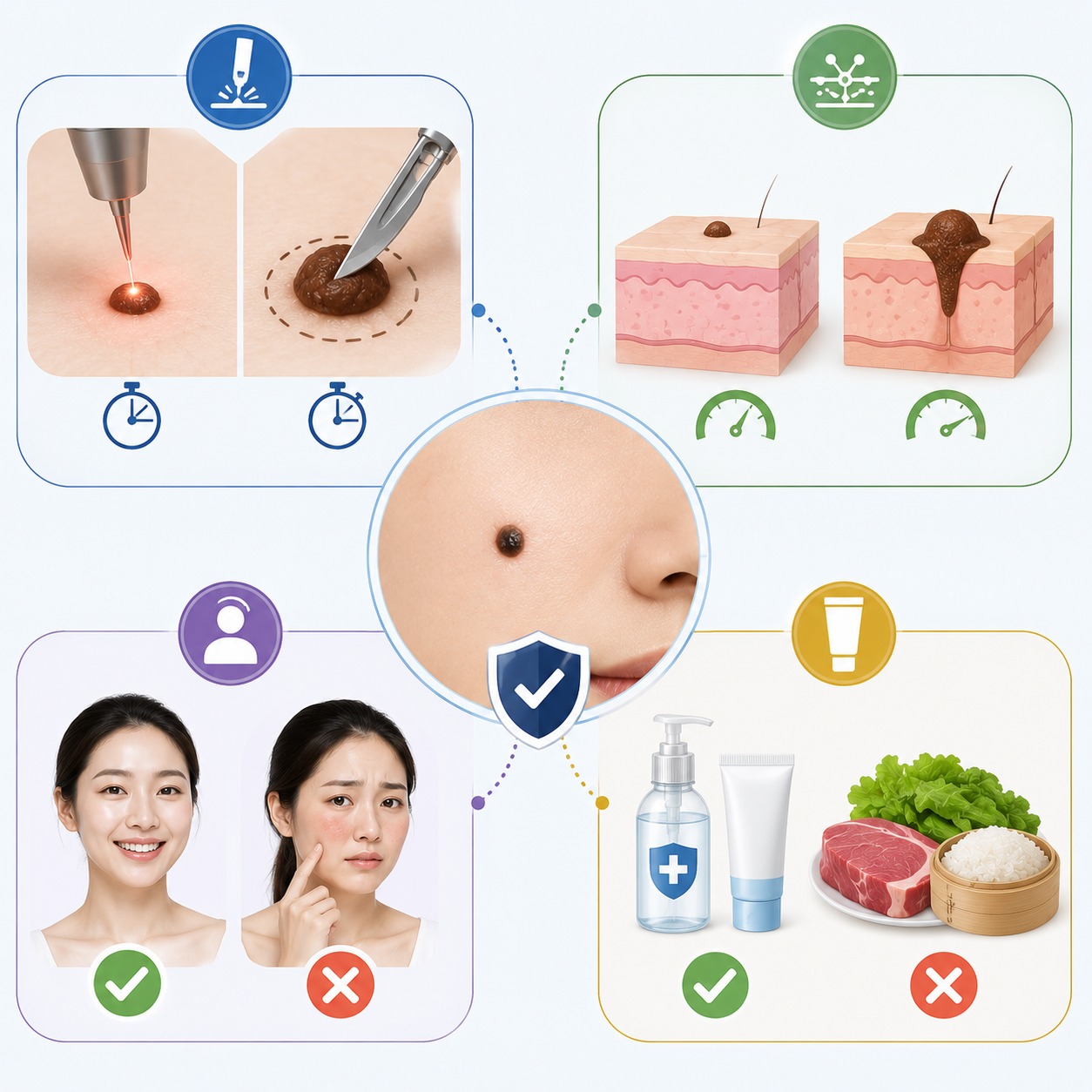
How long does it take to heal after laser mole removal? The speed of skin recovery depends largely on the following key factors:
- Procedure method: Modern laser mole removal takes only 5 – 7 days for the scab to fall off, whereas minor surgery for larger moles requires 7 – 10 days for suture removal and healing.
- Size and depth: Small, superficial moles heal much faster than large moles with deep roots extending into the dermis.
- Individual constitution: Individuals with a healthy constitution and good healing ability experience faster skin regeneration. Conversely, those with sensitive skin often require more time for the wound to stabilize.
- Aftercare routine: Adhering to proper hygiene, applying recovery creams, and avoiding foods that can cause keloids or dark spots (such as beef, water spinach, and glutinous rice) significantly shortens the skin’s healing time.
Wound care to promote rapid scabbing and prevent scarring
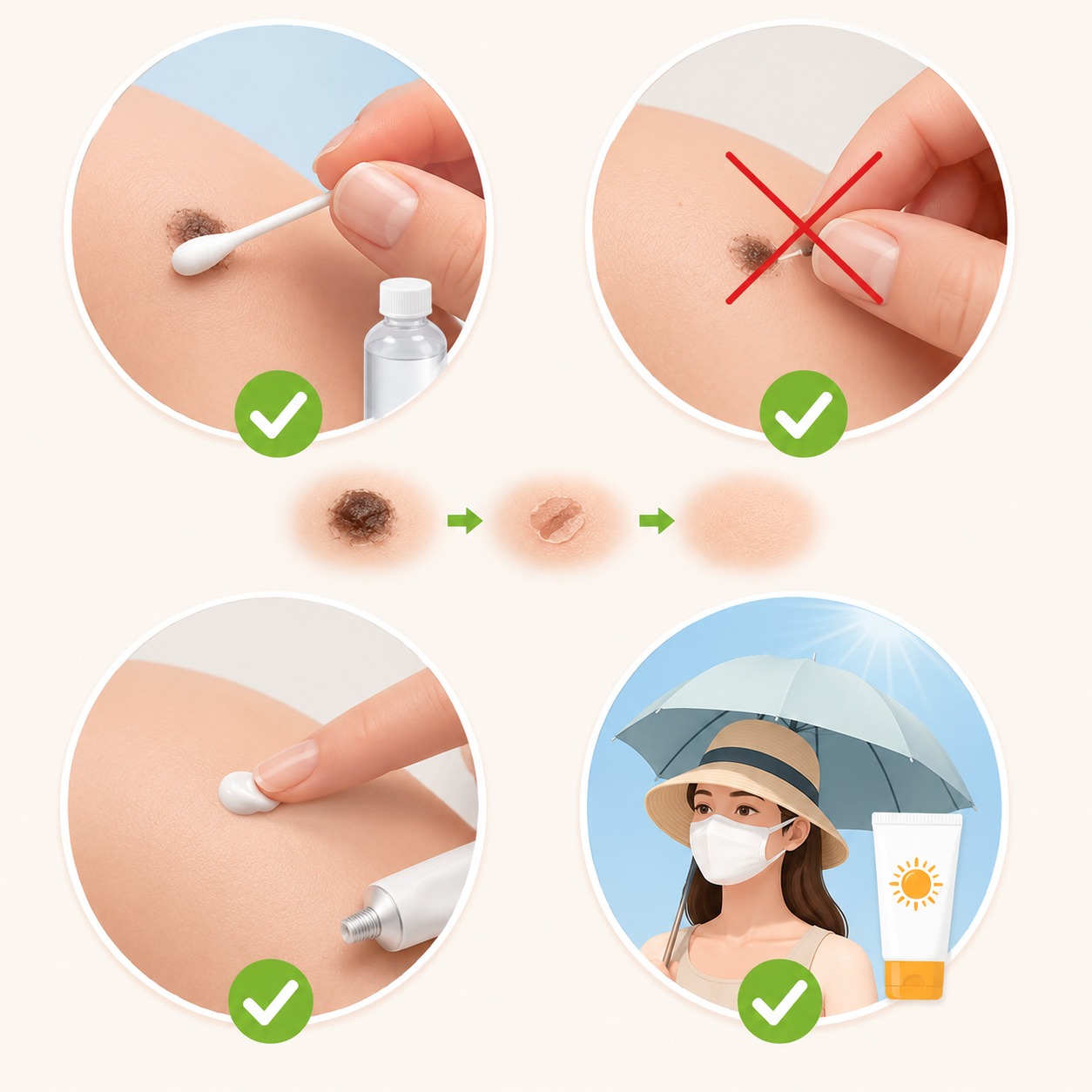
To ensure the skin heals smoothly and maintains an even tone, follow these care guidelines:
- Gentle cleaning: Keep the wound dry and ventilated for the first 24 hours. Afterward, use a cotton swab moistened with normal saline (0.9% NaCl) to gently wipe the area around the treatment site; avoid vigorous rubbing.
- Do not pick at the scab: Allow the scab to dry and fall off naturally. Picking or peeling it off prematurely can damage the delicate new skin underneath, increasing the risk of infection and pitted scarring.
- Apply recovery or scar-treatment cream: Once the scab has completely detached, apply a skin-regenerating or scar-treatment cream as directed by your doctor to stimulate healthy collagen production and help the skin become smooth again.
- Thorough sun protection: New skin following mole removal is highly susceptible to hyperpigmentation upon sun exposure. Protect the area carefully and apply a gentle sunscreen when going outdoors to prevent dark, uneven discoloration.
What foods should you avoid after mole removal to ensure quick healing?
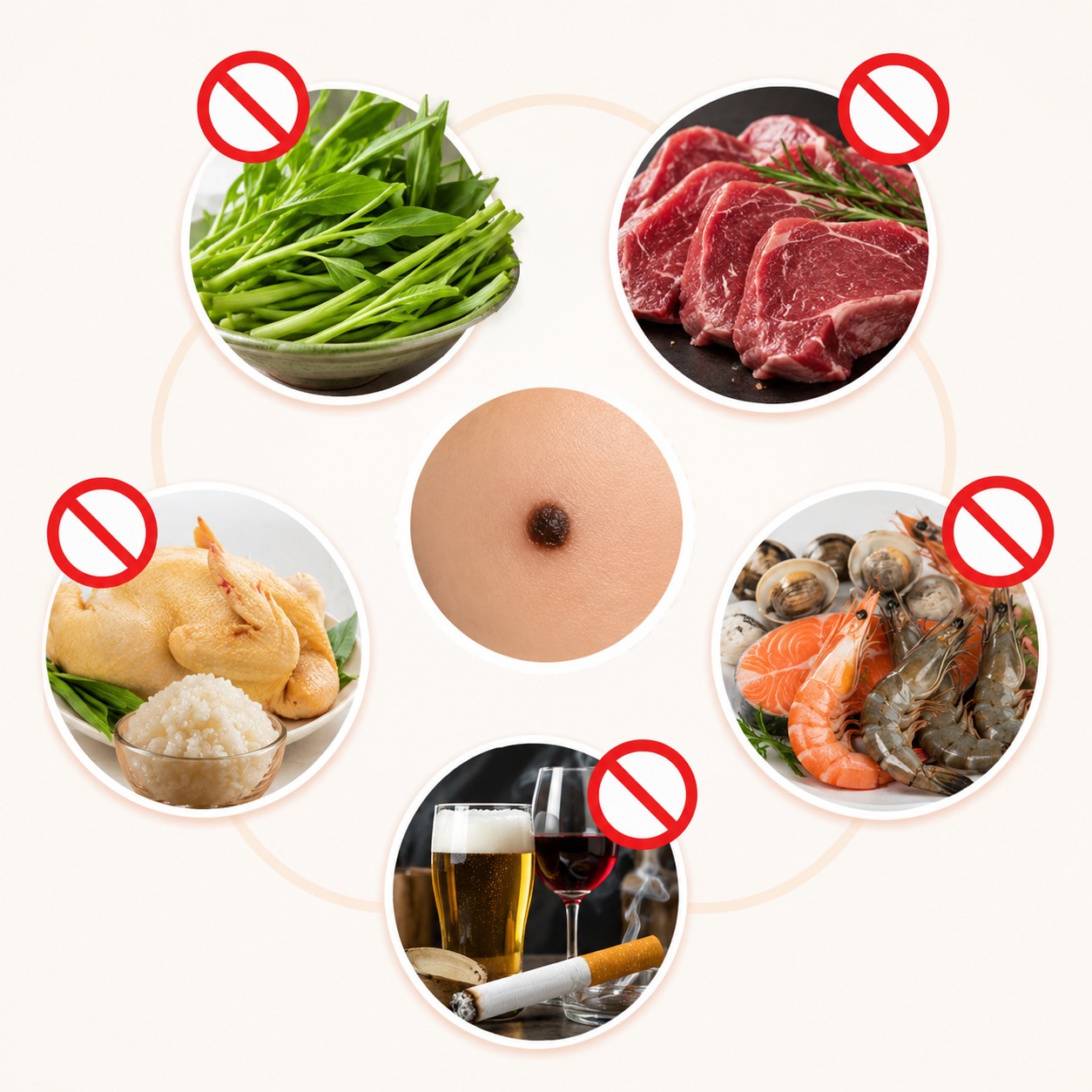
To avoid damaging the newly forming skin and prevent unsightly scarring, you should strictly avoid the following foods for at least the first 1–2 weeks:
- Water spinach: Stimulates excessive collagen production, a leading cause of keloid scars at the removal site.
- Beef: High in protein but prone to causing hyperpigmentation in the new skin, leading to dark, uneven spots after healing.
- Chicken and glutinous rice: These have “heating” properties that can easily cause pus formation, swelling, and itching, while also delaying the natural scabbing and healing process.
- Seafood and “fishy” foods: Can easily cause irritation and intense itching as the skin heals, tempting you to scratch and potentially damage the wound.
- Stimulants: Alcohol and tobacco reduce the body’s immune response, slowing down wound healing and increasing the risk of infection.
Safe Mole Removal with Rapid Recovery at Dr Xuan Quan Clinic
The entire mole removal procedure is personally performed by Dr. Xuan Quan, a specialist with over a decade of in-depth experience. Utilizing modern microsurgical techniques, the doctor gently and precisely removes the mole down to its root – accurate to the millimeter – to avoid damaging surrounding healthy skin and to facilitate rapid wound closure.
A major advantage of Dr Xuan Quan Clinic is its meticulous post-operative monitoring and guidance. Following the procedure, the doctor personally prescribes medication and provides detailed instructions on hygiene and aftercare tailored specifically to your body’s needs.
The clinic’s medical team also provides ongoing support, offering reminders and continuously monitoring the healing process until the skin is completely smooth and even-toned.

The above information provides detailed expert insights into the healing timeline for mole removal and key stages of skin recovery. If you are looking for a comprehensive solution for mole removal, let Dr Xuan Quan Clinic assist you and recommend the best approach for your skin!