Tiếng Việt
Typically, the timeframe for suture removal after a nose job ranges from 7 to 10 days, depending on the individual’s physiology and healing rate. In this article, Dr Xuan Quan Clinic outlines the detailed recovery schedule and key tips to help your nose settle quickly into a beautiful, natural shape.
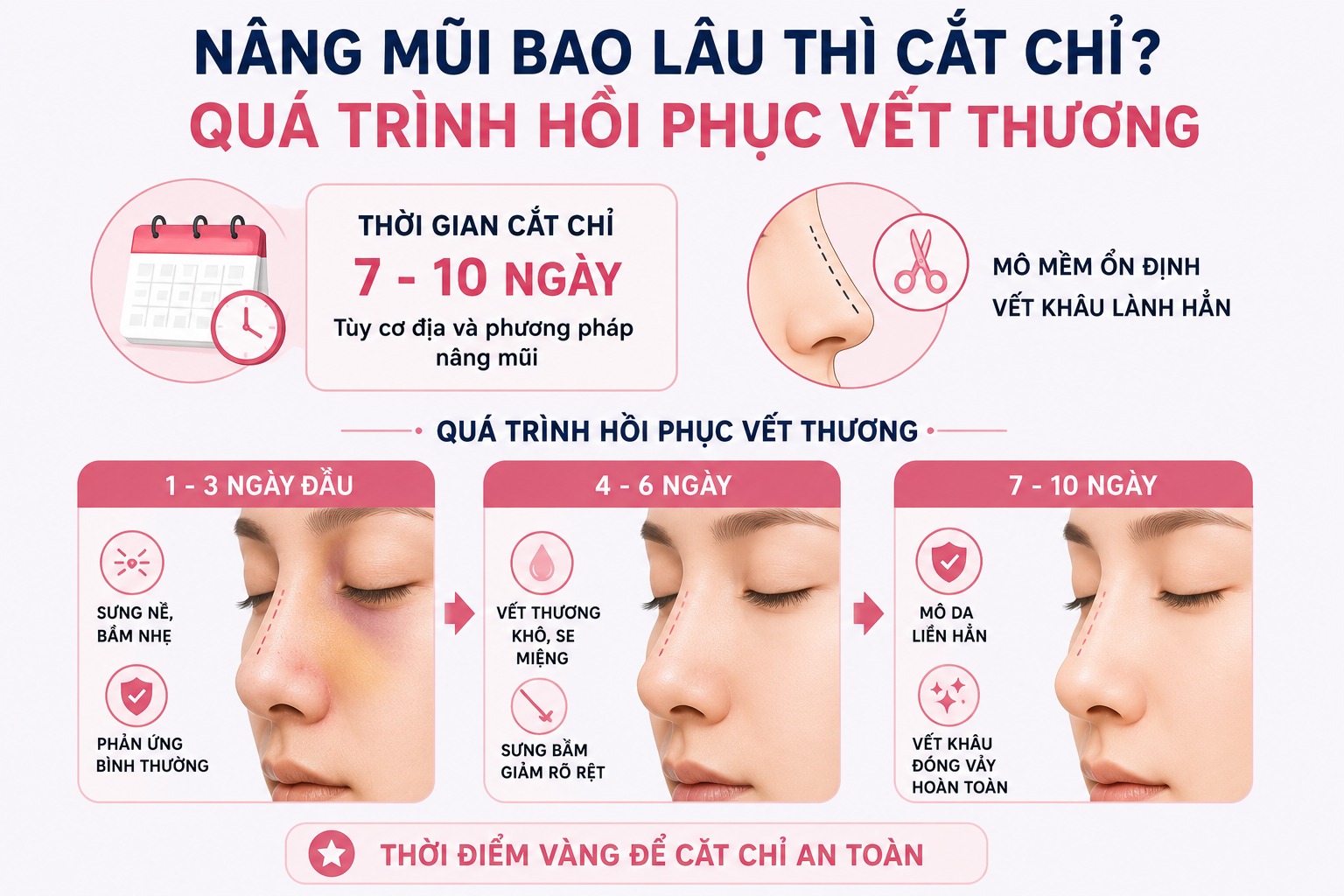
How long after a nose job are stitches removed? The wound healing process
Typically, the timing for suture removal after rhinoplasty ranges from 7 to 10 days, depending on the individual’s physiology and the specific surgical technique used. By this stage, the soft tissues in the nasal area have stabilized, and the incision has fully healed.
The wound recovery process leading up to suture removal unfolds in specific stages, as follows:
- Days 1–3: Swelling and mild bruising occur; this is a completely normal bodily response to localized trauma.
- Days 4–6: The wound begins to dry and close, and swelling and bruising subside significantly.
- Days 7–10: The skin tissue heals completely, and the incision site scabs over fully. This is the optimal time for safe suture removal.
Note: You should strictly avoid removing the stitches too early, as tissue bonding is not yet secure and the wound is highly susceptible to reopening or tearing. Conversely, removing them too late is also ill-advised, as the sutures can become embedded in the skin, causing pain during removal and likely leaving unsightly “railroad-track” scars.
Is it painful to have stitches removed after a nose job?
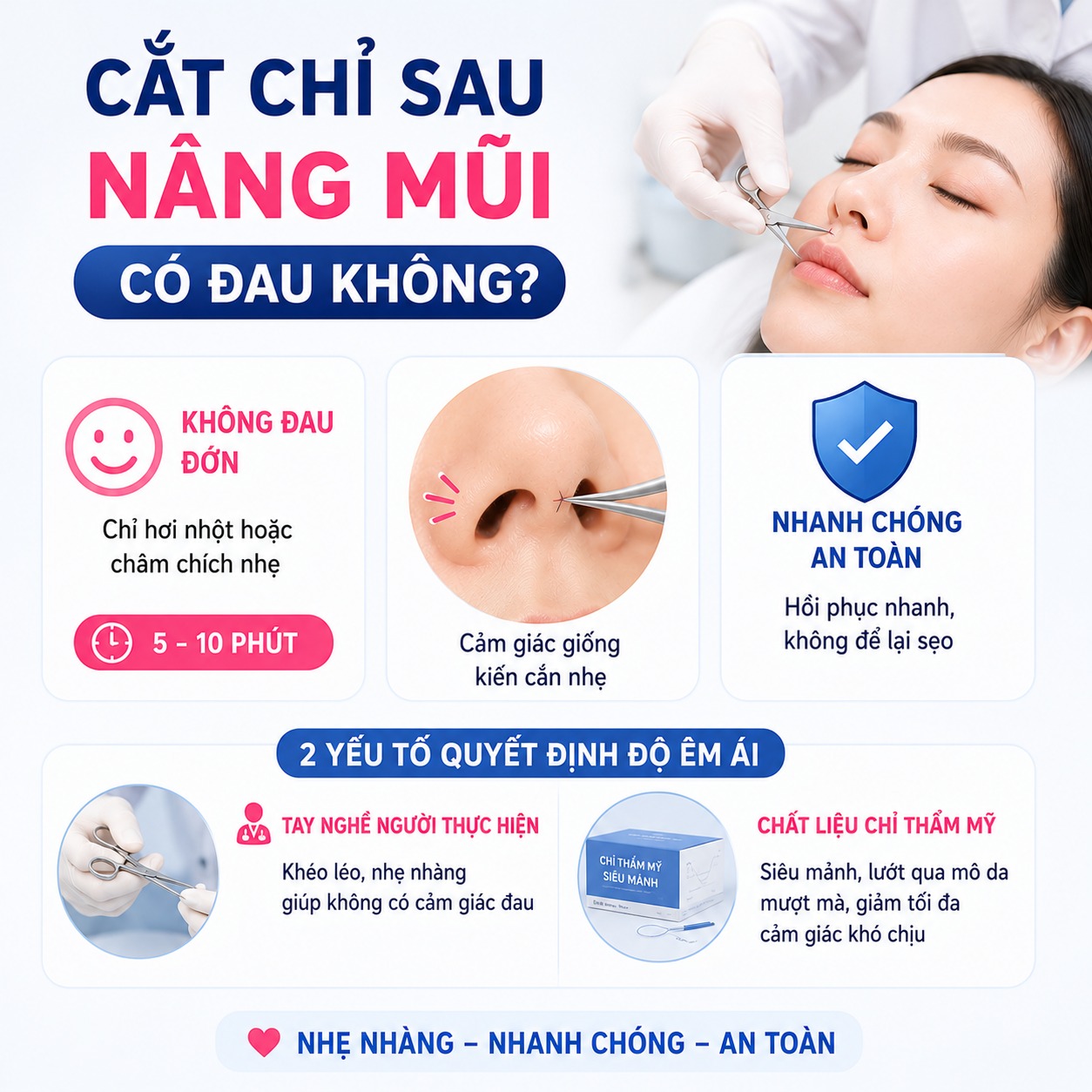
Having stitches removed after a nose job is not nearly as painful as many people fear. In fact, the process is very quick, taking only about 5 to 10 minutes.
The actual sensation is merely a slight tickle or a mild stinging feeling—like an ant bite—as the nurse maneuvers the scissors and pulls the thread out. The comfort level of the procedure depends largely on two factors:
- The skill of the practitioner: A nurse’s dexterity and gentle touch ensure a pain-free experience.
- The type of suture material: Using specialized, ultra-fine cosmetic sutures allows the thread to glide smoothly through the tissue, minimizing discomfort during removal.
When should you contact the doctor before the scheduled suture removal?
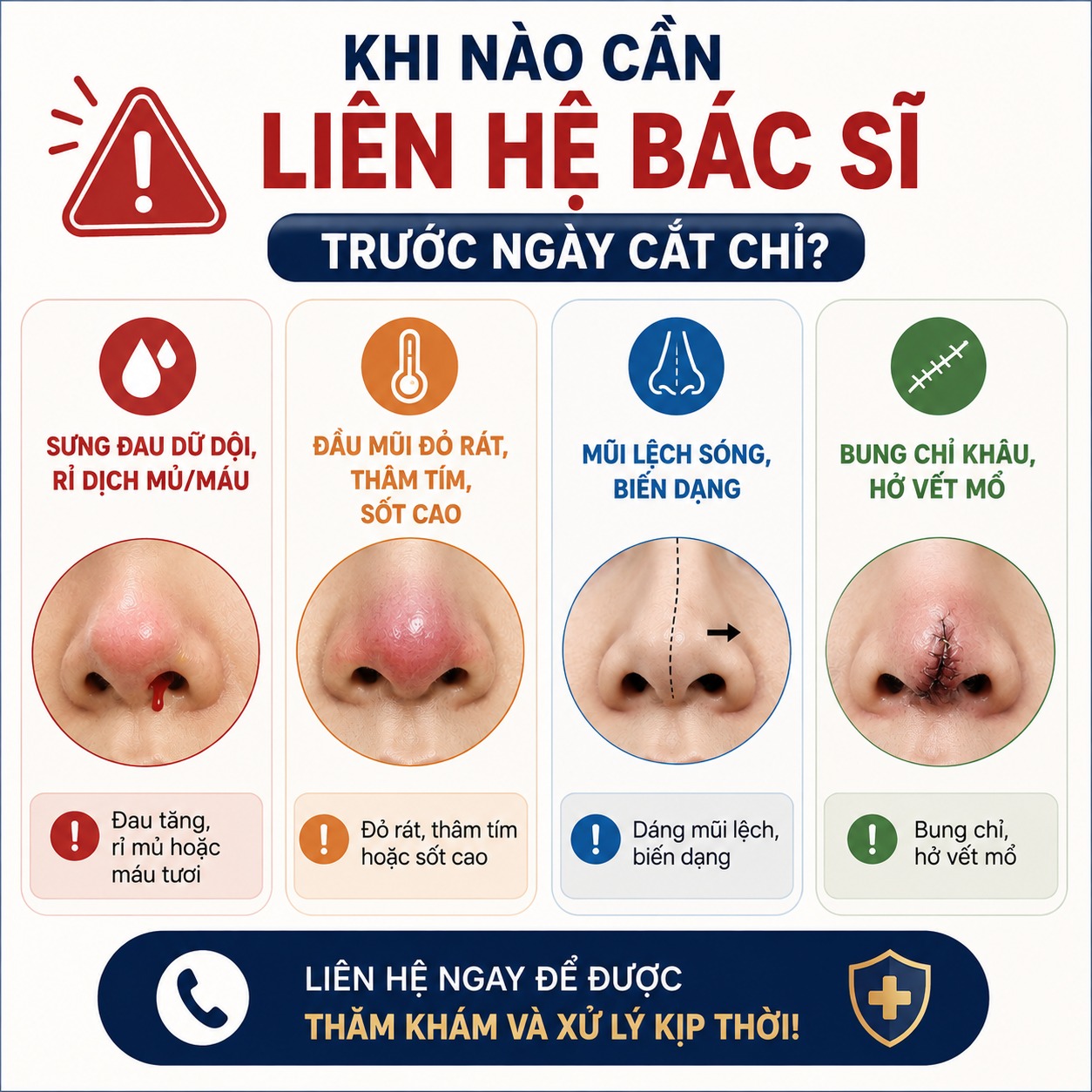
Even if you have a scheduled follow-up appointment, you should contact your doctor immediately for prompt attention if you experience any of the following warning signs:
- Severe pain and swelling, or oozing of pus or fresh blood: Progressive nasal pain, continuous bleeding, or the discharge of foul-smelling fluid.
- Redness, burning, bruising, or high fever: The skin at the nasal tip turns dark or purplish and appears abnormally tight or shiny—signs indicating a potential infection.
- Nasal misalignment or deformity: The nose shifts noticeably to one side due to accidental impact during daily activities.
- Broken sutures or wound opening: A stitch snaps or comes loose, exposing the wound; medical intervention is required to prevent infection.
Important notes after suture removal to ensure the nose takes on a beautiful shape
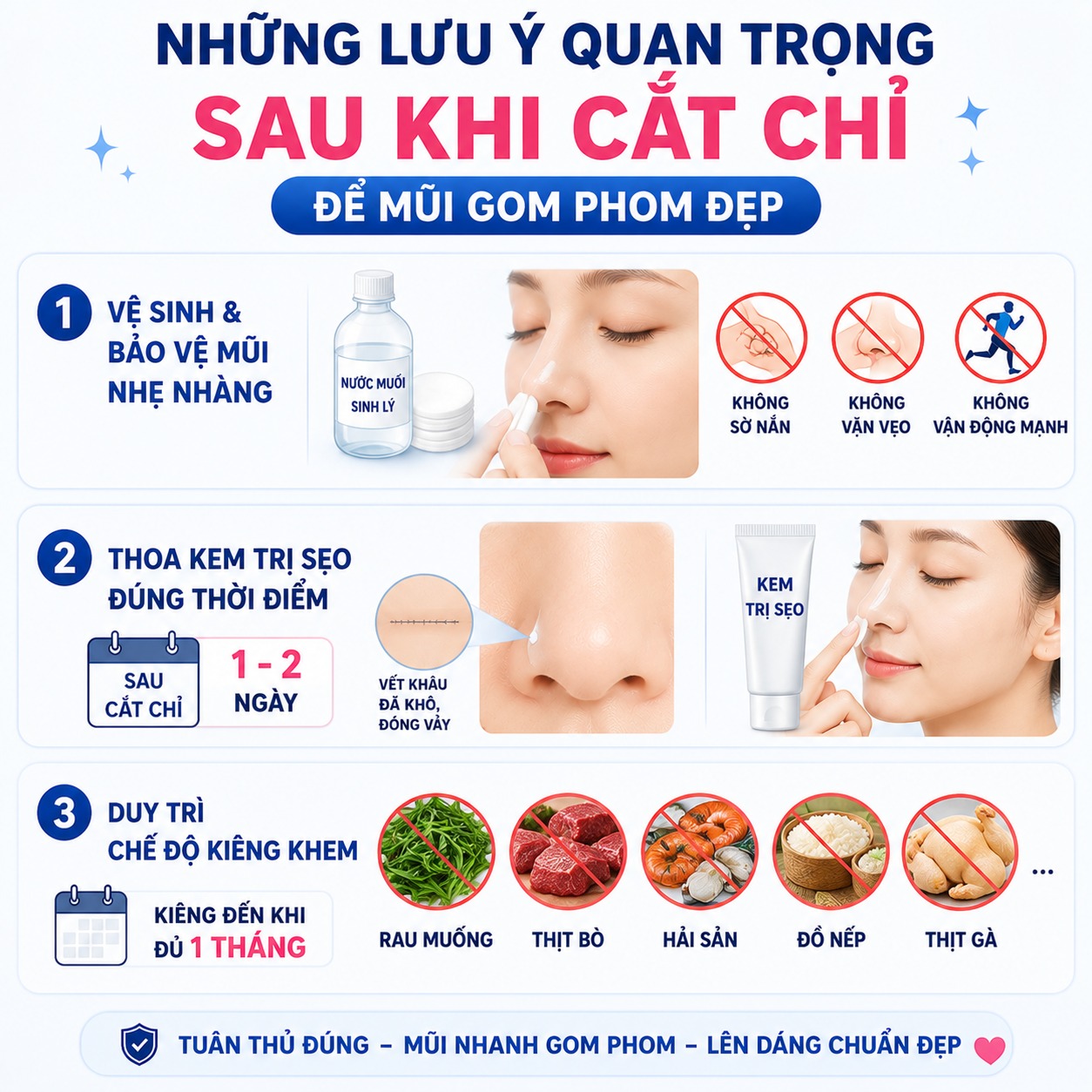
To ensure your nose quickly settles into its ideal shape, please follow these guidelines:
- Clean and protect the nose gently: Continue to gently clean the nasal area using physiological saline. Strictly avoid touching, rubbing, scratching, or twisting the nose, and refrain from strenuous sports to prevent the shape from shifting.
- Apply scar cream at the right time: One to two days after suture removal—once the incision has completely dried and scabbed over—begin applying scar cream as directed by your doctor to help fade discoloration and promote smooth healing.
- Maintain dietary restrictions: Continue to avoid foods known to cause keloids, dark scars, or itching—such as water spinach, beef, seafood, glutinous rice, and chicken—until the one-month mark to ensure optimal healing and safety.
The above information provides a detailed answer regarding the timing for suture removal after rhinoplasty, along with the recovery timeline and medically approved care instructions to ensure the nose sets properly and heals without scarring.
If you have any further questions about the rhinoplasty procedure or wish to schedule an appointment for a follow-up and safe suture removal with a specialist, please contact Dr. Xuan Quan Aesthetic Clinic immediately for timely assistance and consultation from our team of doctors.