
 Tiếng Việt

Is it concerning to experience headaches after a rhinoplasty? The answer is that this is a completely normal occurrence and no cause for alarm, provided it only lasts for the first 1–7 days following surgery. However, if the headaches persist, become severe, or are accompanied by other unusual symptoms, it may be a warning sign of a post-operative complication that requires prompt attention. In the following article, Dr Xuan Quan Clinic will provide detailed insights and safe solutions to help you navigate the recovery period with peace of mind.
Is it concerning to experience headaches after a nose job? When is this considered normal?
Following rhinoplasty, experiencing headaches or a feeling of tightness in the temple area is a normal physiological response and is nothing to be concerned about, provided it occurs only within the first 1 to 7 days.
You can rest assured if the discomfort falls into any of the following categories:
- Elimination of anesthesia: As the effects of the anesthesia wear off, the body begins the process of eliminating it, which can lead to headaches, dizziness, or mild nausea during the first 24 to 48 hours.
- Natural swelling: Post-operative swelling increases pressure on surrounding tissues, stimulating sensory nerves and transmitting pain signals to the head and eye socket areas.
- Use of a nasal splint: Wearing a splint to maintain the shape of the nose can create a sense of tightness or heaviness in the facial area, which may indirectly cause mild headaches. This sensation will disappear completely once the splint is removed (typically after 7 days).

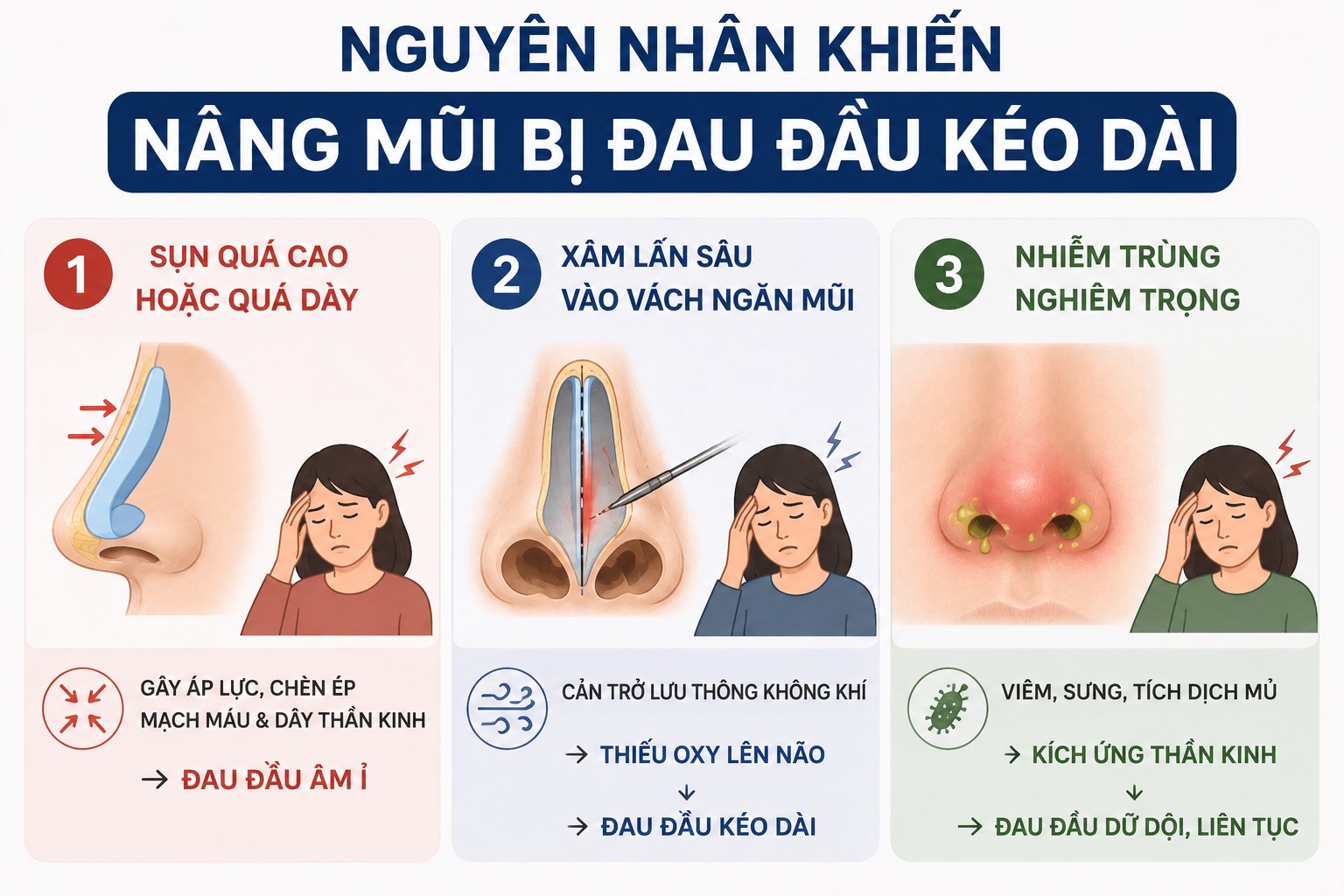
Causes of persistent headaches following rhinoplasty
If a headache does not subside after the first week and instead tends to persist, the cause is often linked to technical issues or the following postoperative complications:
- Use of an implant that is too high or too thick: Inserting an implant that is disproportionately large for the actual nasal structure creates significant pressure, compressing blood vessels and nerves in the facial area, which leads to a dull, lingering headache.
- Deep encroachment into the nasal septum: Inaccurate surgical dissection can damage, misalign, or compress the nasal septum, obstructing airflow. This resulting lack of oxygen reaching the brain is a primary cause of persistent headaches.
- Signs of a serious infection: Bacterial invasion can cause inflammation, swelling, bruising, and the accumulation of pus in the nasal area. As the infection spreads, it irritates the nervous system, triggering intense and continuous headaches.
Warning signs that require immediate medical attention
You should promptly consult a specialist for an examination and timely intervention if your headache is accompanied by any of the following warning signs of complications:
- Severe, unremitting headache: A headache that occurs continuously, intensifies in severity, and shows no signs of improvement despite the use of prescribed pain medication.
- Swollen, bruised nose with purulent discharge: Swelling in the nasal, ocular, or frontal regions—characterized by warmth to the touch, extensive redness, and the presence of pus or blood (potentially with a foul odor) draining from the surgical site.
- Persistent high fever: Signs of a systemic infection, such as a fever exceeding 38.5°C, accompanied by lethargy, fatigue, or chills.
- Tightness or pain in the eye sockets and blurred vision: Intense pain radiating toward the forehead and eye sockets, creating significant pressure that leads to a decline in visual acuity or blurred vision.

Effective ways to manage and alleviate headaches after rhinoplasty at home
To quickly alleviate headaches and support your body’s recovery during the post-operative period following rhinoplasty, you can follow these simple at-home care measures:
- Take medication exactly as prescribed: Strictly adhere to the schedule for pain relievers and anti-inflammatory drugs as directed by your surgeon. Do not, under any circumstances, purchase or take additional pain medication without consulting a medical professional.
- Apply cold compresses to relieve nerve pressure: During the first 48 hours, apply cold compresses to your forehead, temples, and the area around your nose (ensuring that no water touches the surgical site). The low temperature helps constrict blood vessels, soothe nerves, and effectively reduce headaches.
- Keep your head elevated while sleeping: When resting, use pillows to keep your head positioned higher than your chest (at an angle of approximately 30–45 degrees). This promotes better blood circulation away from the face, preventing blood from pooling in the facial area—which can otherwise cause pressure and discomfort in the nasal region.
- Drink plenty of warm water to aid elimination: Consume 2–2.5 liters of warm water daily to stimulate your circulatory system and help your body efficiently flush out any residual anesthesia or sedative agents.

When should you seek medical attention for a headache following a rhinoplasty?
Mild headaches during the first 1–3 days are a normal reaction to the effects of anesthesia and pressure from swelling. However, you should contact your doctor immediately if you experience severe, persistent pain, a high fever (above 38.5°C), or if bruising and swelling around the forehead and eye sockets spread—especially if accompanied by foul-smelling nasal discharge.
In such cases, Dr. Xuan Quan Aesthetic Clinic offers an emergency assessment protocol. Dr. Xuan Quan—who possesses over 10 years of experience—will personally conduct an examination, perform a nasal endoscopy, and utilize precise microsurgical techniques to relieve pressure. This approach effectively addresses the pain while ensuring the absolute safety of the patient.

Frequently asked questions about headaches after rhinoplasty
Below are brief expert answers to the most common questions regarding headaches following rhinoplasty:
What medication should I take to relieve headaches after rhinoplasty?
You should only take the pain relievers and anti-inflammatory medications prescribed by your surgeon in your post-operative care plan. Never purchase or take strong, over-the-counter painkillers on your own, as they may cause adverse side effects or interfere with the blood-clotting process necessary for healing.
How long do headaches typically last after rhinoplasty?
Generally, headaches resulting from swelling and the lingering effects of anesthesia will gradually subside and disappear completely within 3 to 7 days—typically around the time the nasal splint is removed and the swelling begins to decrease.
Is it dangerous to experience headaches accompanied by nasal congestion after rhinoplasty?
If this occurs during the first week, it is considered completely normal; it is usually caused by swelling of the nasal mucosa, the presence of blood clots, or surgical packing obstructing the airway. However, if this persists into the second week and is accompanied by a mild fever, you should seek a medical evaluation, as it may indicate that the nasal septum is under excessive pressure.
The information above addresses concerns regarding headaches after rhinoplasty, including their causes and effective home-care solutions. If your headaches persist or are accompanied by any unusual symptoms, please contact Dr. Xuan Quan Aesthetic Clinic immediately. Dr. Xuan Quan will examine you, assess the condition of your nose, and provide timely intervention to ensure your complete safety.