
 Tiếng Việt

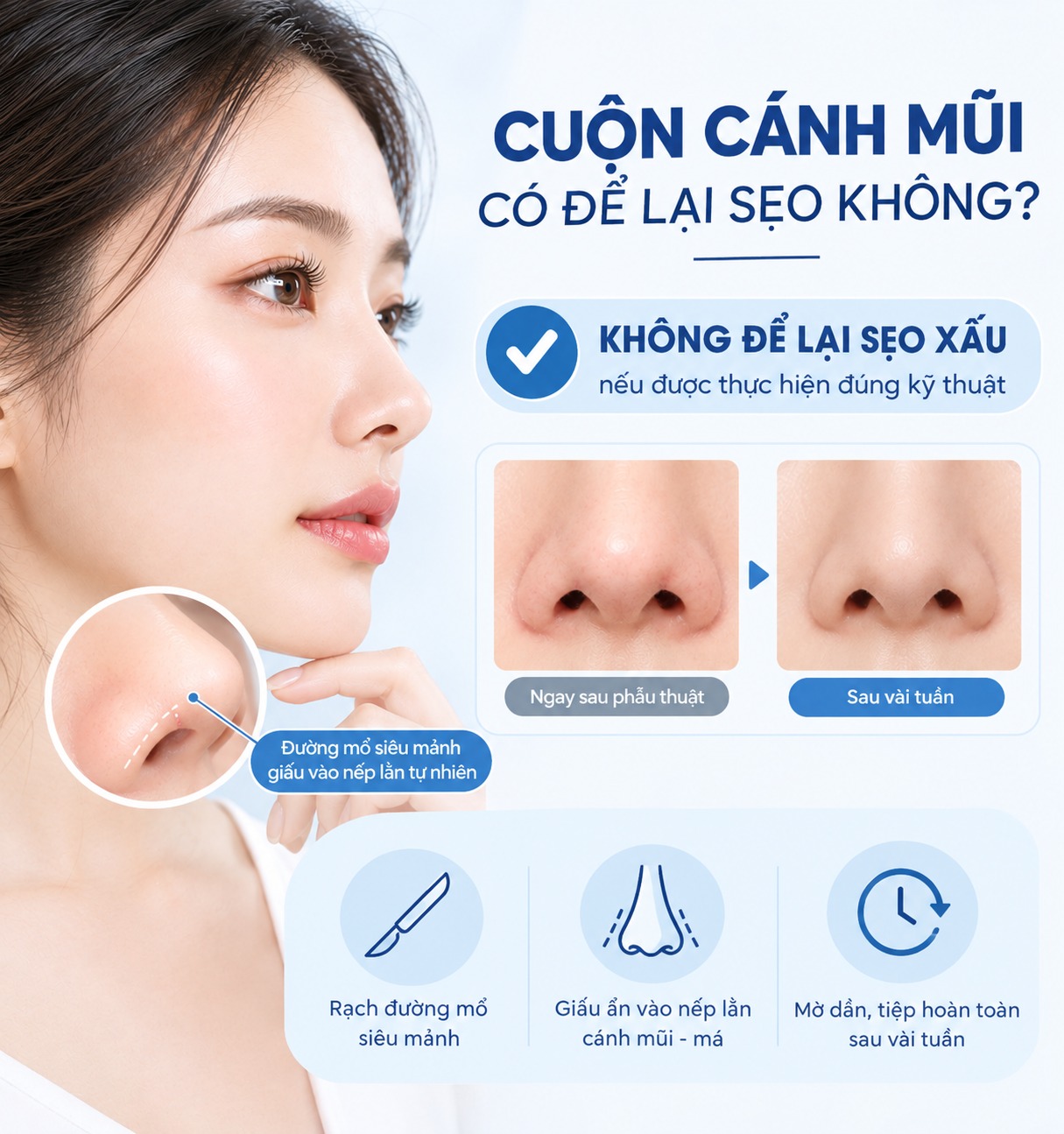
Alar base reduction (nostril narrowing) does not result in visible or unsightly scarring, provided the correct surgical technique is used. As a minor, minimally invasive procedure, the incision is kept thin and skillfully concealed by the surgeon within the natural crease where the nostril meets the cheek. Nevertheless, the final aesthetic outcome depends significantly on the surgeon’s expertise and the quality of post-operative care at home. In this article, Dr Xuan Quan Clinic explores whether alar base reduction leaves scars and shares the secrets to achieving a refined, flawless-looking nose!
Does alar base reduction leave a scar?
When performed with the correct technique, the procedure does not result in unsightly or keloid scarring. As it is a minor, delicate surgery, the surgeon makes an ultra-fine incision, skillfully concealing it within the natural crease between the nostril and the cheek. Depending on the individual’s healing process and the surgeon’s expertise, this incision will gradually fade and blend completely with the surrounding skin tone after a few weeks.
The key factor that determines whether alar base reduction will result in scarring
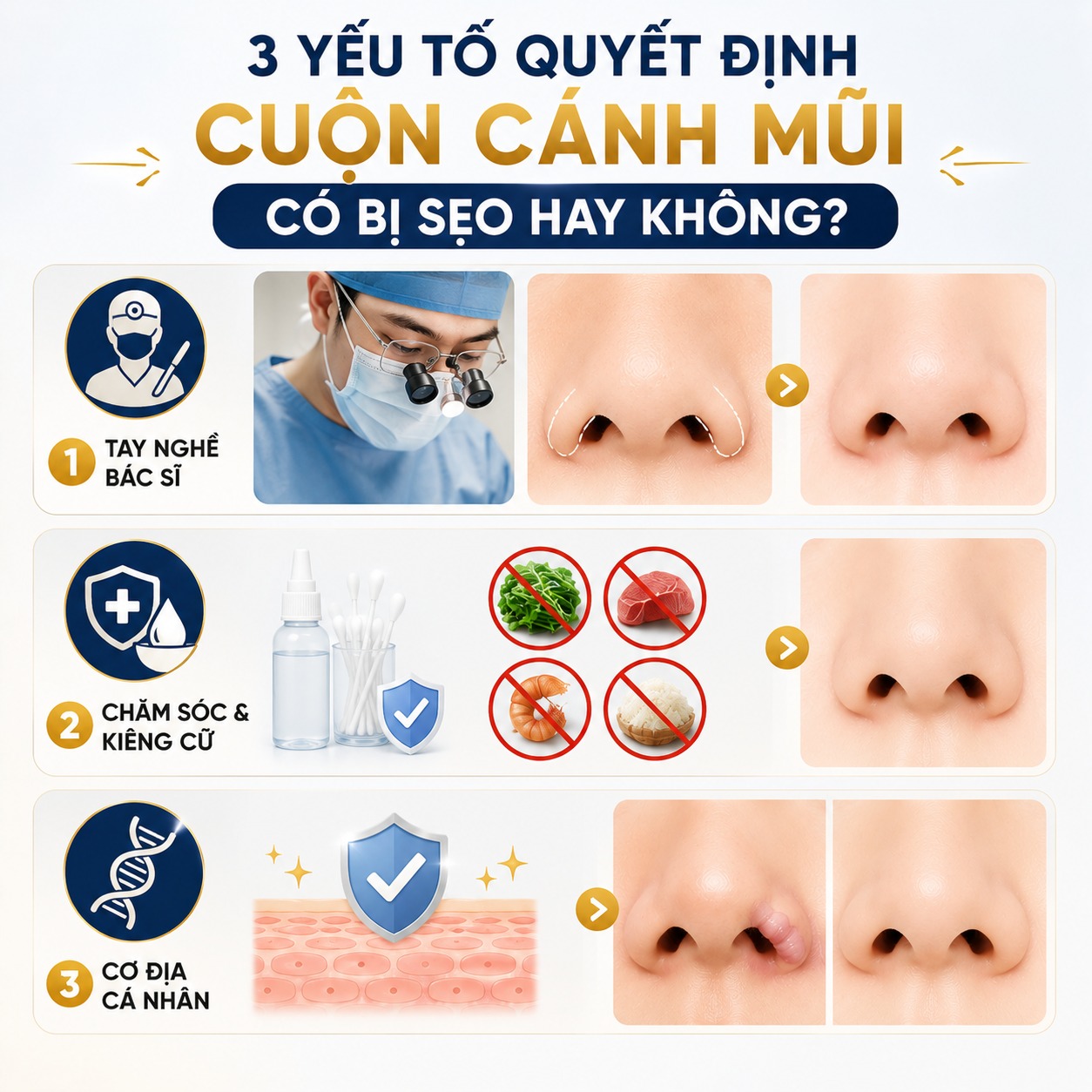
Whether the incision after a nostril reduction procedure turns out aesthetically pleasing and “invisible” depends entirely on the following three core factors:
- The surgeon’s skill and suturing technique (accounting for 80% of the outcome): An experienced surgeon will make precise incisions with minimal deep tissue trauma and employ skillful, hidden-suture techniques. Conversely, a less skilled surgeon may suture too tightly or misalign the tissue, significantly increasing the risk of developing hypertrophic (raised) or “centipede-like” (jagged) scars.
- Post-operative care and dietary restrictions: The smoothness of the incision site depends on daily cleaning with saline solution and strictly avoiding foods known to promote scarring or skin discoloration—such as water spinach, beef, seafood, and glutinous rice-based dishes—during the first month.
- Individual biological predisposition: Those with a “favorable” skin constitution will experience faster healing and rapid fading of scars. In contrast, if you are prone to excessive collagen production (a predisposition to keloid or hypertrophic scarring), it is essential to follow a prescribed regimen of applying specialized scar-treatment creams immediately after the stitches are removed.
Where are scars from a nostril-narrowing procedure typically located?
The incision for alar base reduction is extremely fine and is skillfully concealed by the surgeon in inconspicuous areas:
- Along the alar crease: Positioned precisely within the groove where the nasal wing meets the cheek (a natural facial fold).
- Inside the nasal base: Located entirely within the mucosal lining of the nostrils, leaving no visible traces on the external skin surface.

How long does it take for scars from a nostril-narrowing procedure to fade?
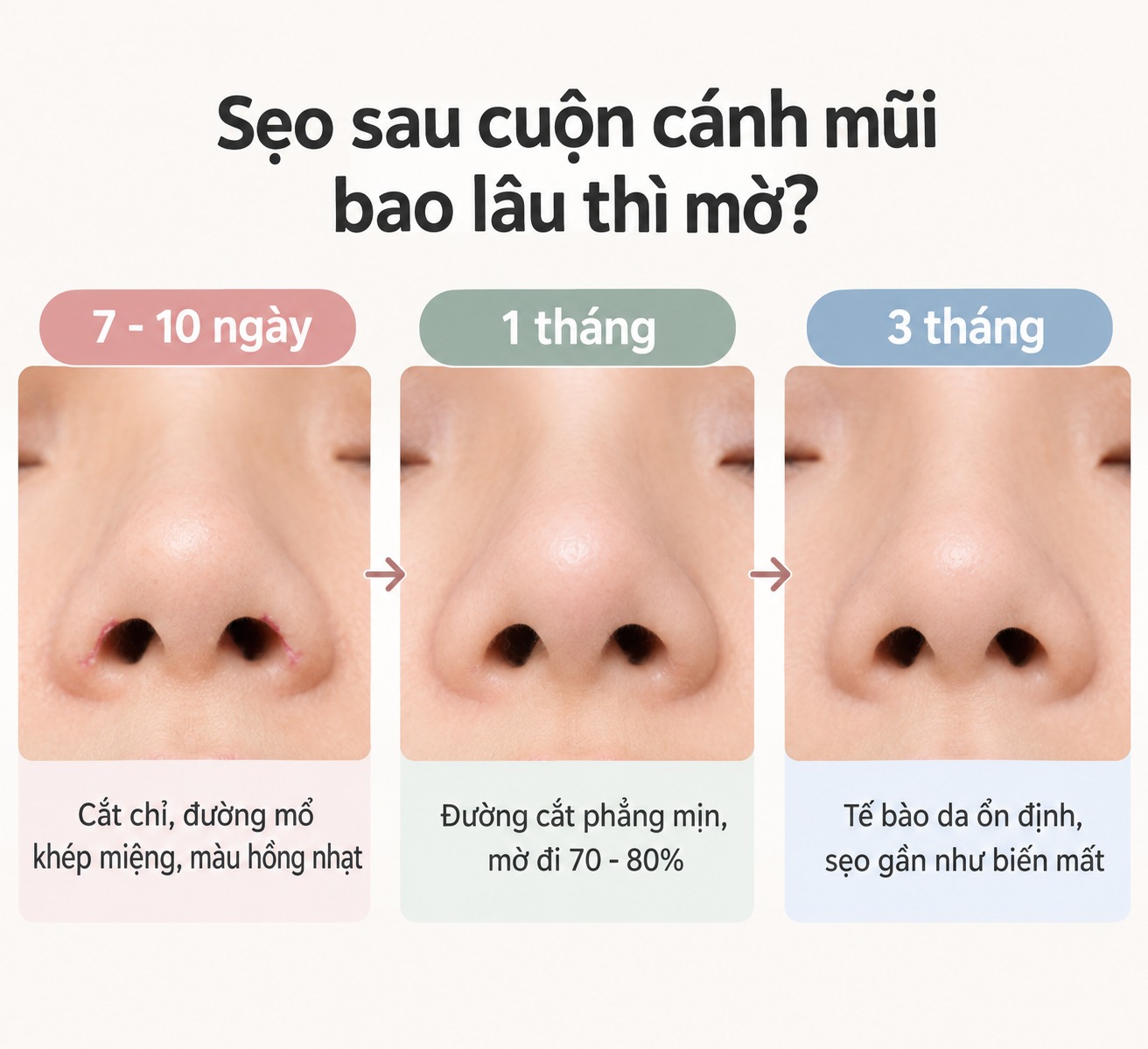
Scars from alar base reduction (nostril-narrowing surgery) typically fade completely and blend with the surrounding skin tone within 1 to 3 months, as follows:
- First 7–10 days: Stitches are removed; the incision line gradually closes and appears light pink.
- 1 month: The incision line becomes smooth and flat, fading by approximately 70–80%—it can easily be concealed with light makeup.
- 3 months: Skin cells have fully stabilized, and the scar—tucked within the crease of the nostril—becomes virtually invisible.
Recovery process and scar fading after alar base reduction
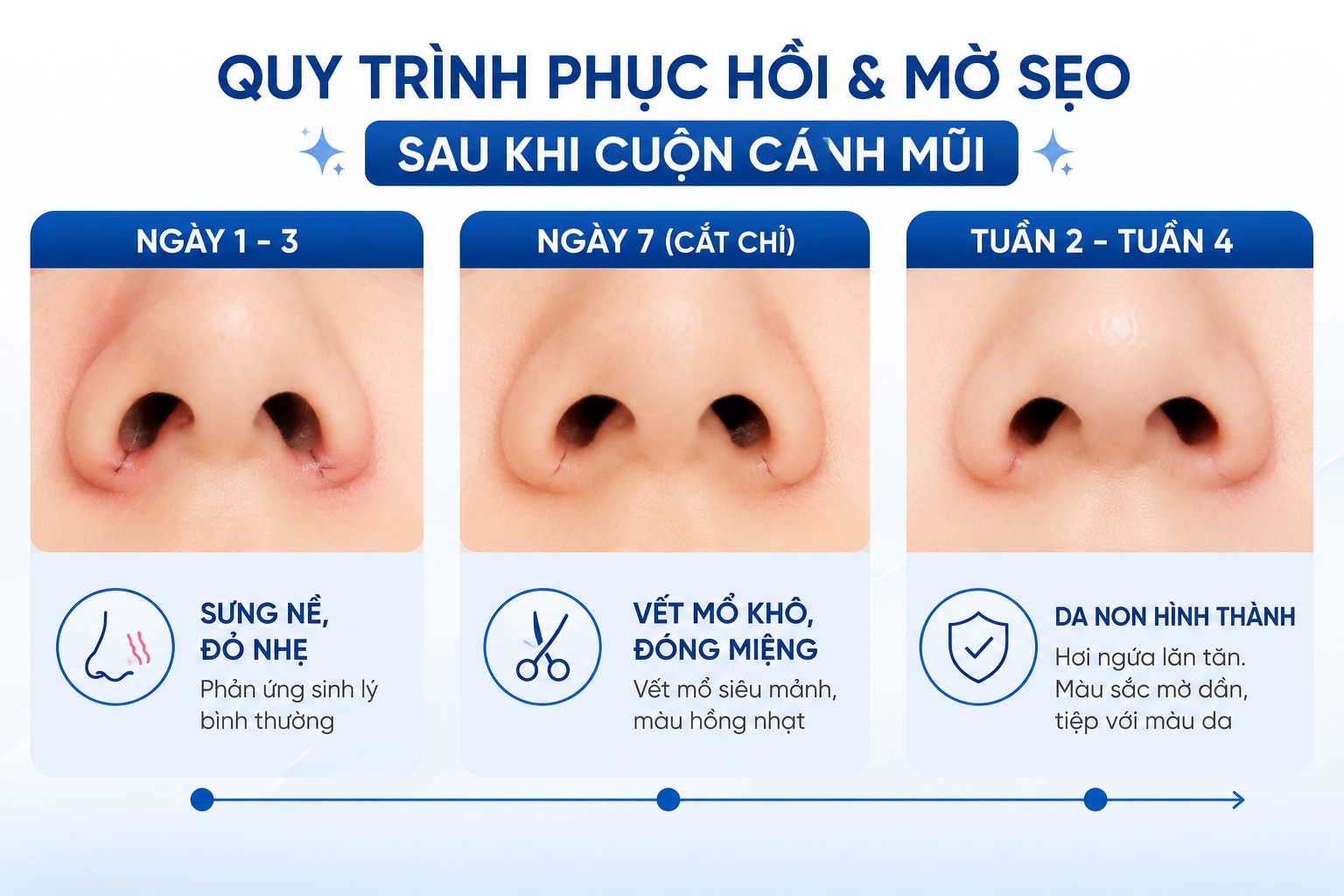
The healing process and scar fading following a minor surgical procedure occur quite rapidly, according to the following timeline:
- Days 1–3: The area around the nostrils may appear slightly swollen and red. This is a completely normal physiological response.
- Day 7 (Suture removal): The incision site is dry and fully closed, allowing for the removal of stitches. At this stage, the incision line appears as a very fine, pale pink mark.
- Weeks 2–4: New skin begins to form, which may cause a mild, tingling, or itchy sensation. The color of the incision line gradually darkens before blending in with the surrounding skin tone of the nostril area.
- After 1–3 months: The soft tissue structure has fully stabilized. The incision line is perfectly concealed within the nasolabial fold, appearing smooth and virtually “invisible,” leaving no visible trace of the procedure.
Microsurgical Alar Base Reduction with Hidden Scars at Dr. Xuan Quan Aesthetic Clinic
Say goodbye to concerns about unsightly scars or harsh, rigid incision lines. The microsurgical alar base reduction technique at Dr. Xuan Quan Aesthetic Clinic offers a solution for a refined, natural-looking nose that adheres to the “golden ratio.”
- Ultra-fine incisions with complete scar concealment: The surgeon precisely intervenes within the natural crease at the base of the nostrils. The microsurgical sutures blend seamlessly into the skin, leaving no visible trace of the procedure.
- Performed personally by Dr. Xuan Quan: A graduate of Hanoi Medical University—with advanced training in South Korea and Singapore—Dr. Xuan Quan personally handles the measurements and calculations, ensuring the degree of reduction is precise to the millimeter. This approach preserves the nose’s aesthetic harmony (including considerations for *feng shui*) without causing nasal congestion or narrowing the airway.
- Minimal invasiveness and rapid recovery: This gentle microsurgical technique reduces swelling and bruising by up to 80%. It is virtually painless and requires no significant downtime.
- Dedicated post-operative care and a 6-month warranty: Patients receive close monitoring throughout the healing process, with the added peace of mind that comes from our clinic’s reliable warranty commitment.

Important notes following alar base reduction to prevent scarring
To ensure the incision heals quickly and becomes as “invisible” as possible, please strictly follow these home-care guidelines:
- Proper cleaning: For the first 7 days, gently clean the incision site using a cotton swab moistened with saline solution. Keep the area around the nostrils dry at all times, and ensure that tap water or facial cleansers do not come into contact with the wound.
- Avoid physical trauma: Do not pick at scabs, and refrain from touching, scratching, or rubbing the area around the nostrils—even if the new, forming skin causes itching.
- Avoid scar-promoting foods: For at least one month, completely exclude foods that may lead to hypertrophic scars, dark spots, or suppuration—such as water spinach, beef, seafood, glutinous rice dishes, chicken, and stimulants.
- Apply scar-treatment cream at the right time: Immediately after the stitches are removed on the 7th day, begin using a specialized scar-treatment cream—following the frequency and instructions provided by Dr. Xuan Quan—to help flatten the incision line as effectively as possible.

The information above provides a detailed answer to the question of whether alar base reduction (nostril narrowing) leaves scars, along with an overview of the standard recovery process, helping you feel more prepared on your aesthetic journey. If you are looking for a way to refine your nostrils for a look that is both slender and harmonious with your facial features—without the risk of visible surgical marks—contact Dr. Xuan Quan Aesthetic Clinic today. We guarantee complete peace of mind and total satisfaction!