Tiếng Việt
With many years of experience in the field of rhinoplasty, we have observed many cases of deviated nasal septum that are often overlooked or ignored. In this article, drawing on our professional expertise, let’s explore the causes, signs, and safe and effective ways to correct a deviated nasal septum with Dr Xuan Quan Clinic.
Signs of a Deviated Nasal Septum
A deviated nasal septum is a condition where the septum (the bone and cartilage structure that divides the nasal cavity into two sides) is shifted to one side, causing an imbalance in the airway. Early recognition of a deviated nasal septum allows you to proactively seek examination and treatment in a timely manner.
- Prolonged shortness of breath and nasal congestion: One nostril is frequently blocked, especially noticeable when sleeping or during weather changes.
- Mouth breathing while sleeping: Due to restricted airways, many people have to breathe through their mouths, easily causing dry throat and fatigue.
- Headaches and facial pain: Increased sinus pressure due to poor airflow.
- Frequent nosebleeds: The nasal mucosa becomes dry and more vulnerable.
- Nose deviation or asymmetry (clearly visible): Affects facial aesthetics.
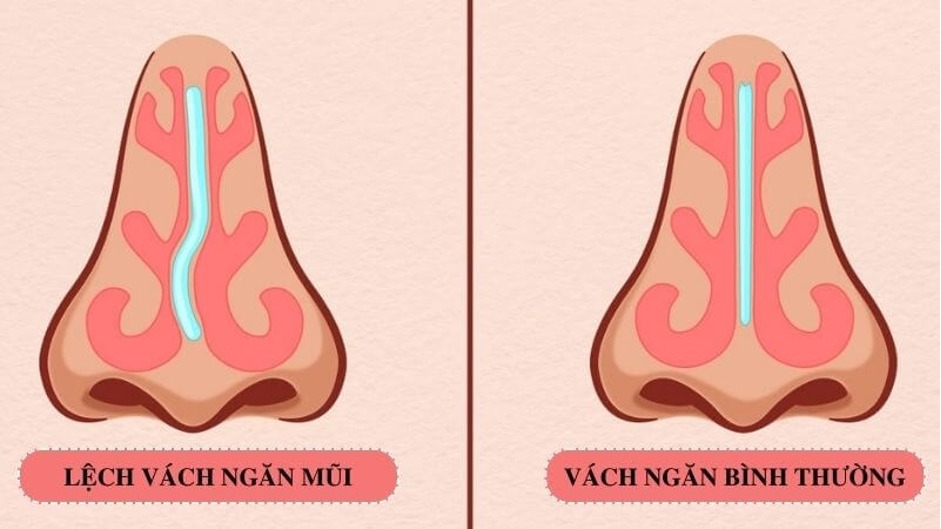
Common Causes of Nasal Septum Deviation
Understanding the causes of nasal septum deviation will help you prevent and treat it more effectively. Below are the main causes of nasal septum deviation in many people:
- Congenital: Some people are born with a deviated nasal septum due to unbalanced structural development.
- Trauma: Accidents, impacts, or sports injuries can cause nasal structural deviation.
- Developmental process: As the body grows, uneven bone and cartilage development can also cause deviation.
- Post-surgical complications: In some cases, improperly performed rhinoplasty can affect the septum.
Is nasal septum deviation dangerous?
The answer is YES, especially when the nasal septum deviation is severe and prolonged without timely intervention.
- Respiratory effects: Causes shortness of breath, nasal congestion, especially during sleep.
- Increased risk of sinusitis: Due to ineffective drainage of mucus.
- Causes fatigue and reduced quality of life: Lack of oxygen during sleep.
- Aesthetic effects: Deviated nose, unbalanced face.
When is septal deviation necessary?
Not all cases of septal deviation require intervention; however, you should consider correction early if you experience symptoms affecting your health and daily life:
- Prolonged shortness of breath affecting daily life: When the nasal septum is deviated, it obstructs the airway, causing frequent nasal congestion and difficulty breathing, especially at night or during physical activity.
- Recurrent sinusitis: The structural deviation prevents mucus from draining effectively, easily accumulating and causing chronic sinusitis that recurs frequently despite treatment.
- Significant aesthetic problems due to a deviated nose: In cases where the deviated nose is clearly visible from the outside, the face will be unbalanced, affecting appearance and self-confidence.
- Impact on sleep: Difficulty breathing forces you to breathe through your mouth while sleeping, easily leading to a dry throat, poor sleep quality, and fatigue the next day.
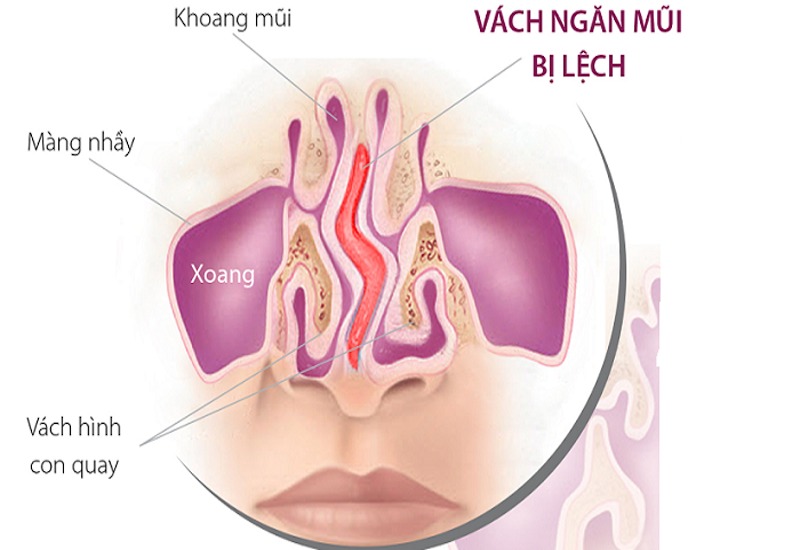
Current Methods for Correcting a Deviated Nasal Septum
Currently, to treat a deviated nasal septum, doctors often apply advanced intervention methods to improve both respiratory function and aesthetics.
Septoplasty
This surgical method adjusts the bone and cartilage structure inside the nose, bringing the septum back to a balanced position, thereby improving breathing difficulties, nasal congestion, and enhancing respiratory function.
Combined Rhinoplasty
This method is applied when the patient wants to both correct a deviated nasal septum and improve the shape of the nose. The doctor will combine septoplasty and create a new nose shape, making the nose more balanced and harmonious with the face.
Depending on the specific condition, the doctor will advise on the most suitable septoplasty method to ensure both safety and long-term aesthetics.
Safe Nose Augmentation Solutions at Dr Xuan Quan Clinic
If you have a deviated septum and want to improve your nose shape, choosing a solution that combines function and aesthetics is the optimal approach. At Dr Xuan Quan Clinic, this method not only thoroughly addresses the deviated septum internally but also reconstructs a harmonious and balanced nose shape that complements your face, providing comprehensive results instead of just improving the appearance.
At Dr Xuan Quan Clinic, the nose augmentation procedure is performed systematically and personalized for each client:
- In-depth examination and assessment of the nasal structure: Clients undergo a detailed examination of the deviated septum, its degree of deviation, nasal base, and soft tissue to develop an accurate intervention plan, minimizing risks.
- Combined septum correction and nose reshaping: In addition to addressing the internal septum, the doctor simultaneously reconstructs the external nose shape, resulting in a straight, balanced nose that significantly improves both respiratory function and aesthetics.
- Personalized nose shape design: The nose shape is adjusted to the facial proportions, avoiding excessive elevation or disproportion – this is a crucial factor in minimizing complications and ensuring long-lasting results.
Featured Nose Augmentation Services
- S-Line Nose Augmentation – 25,000,000 VND: Suitable for individuals with a relatively flat nose base, needing minor improvement to create a naturally curved nose shape.
- S-Line Structural Nose Augmentation – 45,000,000 VND: A comprehensive solution for cases of crooked noses, low noses, or complex defects.
- PureForm Nose Augmentation – 50,000,000 VND: Modern technology helps create a nose shape with perfect proportions, optimizing naturalness and durability.
Key Advantages: Uses high-quality materials with a 5-year lifespan – lifelong results, suture removal after 7-10 days, fast recovery, and minimizes complications such as nose deviation, cartilage collapse, or visible implant.
Frequently Asked Questions About Deviated Nasal Septum
Before deciding to correct a deviated nasal septum, many people have concerns regarding the risks, costs, and effectiveness of the procedure. Below are detailed answers:
Can a deviated nasal septum heal on its own?
No. This is a structural issue of bone and cartilage, so it cannot self-correct. If there are no symptoms, it can be monitored, but if it causes difficulty breathing or sinusitis, early intervention is necessary.
Is correcting a deviated nasal septum painful?
The procedure will be performed under local anesthesia/sedation, so it is not painful. There may be some mild discomfort for the first few days, but this will quickly subside as the nose recovers.
How long does it take to recover after correcting a deviated septum?
Normal activities can be resumed in about 7-10 days, the nose will be more stable after 3-4 weeks, and almost complete recovery is expected in 1-3 months.
Will a deviated nasal septum recur after correction?
The likelihood of recurrence is very low if the procedure is performed correctly and proper aftercare is followed. However, choosing a reputable clinic remains crucial.
Is it possible to correct a deviated septum and lift the nose at the same time?
Yes. This is the optimal solution to improve respiratory function while creating a beautiful, balanced, and harmonious nose shape that complements the face.
A deviated septum not only affects aesthetics but also directly impacts respiratory health if left untreated. Early detection and choosing the appropriate treatment method will help you improve both function and appearance safely.
If you are experiencing this condition, do not hesitate to seek early consultation for effective and long-lasting solutions.