
 Tiếng Việt

Can a structural rhinoplasty lead to cartilage displacement (sinking)? The answer is NO, provided the surgery is performed using the correct technique—placing the implant beneath the periosteum—and the nasal framework (nasal pillar) is firmly reinforced. However, this complication can occur if the surgeon lacks sufficient skill, places the implant in the wrong tissue plane, or attempts to achieve a bridge height that exceeds the skin’s natural elasticity. Join Dr Xuan Quan Clinic as we analyze the causes of cartilage displacement and share the secrets to achieving a beautiful, durable, and safe structural rhinoplasty that lasts a lifetime.
Signs of cartilage displacement in the nose that you should be aware of
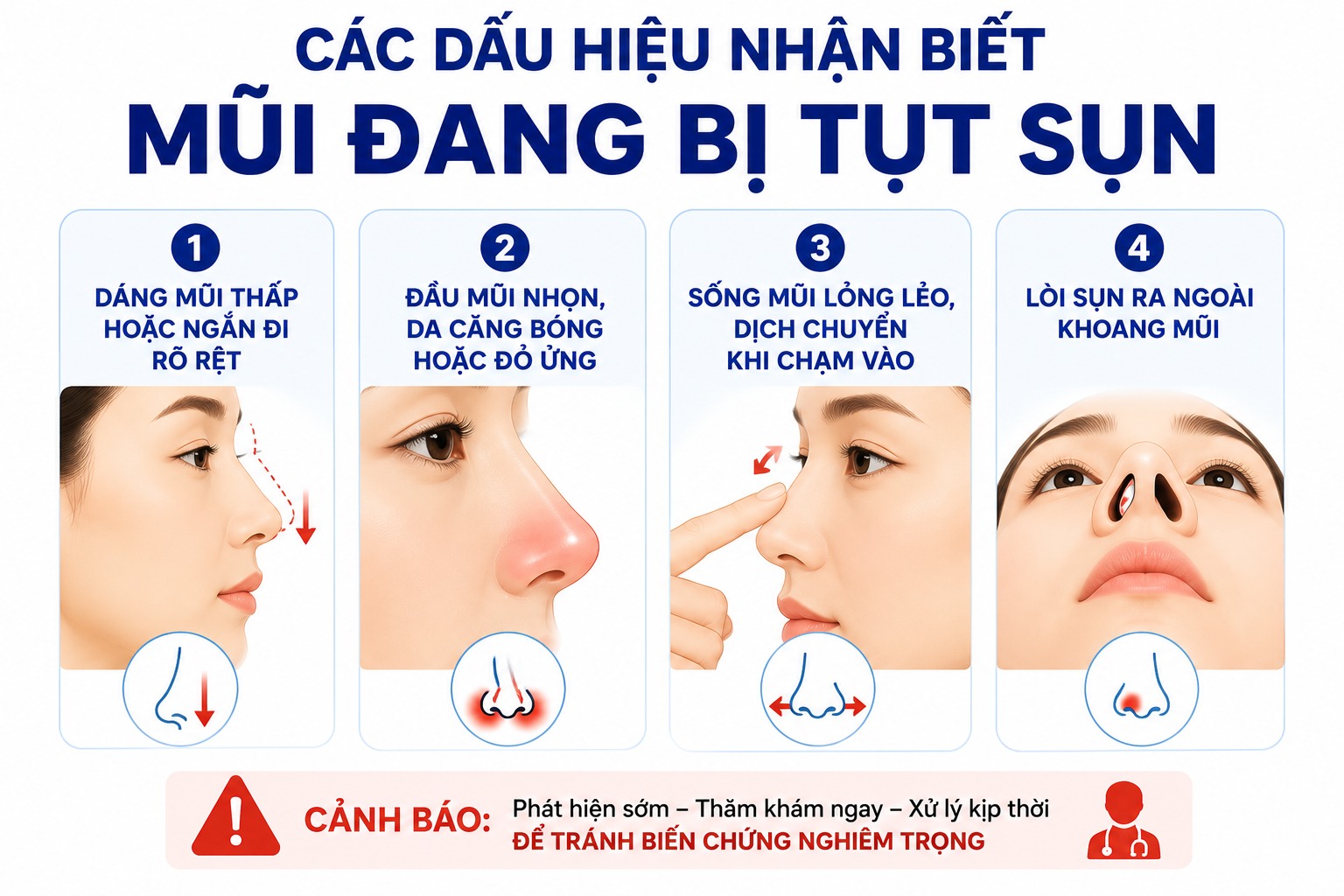
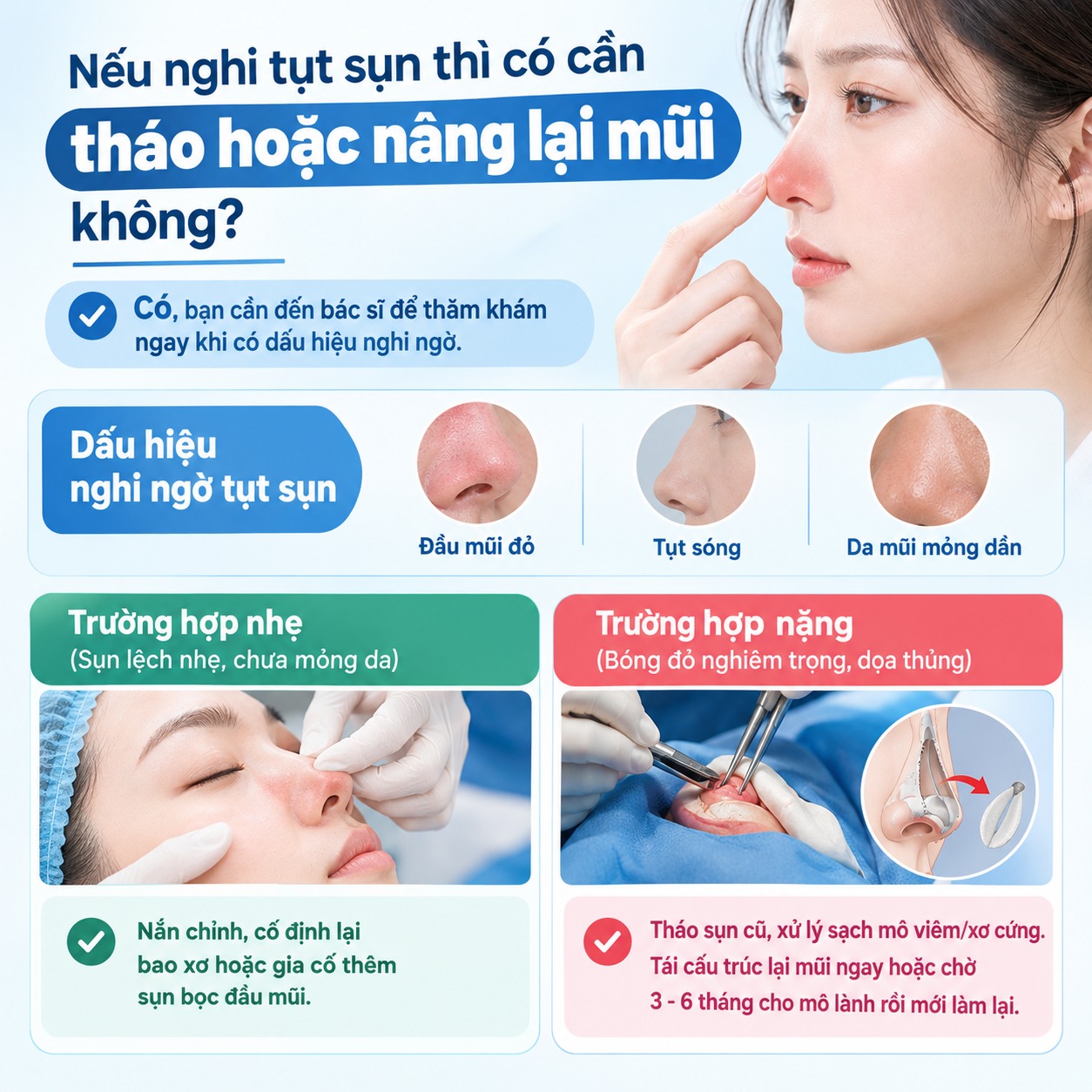
If you notice any of the following warning signs regarding the shape of your nose, you should consult a doctor immediately for an examination and prompt intervention:
- A noticeable decrease in height or length: The bridge of the nose gradually lowers over time compared to its appearance after the initial post-operative swelling has subsided; alternatively, the nasal tip may appear upturned or shortened as the cartilage shifts downward.
- A pointed nasal tip with tight, shiny, or reddened skin: As the nasal implant or cartilage shifts downward, it exerts constant pressure on the tip, causing the skin to become stretched and thin. This may result in a shiny, red appearance or the development of pale, patchy white streaks.
- An unstable nasal bridge that shifts upon touch: If you touch or gently shake the nose, you may feel that the implant or cartilage is not firmly anchored to the nasal bone; instead, it feels loose and moves abnormally.
- Protrusion of cartilage or implant material: This is the most serious complication, occurring when the cartilage or implant shifts significantly and pierces through the nasal septum or the skin of the nasal tip, leading to inflammation, pain, and the exposure of the implant material.
Causes of cartilage displacement following structural rhinoplasty
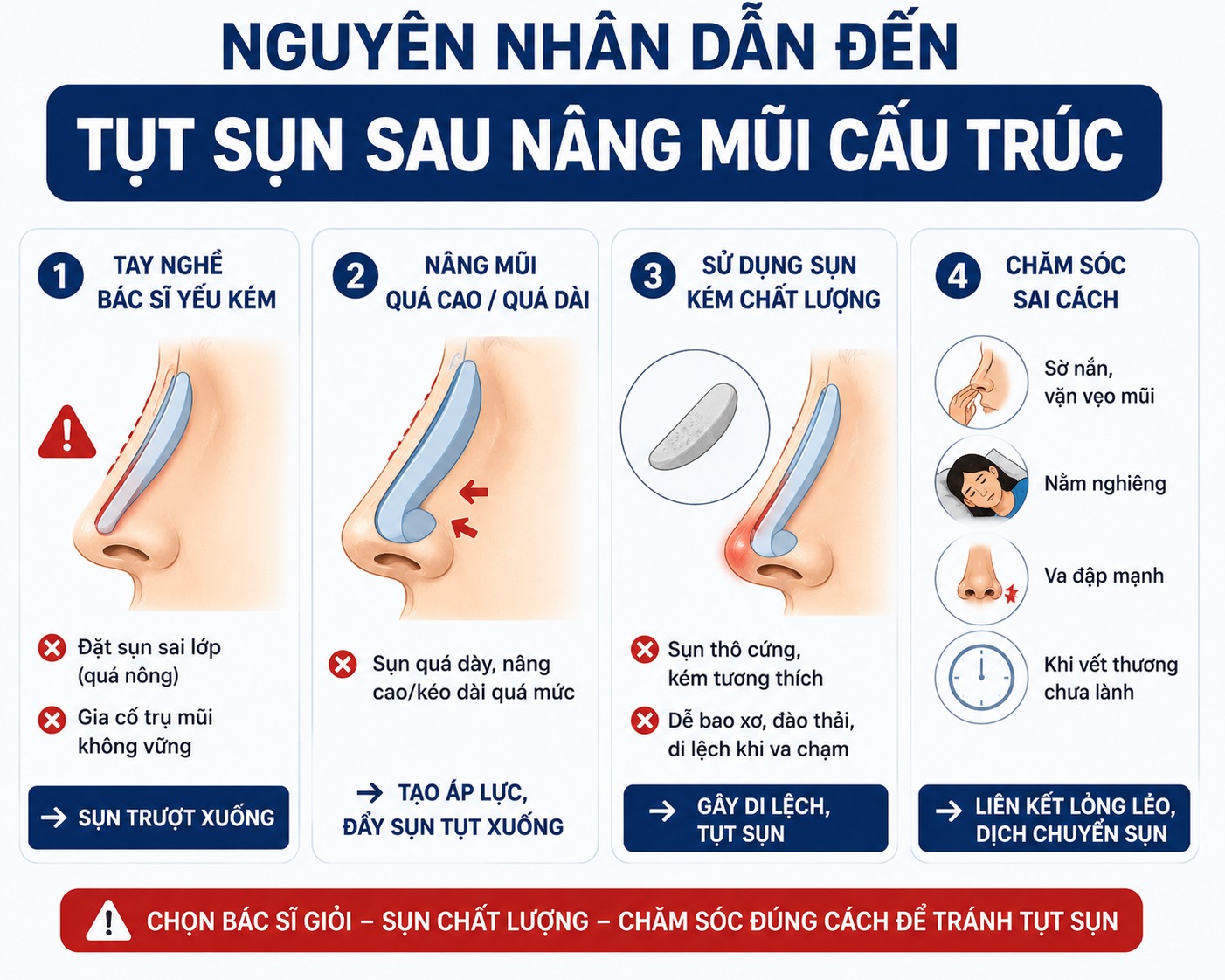
The displacement or collapse of nasal cartilage—including the collapse of the nasal tip support structure—typically stems from technical errors or issues with the materials used:
- Inadequate surgical skill: This is the primary cause. If a surgeon places the cartilage in the wrong plane—too superficially, just beneath the skin, rather than deep beneath the periosteum—or fails to reinforce the nasal tip support structure sufficiently, the cartilage may gradually slide downward due to gravity.
- Excessive augmentation (height or length): The use of overly thick synthetic implants, or an attempt to increase the height or length of the nasal tip beyond the skin’s natural elasticity, creates significant pressure. Over time, this forces the cartilage to shift downward.
- Use of poor-quality materials: Implants that are rigid, lack proper adherence, or are biologically incompatible with the body are prone to rejection or the formation of a fibrous capsule. This can lead to displacement or slippage of the cartilage, even upon minor impact.
- Improper post-operative care: Habits such as touching, twisting, or manipulating the nose, sleeping on one’s side, or subjecting the nose to strong impact before it has fully healed can weaken the structural integrity of the cartilage, causing it to shift from its intended position.
How long after a rhinoplasty does it take to know whether the cartilage has stabilized?
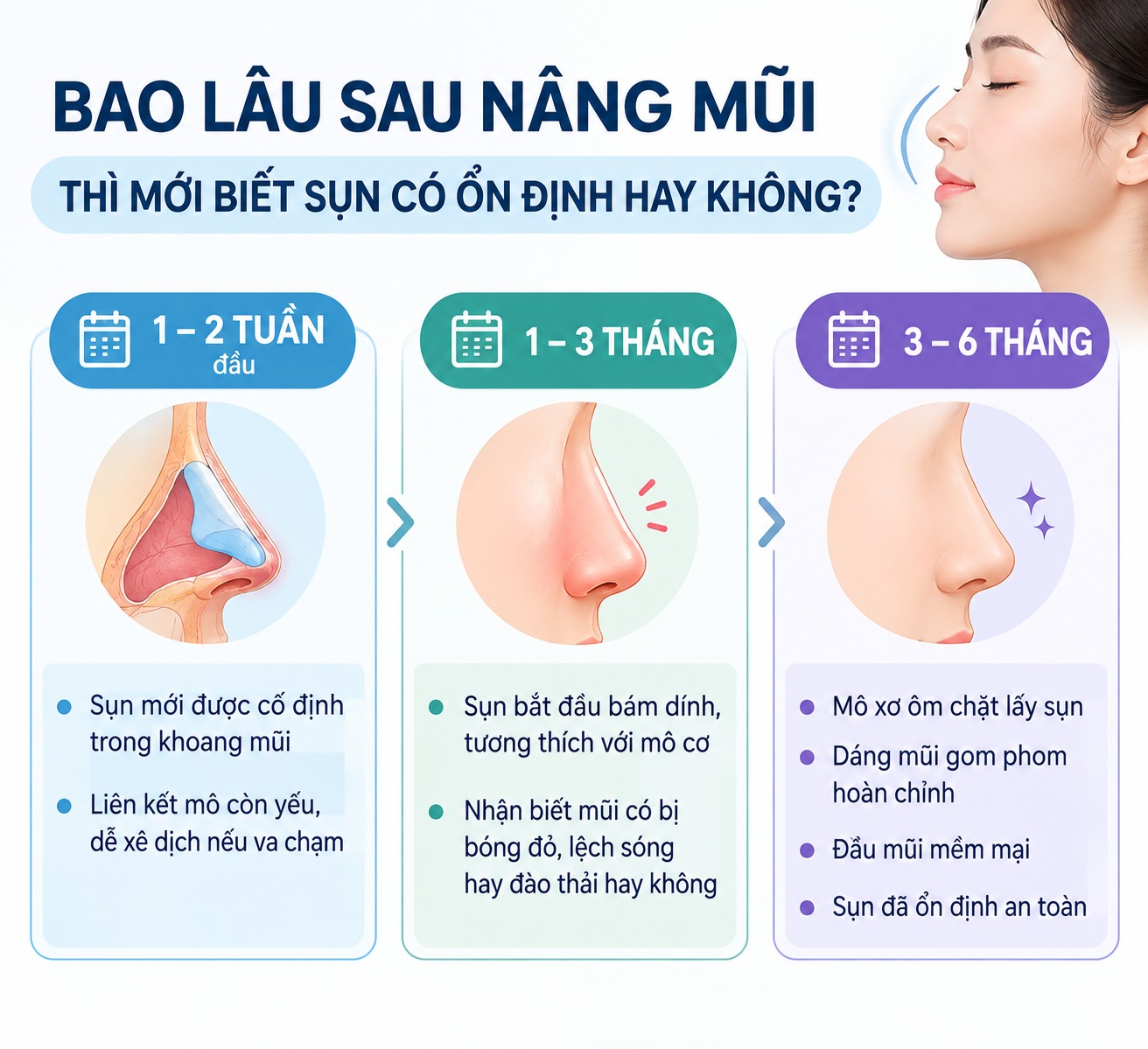
The time required for nasal implant cartilage to fully integrate and stabilize ranges from 1 to 6 months, encompassing three key stages:
- First 1–2 weeks: The new cartilage is secured within the nasal cavity; however, tissue connections remain weak, making it susceptible to displacement if subjected to impact.
- 1–3 months: The cartilage begins to adhere and integrate with the surrounding tissue. During this phase, it becomes possible to detect issues such as redness, implant deviation, or rejection.
- 3–6 months: Fibrous tissue firmly encases the cartilage, the nasal shape fully settles, the nasal tip becomes soft, and the implant is considered safely stabilized.
Is structural rhinoplasty less prone to cartilage displacement compared to conventional rhinoplasty?
Yes, structural rhinoplasty minimizes the risk of cartilage displacement (or “sinking”) compared to conventional implant techniques, thanks to a different approach to structural support:
- Conventional rhinoplasty: An implant is placed directly over the bridge and tip of the nose. Over time, pressure from the surrounding tissue can cause the implant to slide downward, thinning the skin and potentially piercing through the nasal tip.
- Structural rhinoplasty: The nasal framework is reinforced using the patient’s own cartilage (such as septal or rib cartilage) to create a stable, load-bearing foundation. This secures the implant firmly in place, effectively eliminating the risk of it shifting or sinking.

Mitigating the risk of cartilage displacement in structural rhinoplasty
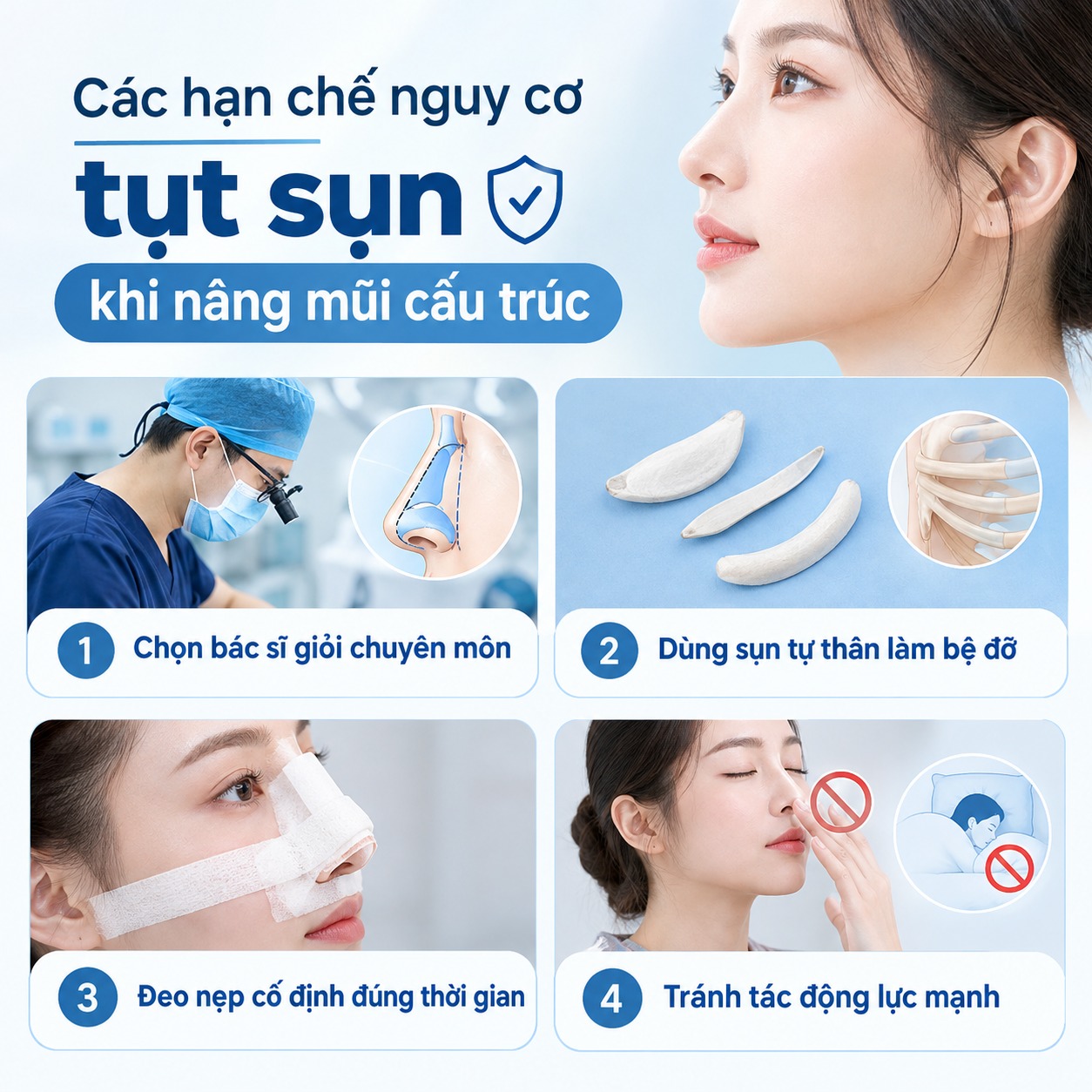
Although structural rhinoplasty offers high durability, you should follow these measures to ensure the cartilage remains securely in place and the nasal shape is maintained for a lifetime:
- Choose a highly skilled surgeon: An experienced surgeon will accurately calculate the necessary structural support, build a stable nasal framework, and create a precise pocket for the cartilage, ensuring a snug fit without any looseness.
- Use autologous cartilage for structural support: Utilize septal, ear, or rib cartilage to reinforce the nasal framework and cushion the nasal tip; this minimizes pressure on the skin of the nasal tip.
- Wear the nasal splint for the recommended duration: Keep the splint and stabilizing tape in place as directed (typically for 7–10 days) to prevent the cartilage from shifting before it has fully adhered to the surrounding tissue.
- Avoid strong physical impact: Refrain from touching or manipulating the nose, sleeping on your side, or subjecting the nasal area to any impact for the first 1–3 months, while the cartilage is still in the process of fully integrating with the surrounding tissue.
If cartilage displacement is suspected, is it necessary to remove the implant or undergo a revision rhinoplasty?
Yes, if there are signs suggesting implant displacement or slippage (such as a red nasal tip, a shifting implant, or thinning skin on the nose), you should consult a doctor immediately to prevent complications like perforation of the nasal tip or a severe infection.
- In mild cases (e.g., slight displacement of the cartilage with no significant skin thinning), the doctor may be able to reposition the implant, secure the fibrous capsule, or reinforce the nasal tip with additional cartilage to protect the shape of the nose.
- In severe cases (e.g., significant redness or a risk of perforation), the existing implant must be removed, and any inflamed or fibrotic tissue must be cleared. Depending on the condition, the doctor may either reconstruct the nose immediately or advise waiting 3–6 months for the tissue to heal before performing a revision procedure.
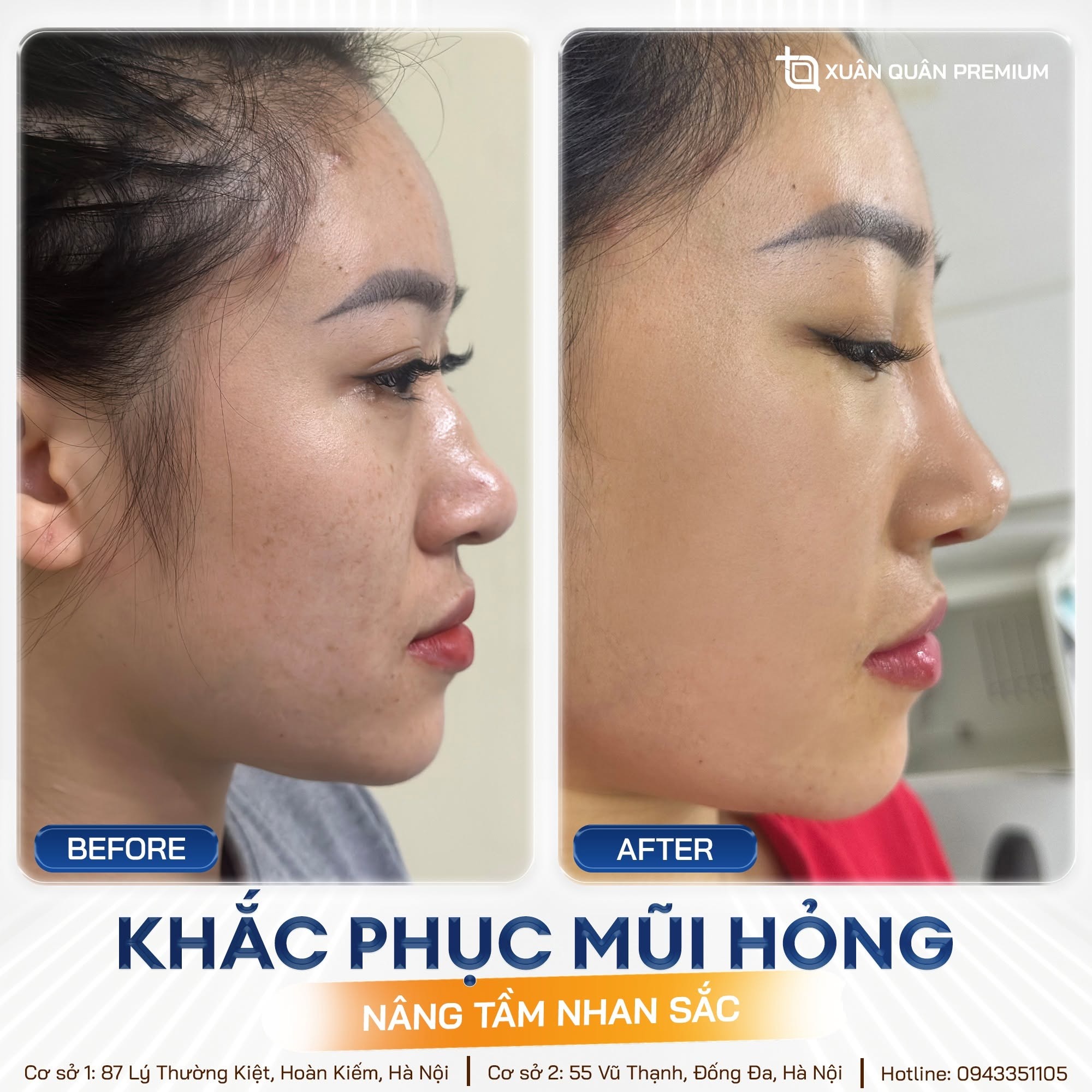
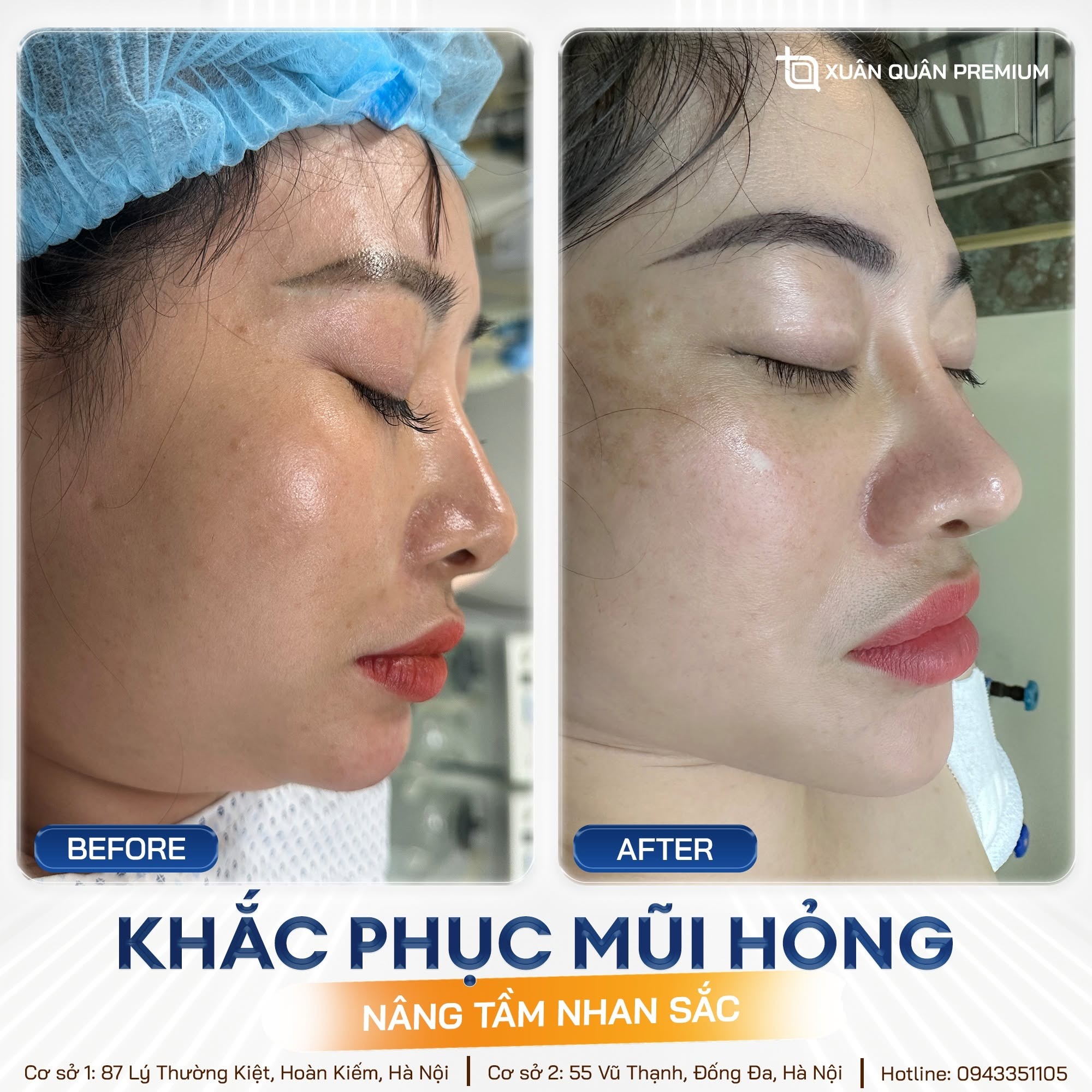
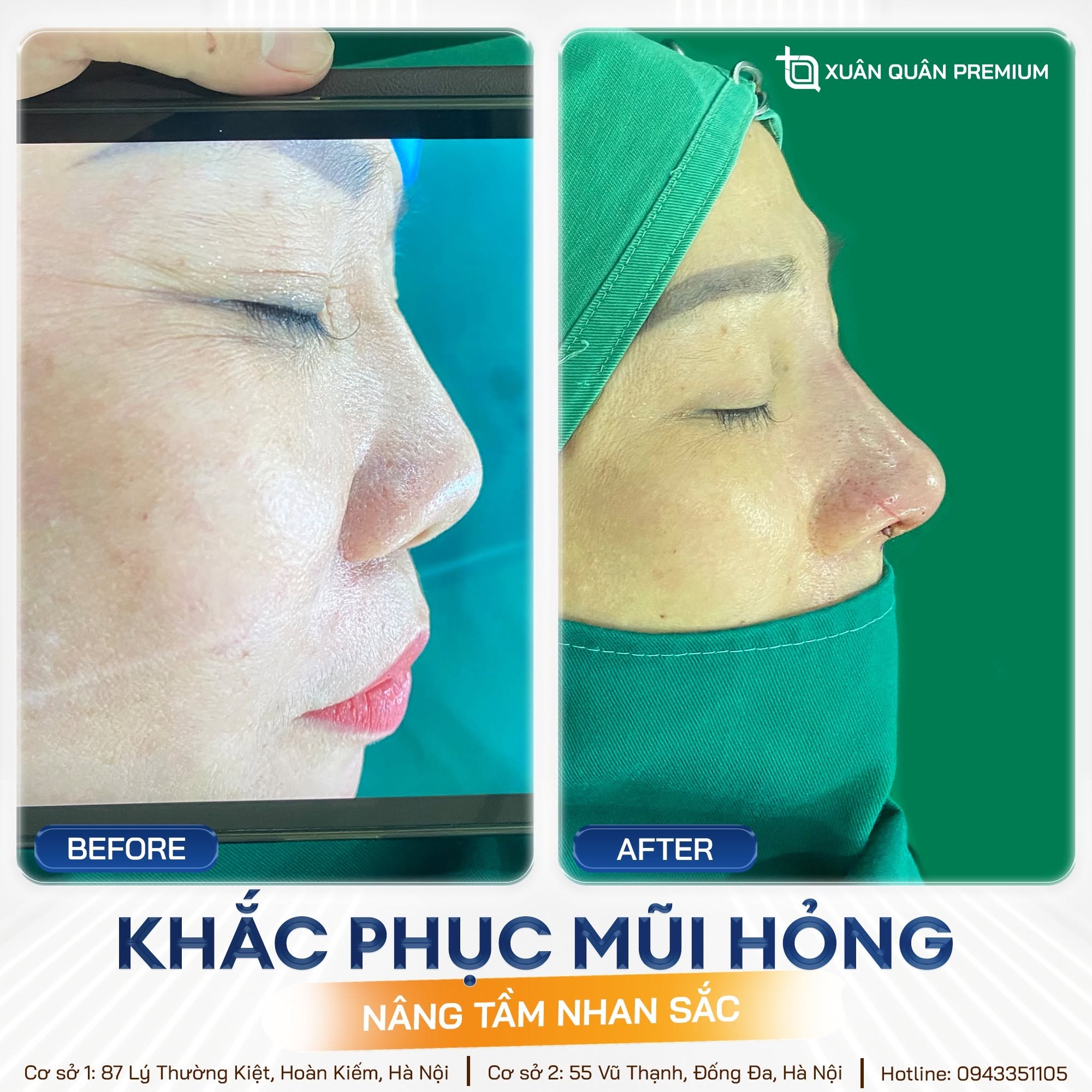
A safe solution at Dr. Xuan Quan Aesthetic Clinic: If you notice any unusual signs, please visit Dr. Xuan Quan Aesthetic Clinic immediately. With over 10 years of specialized experience in correcting compromised rhinoplasty results, Dr. Xuan Quan will personally perform an ultrasound to screen for complications. He utilizes precise microsurgical techniques to safely remove cartilage and address capsular contracture, ultimately restoring a refined, medically sound, and aesthetically pleasing nasal shape.
Frequently asked questions about cartilage displacement following structural rhinoplasty
Below are brief answers from Dr. Xuan Quan regarding the most common concerns patients have about cartilage displacement (sinking/slipping) following a structural rhinoplasty:
How long does it take for the cartilage to become completely stable after a structural rhinoplasty?
It typically takes 1 to 3 months. By this time, the autologous (self-derived) cartilage has integrated and bonded firmly with the surrounding tissues, forming a solid, fully fixed structure.
Can a nose with displaced cartilage be corrected using a structural rhinoplasty technique?
Yes, absolutely. The surgeon will remove the existing cartilage, address any fibrous capsule tissue, and then reconstruct the entire nasal structure—placing new cartilage securely beneath the periosteum (the membrane covering the bone) to ensure safety.
How can I check for myself if my nasal cartilage has become displaced?
You may notice signs such as a visible reduction in the height or length of the nose, a sharp or pointed nasal tip, skin over the tip that appears tight, shiny, or red, or a sensation that the cartilage along the nasal bridge is loose or shifting.
The information above provides a detailed explanation regarding the risk of cartilage displacement in structural rhinoplasty, including its causes and specific warning signs. To achieve a safe, long-lasting, and aesthetically pleasing structural rhinoplasty, please contact our hotline or book an appointment with Dr. Xuan Quan’s aesthetic clinic for a direct, in-depth consultation and examination with Dr. Xuan Quan himself.