
 Tiếng Việt

Can you sleep on your side after a temple augmentation procedure? According to aesthetic specialists, you should absolutely AVOID sleeping on your side during the initial recovery phase. Doing so places the full weight of your head – and significant pressure – onto the temple area, which can easily cause the implant to shift or slide out of place, potentially leading to facial asymmetry. In this article, Dr Xuan Quan Clinic provides guidance on the proper sleeping position to ensure your temples heal quickly and achieve a natural, beautiful appearance.
Why should you avoid sleeping on your side immediately after a temple augmentation?
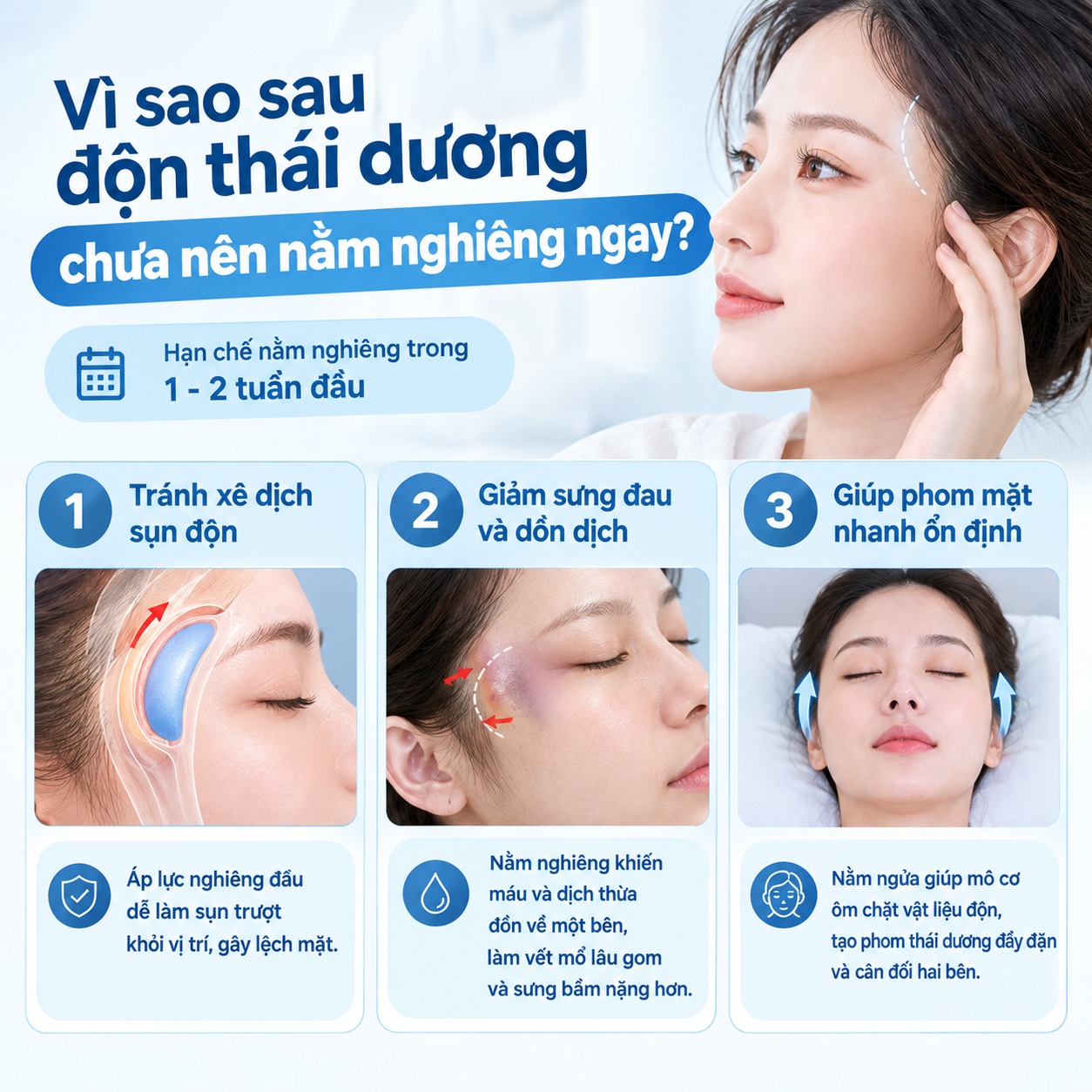
Following a temple augmentation, you should refrain from sleeping on your side for the first 1 – 2 weeks for the following reasons:
- Preventing implant displacement: Since the implant has not yet fully adhered to the surrounding tissue, the pressure from resting your head on its side can cause it to slide out of position, resulting in facial asymmetry.
- Reducing swelling, pain, and fluid accumulation: Sleeping on your side can cause blood and excess fluid to pool on one side, which delays the healing of the incision and intensifies swelling and bruising.
- Promoting facial stabilization: Sleeping on your back allows the muscle tissue to firmly secure the implant, ensuring a full, well-defined, and symmetrical appearance for both temples.
How long should you avoid sleeping on your side after a temple augmentation?
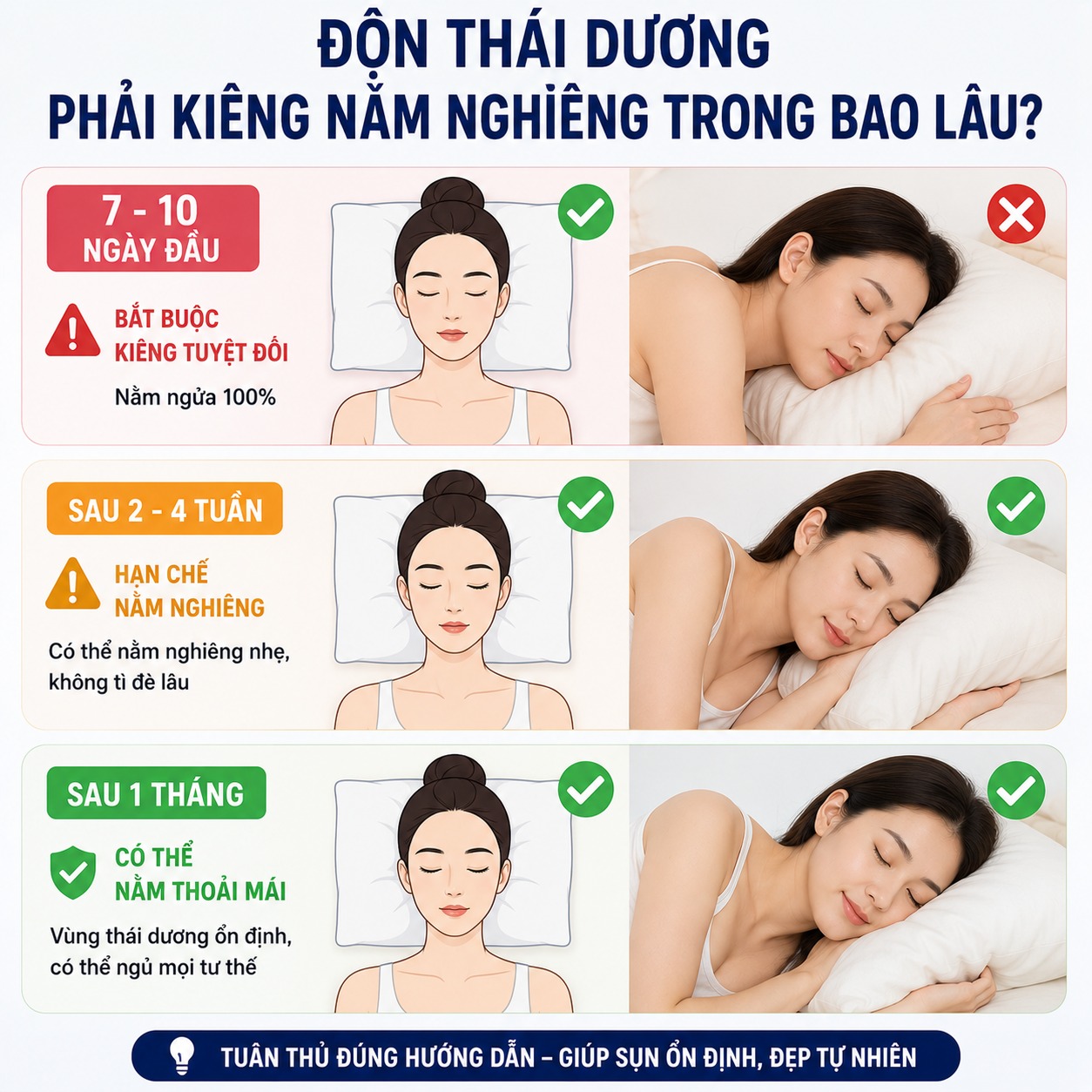
The duration for which you should avoid sleeping on your side following a temple augmentation depends on the healing rate and how well the implant has integrated with the surrounding tissue. The timeline is as follows:
- The first 7–10 days (Strictly prohibited): During this phase, the implant has not yet bonded with the muscle tissue, and the surgical incisions have not yet had their stitches removed, making the implant highly susceptible to shifting. You must sleep exclusively on your back to protect the shape of the temple area.
- 2–4 weeks post-surgery (Limit side-sleeping): At this stage, muscle tissue begins to grow around and adhere to the implant. You may sleep on your side gently, but avoid pressing your face firmly against the pillow or applying prolonged pressure to the area.
- After 1 month (Resume normal sleeping positions): The temple area has stabilized, and the implant material – especially if a biological implant like Pureform was used – has firmly adhered and fully integrated into the body. You may then return to your preferred sleeping positions.
What should you do if you accidentally sleep on your side after a temple augmentation procedure?
If you happen to sleep on your side, remain calm and take the following steps based on your specific situation:
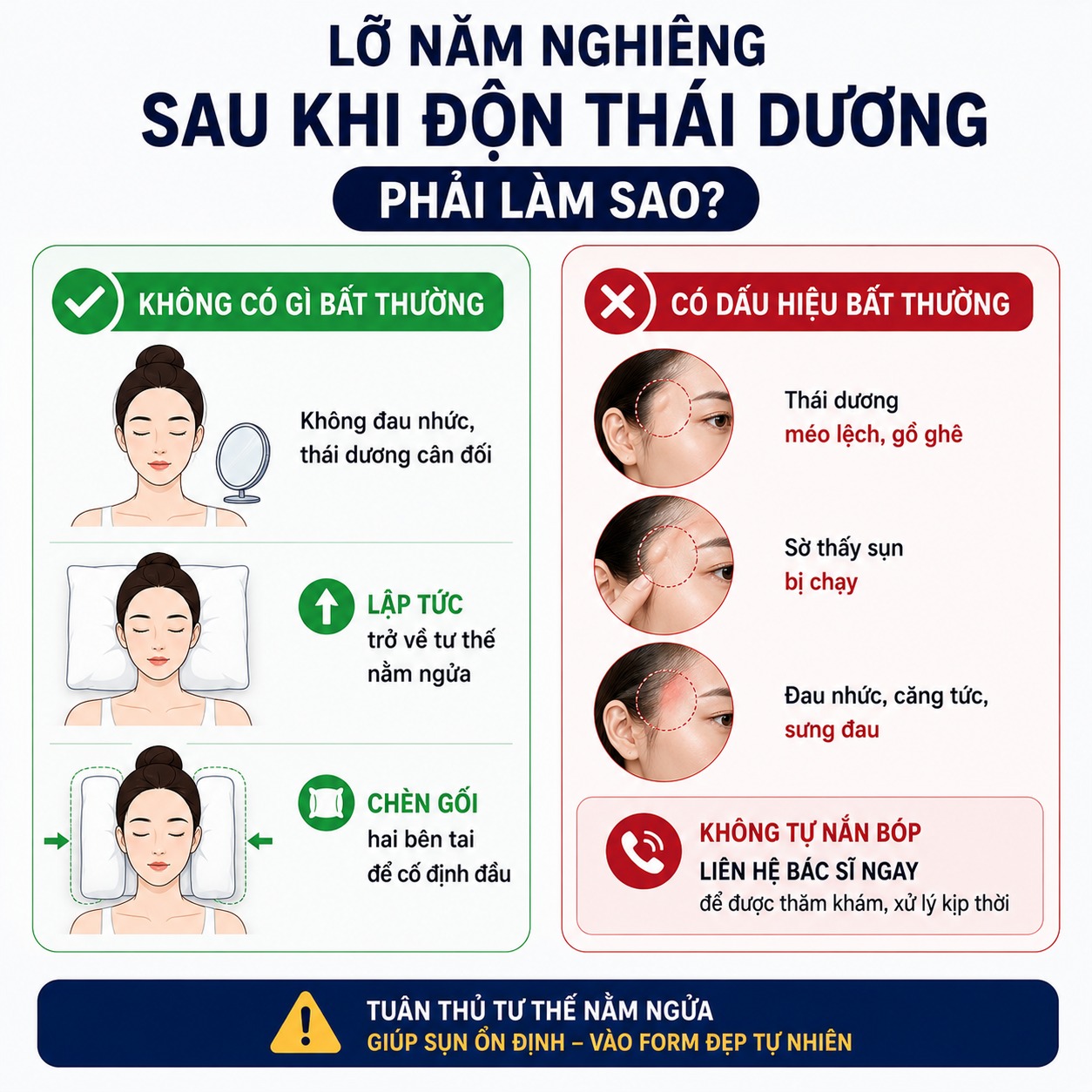
If there are no abnormalities in the temple area
If you wake up feeling no pain, and upon checking in a mirror, you see that both temples remain symmetrical, simply return to a back-sleeping position immediately.
Moving forward, place pillows on either side of your head to keep it stable while you sleep.
If there are signs of asymmetry, swelling, or pain
If you notice that the temple area appears uneven or distorted, feel the implant shifting, or experience sharp pain or a tight, strained sensation, do not attempt to adjust or massage the area yourself.
Contact your doctor immediately for an examination, imaging, and professional realignment of the implant.
Recommended Sleeping Positions for Optimal Temple Contouring
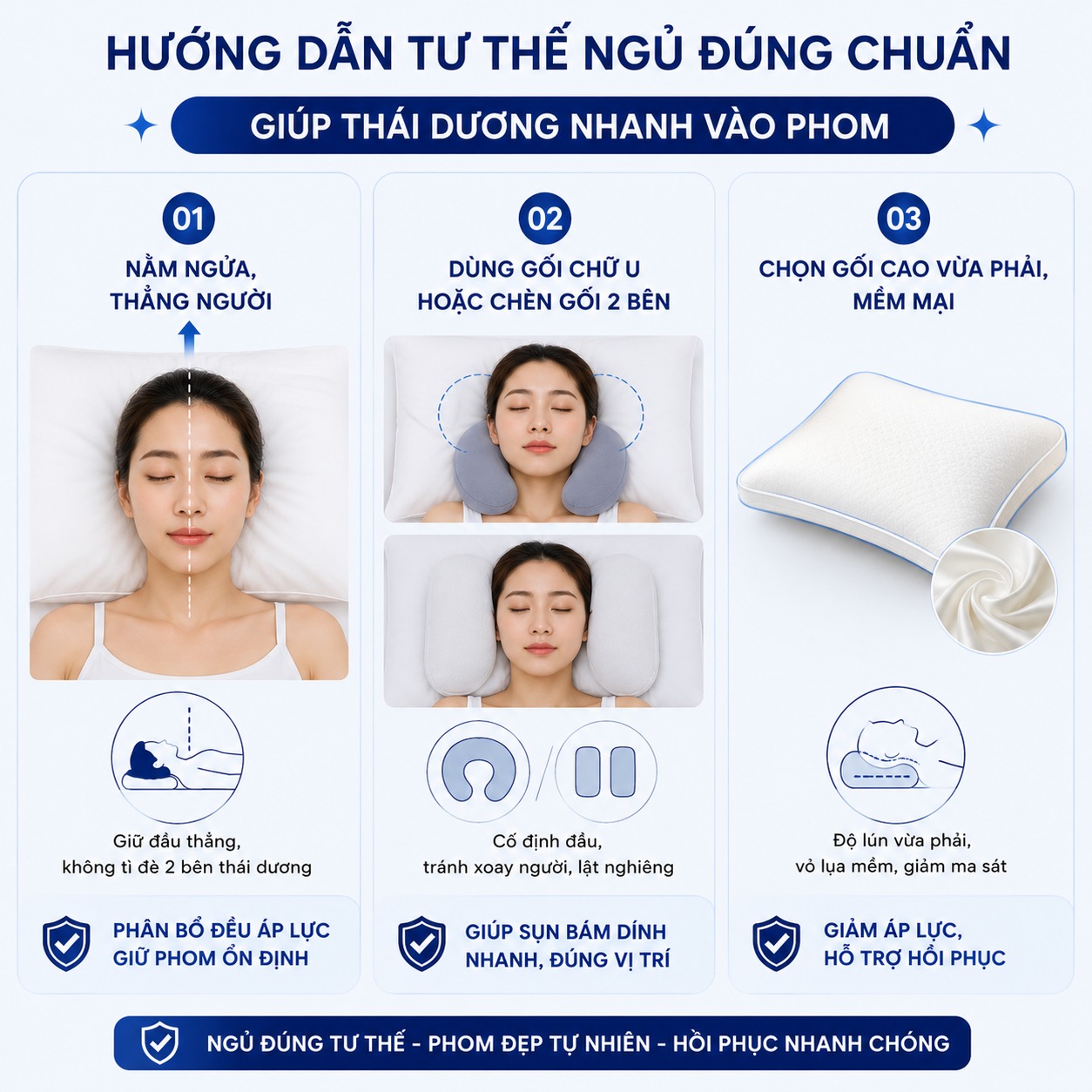
To maintain a balanced shape in the temple area and accelerate the integration of the cartilage/implant, it is advised to follow these medically recommended sleeping positions:
- Sleep on your back in a straight, neutral position: This is the ideal sleeping posture. Keep your head and face directed toward the ceiling; this ensures even pressure distribution and prevents the temple area from being compressed or subjected to forces that could cause distortion.
- Use a U-shaped pillow or place pillows on either side: To prevent accidental rolling or turning onto your side while asleep, use a U-shaped travel pillow around your neck, or place soft bolsters/pillows on both sides of your head to keep it securely in place.
- Choose a soft pillow with an appropriate height: Opt for a pillow with moderate firmness and a soft silk or satin pillowcase. This helps minimize friction and reduces pressure on the head and neck region during the post-operative recovery period.
Warning signs after temple augmentation that require a medical check-up
Although temple augmentation is a safe, minor surgical procedure, you should seek immediate medical attention if any of the following warning signs occur:
- Persistent, severe pain and swelling: The temple area remains painful, tight, or significantly swollen even after 5–7 days.
- Visible asymmetry or deformity: The implant shifts, creating a noticeable ridge or bulge, or causing a significant imbalance between the two temples.
- Fluid accumulation or foul-smelling discharge: The incision site oozes yellow fluid or blood, or you develop a high fever (potential signs of infection or implant rejection).
Should you notice any unusual symptoms, you can rest assured by visiting Dr Xuan Quan Clinic. You will be personally examined by Dr. Xuan Quan – a highly experienced specialist who has undergone intensive professional training abroad.

By mastering advanced microsurgical techniques that meet international standards, the surgeon can precisely assess the implant pocket, effectively resolve complications, and restore the contours of the temple area – ensuring a balanced, natural appearance with absolute safety.
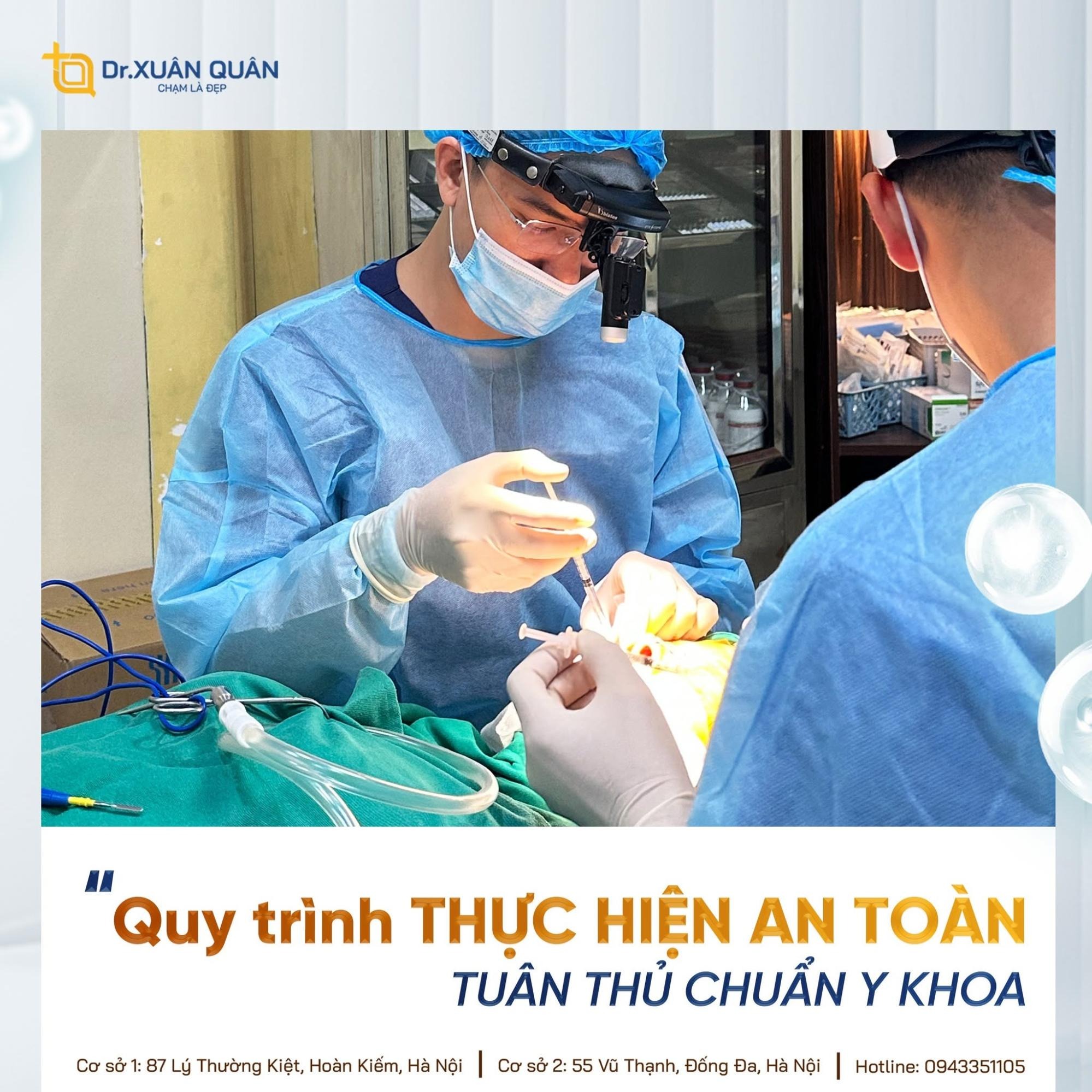
Frequently Asked Questions About Temple Augmentation
Beyond concerns regarding sleeping positions, patients undergoing temple augmentation often have many questions about their daily routine and post-operative care. Below, Dr. Xuan Quan provides concise answers to the most common questions:
Is it necessary to wear a compression head bandage while sleeping?
Yes, it is essential. You should wear a compression bandage consistently – both day and night – for the first 3 to 5 days. This bandage acts as a support, keeping the Pureform implant securely in place and preventing it from shifting should you happen to roll over while sleeping.
How long does it take for the incision to heal completely, and when can I wash my hair?
The incision, which is hidden within the hairline, will have its sutures safely removed after 10 to 12 days. You may wash your hair gently after 3 to 5 days, provided you take care to keep the incision site dry; you must also strictly avoid scratching or rubbing the temple area.
The information above provides expert guidance on whether you can sleep on your side following temple augmentation, along with instructions on the proper sleeping position to ensure an optimal aesthetic outcome. Schedule a consultation today to be examined by a specialist and develop a personalized plan for achieving a fuller, more radiant-looking face.