Tiếng Việt
Many people experience eyelid surgery but find the crease too high, too prominent, or unnatural. In many cases, the eyelids become too large, making the face look harsher, unbalanced, or even resulting in one eye being larger than the other, creating an unbalanced gaze. So, what are the reasons for eyelid surgery being too large? How can overly large eyelids be corrected to ensure a natural and long-lasting result? This article from Dr Xuan Quan Clinic will help you understand and find suitable solutions.
Can eyelid surgery that results in swollen eyelids resolve on its own?
Large eyelids after blepharoplasty may improve on their own if the cause is swelling in the early post-operative period. As the eyelid tissue stabilizes, the crease will soften and become more natural.
However, if the eyelids remain noticeably large, the crease is visible, or the two sides are uneven after recovery, this condition is usually difficult to resolve on its own and should be examined by a doctor.
- It may resolve on its own if the eyelids are still swollen and haven’t settled into their final shape.
- It is difficult to resolve on its own if the large eyelids persist and look unnatural.
- You should see a doctor if the condition does not improve over time.
Reasons why eyelid surgery results in eyelids that are too large or uneven
Excessive eyelid surgery results in a crease that is too high, too deep, or too thick compared to the facial proportions. In fact, most cases requiring correction of excessively large eyelids stem from errors in initial assessment and surgical technique.
Here are the most common causes:
- Incorrect eyelid measurement: Disproportionate to the eye and facial structure.
- Excessive tissue removal: Making the eyelid too deep and high.
- Incorrect fixation of the levator muscle: Leading to eyelid asymmetry.
- Facial scarring: Causing the eyelid to be pulled higher than before.
- Limited surgeon’s skill: Lack of experience in handling soft tissue in the eye area.
In clinical practice, the majority of failed eyelid corrections stem from incorrect assessment of anatomical structure from the outset.
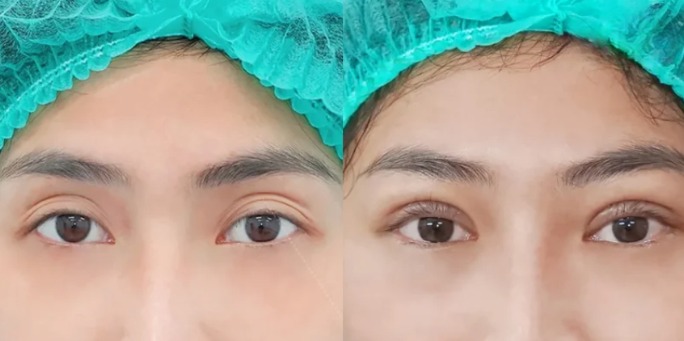
Signs to watch out for when eyelid surgery results in excessively large eyelids
Not all cases of eyelid surgery resulting in excessively large eyelids require immediate correction. However, if you experience any of the following signs, you should seek medical attention promptly for an accurate assessment:
- Eyelids that are too large, with clearly visible creases and an unnatural appearance
- Uneven eyelids, with one side noticeably larger than the other
- Stiff, retracted eyelids, or eyelids that take a long time to form
- Eyes that appear wide open, cannot close completely, or persistent dryness and irritation
- The condition does not improve after the recovery period
These symptoms may indicate that the eyelid crease is not healing properly or that excessive intervention has occurred. Seeking medical attention at the right time will help the doctor determine the most appropriate and safe course of action.
How to fix eyelids that are too large after blepharoplasty?
Correcting overly large eyelids cannot be done using a single method for all cases. The doctor needs to accurately assess the cause of the eyelid surgery (either one eyelid larger than the other) to determine the appropriate treatment, minimizing invasiveness and ensuring long-term safety.
Mild cases (high eyelids due to swelling or unstable tissue)
- Monitor for an additional 3–6 months for complete stabilization of the soft tissue.
- Wait for the natural scar contraction process to help the eyelids lower slightly.
- Regular follow-up appointments are necessary to assess progress.
In many cases, the eyelids may appear “large” in the initial stages, but they will become softer and more natural over time.
Average case (high, prominent eyelids, lack of harmony)
- Lowering the eyelid crease
- Adjusting the fixed position of the crease
- Recreating a softer and more balanced eyelid crease that complements the face
The goal is not just to make the eyelid smaller, but to restore its natural appearance.
In severe cases, or after eye surgery, one eye may be larger than the other
This group requires extensive re-surgery, including:
- Removing old sutures or fixation points
- Adjusting the levator muscle if it is pulled out of alignment
- Reconstructing the entire eyelid crease to restore symmetry
In these cases, scar tissue treatment and structural reconstruction techniques play a decisive role in the outcome.
Address for specialized and safe nose and eye cosmetic surgery.
In cases of eyelid surgery resulting in one eye larger than the other, or needing correction of excessively large eyelids from previous procedures, the most important factor is that the doctor must have a thorough understanding of the anatomical structure of the eye area and experience in handling complex corrective cases.
Dr. Xuan Quan Aesthetic Clinic brings together a team of doctors with deep expertise in the field of eye surgery, with over 10 years of clinical practice experience. Doctors directly examine and analyze the structure of the eyelid skin, levator muscle, excess fat, and degree of aging before prescribing the appropriate method.
In addition to performing basic eyelid surgery, the clinic also accepts and handles many complex cases of botched or damaged eyelid surgery from other clinics.
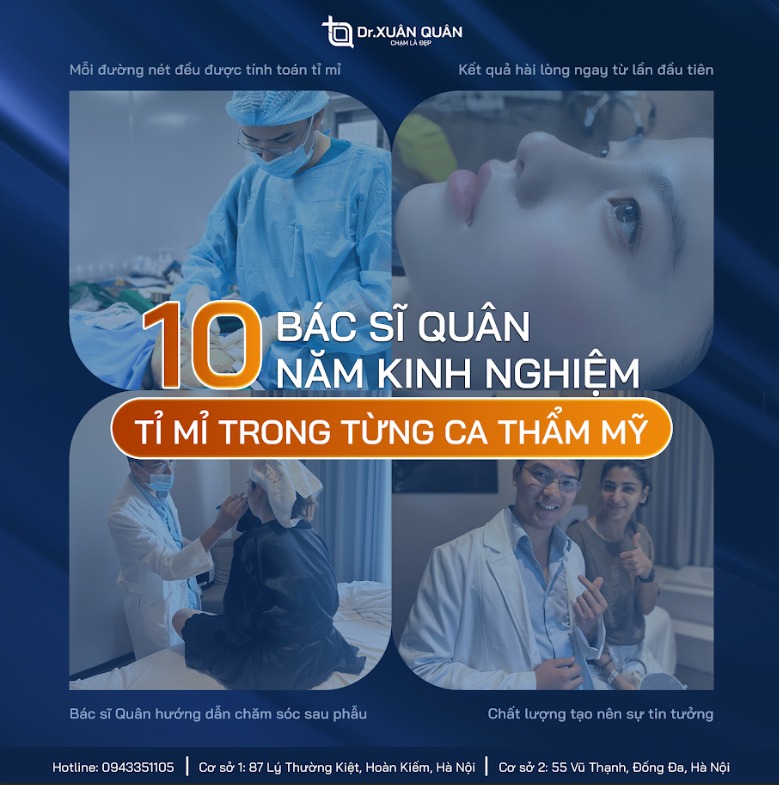
Factors contributing to the reputation of Dr. Xuan Quan Aesthetic Clinic:
- Specialist doctors directly examine and perform surgery: Thorough assessment of eye structure, appropriate intervention, minimizing the risk of eyelid surgery being too large or asymmetrical.
- Personalized eyelid crease design: Adjusting the height and curvature to suit each face, avoiding fixed eyelid shapes.
- Modern equipment: Supporting precise dissection and suturing, reducing the risk of scarring and complications.
- Standard medical procedures and strict sterilization: Risk control from the outset, ensuring safety during and after surgery.
- Meticulous post-operative care: Detailed instructions, suture removal after 7 days, and regular follow-up appointments ensure long-term stable results.
All services use high-quality materials (for surgeries with supporting materials), a clear 6-month warranty policy, combined with standard medical procedures and a professional post-operative care regimen.
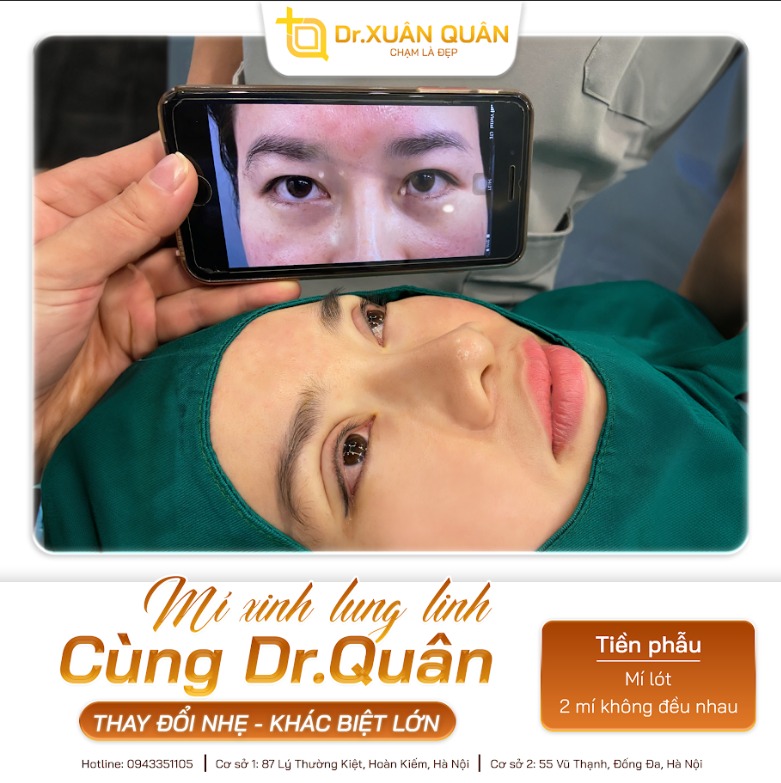
With a focus on safe beauty practices and risk control from the initial consultation, Dr. Xuan Quan Aesthetics not only helps clients achieve harmonious eyes but also minimizes the risk of needing multiple eyelid corrections – especially in cases where previous eyelid surgery has resulted in overly large or asymmetrical eyelids.
Frequently Asked Questions about Eyelid Surgery Causing Excessive Size
When experiencing problems like eyelid surgery resulting in one eye being too large or the other too small, most clients worry about the risks, whether it can be corrected, and how long it will take to recover. Below are some of the most common questions:
1. Is it dangerous to have surgery to correct an uneven eye size?
Most cases are not dangerous to health, but they significantly affect aesthetics and self-confidence. Severe cases may be accompanied by incomplete eyelid closure or dry eyes, requiring prompt medical attention.
2. Is correcting overly large eyelids complicated?
Eyelid revision surgery is always more complex than the first time because there is already scar tissue and adhesions. The doctor needs to treat the old tissue, readjust the levator muscle, and recreate a balanced eyelid crease.
3. What should I avoid after eyelid surgery?
Avoid strong impacts, limit eye makeup in the initial period, and adhere to follow-up appointments and aftercare instructions to ensure stable eyelid recovery.
4. How long after a botched eyelid surgery can it be corrected?
It is usually recommended to wait at least 3–6 months for the tissue to completely stabilize before intervening again, unless complications need to be treated early.
5. Will eyelid surgery to correct overly large eyelids leave scars?
If performed correctly and with good post-operative care, the scar is usually thin and lies within the eyelid crease, making it difficult to notice. The risk of unsightly scarring mainly comes from improper dissection techniques or specific individual sensitivities.
Large eyelids after surgery may be a temporary reaction in the initial stage, but it could also be a sign that the eyelids were not created in the correct proportion. Proper monitoring of the recovery process and early examination if any abnormalities appear will help minimize the risk of needing multiple revisions. If you are experiencing large eyelids after surgery, uneven eyelid size, or unnatural-looking eyelid creases, you should choose a specialized eye surgery clinic for accurate assessment and appropriate corrective advice from a qualified surgeon.