
 Tiếng Việt

Congenital ptosis (drooping eyelids) can be effectively corrected through modern reconstructive surgical techniques, which restore the function of the levator muscles and improve vision. This article from Dr Xuan Quan Clinic provides a comprehensive overview of available treatment methods, suitable candidates, and where to seek safe, medically-standardized corrective procedures for ptosis.
What is congenital ptosis? What are its causes?
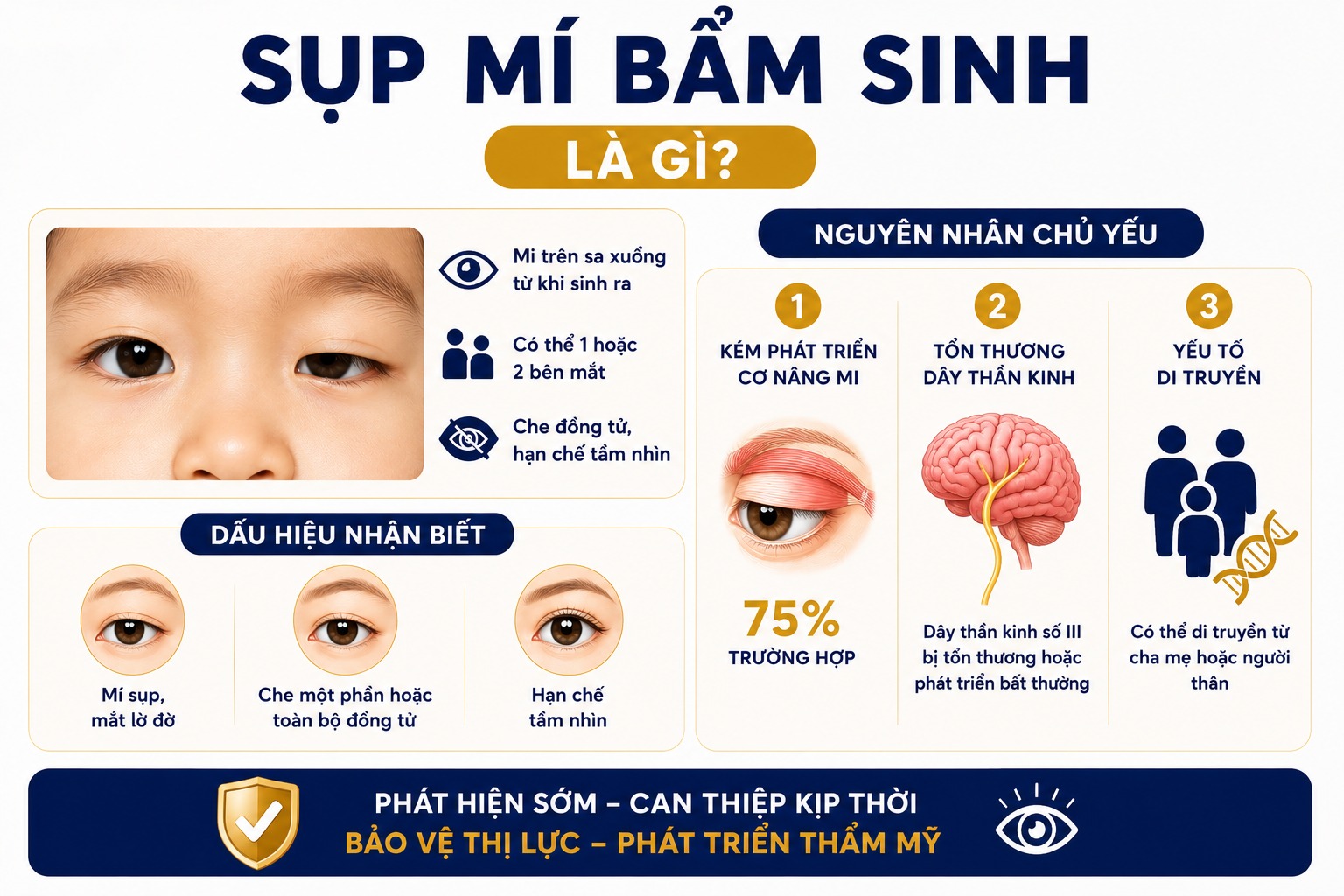
Congenital ptosis is a condition in which the upper eyelid droops below its normal position, present from birth. It can affect one or both eyes, covering part or all of the pupil (the dark center of the eye), which gives the eyes a sad or lethargic appearance and restricts vision.
According to medical experts, this condition is primarily caused by the following factors:
- Underdevelopment of the levator muscle: This accounts for up to 75% of cases. During embryonic development, the fibers of the levator muscle are partially or completely replaced by fibrous or fatty tissue, weakening the muscle and leaving it unable to exert enough force to lift the eyelid.
- Nerve damage: The oculomotor nerve (cranial nerve III)—which controls the levator muscle—may be damaged or fail to develop properly before birth.
- Genetic factors: The condition can be inherited from parents or other family members.
Who should—and who should not—undergo surgery for congenital drooping eyelids?
Surgical intervention for congenital ptosis (drooping eyelids) requires a thorough assessment of eyelid muscle function and overall health status. The following medical criteria will help determine whether the procedure is appropriate for you:
Candidates for ptosis correction:
- Individuals with unilateral (one-sided) or bilateral (both-sided) ptosis that causes facial asymmetry or aesthetic concerns.
- Individuals with severe ptosis that obstructs the pupil, leading to impaired vision or amblyopia (“lazy eye”).
- Children aged 5–6 years or older (or younger, if the ptosis is severe enough to compromise vision).
Individuals for whom the procedure is not recommended (or should be postponed):
- Those with acute eye conditions (e.g., conjunctivitis, severe dry eye, or infections).
- Individuals with uncontrolled chronic medical conditions (e.g., severe diabetes, cardiovascular disease, or blood clotting disorders).
- Women who are pregnant or currently breastfeeding.

Effective surgical methods for congenital ptosis today
For congenital ptosis (drooping eyelids), folk remedies or topical creams are completely ineffective. Depending on the strength of the individual’s levator palpebrae superioris muscle (the muscle that lifts the eyelid), a doctor will recommend one of the following two common treatment methods:
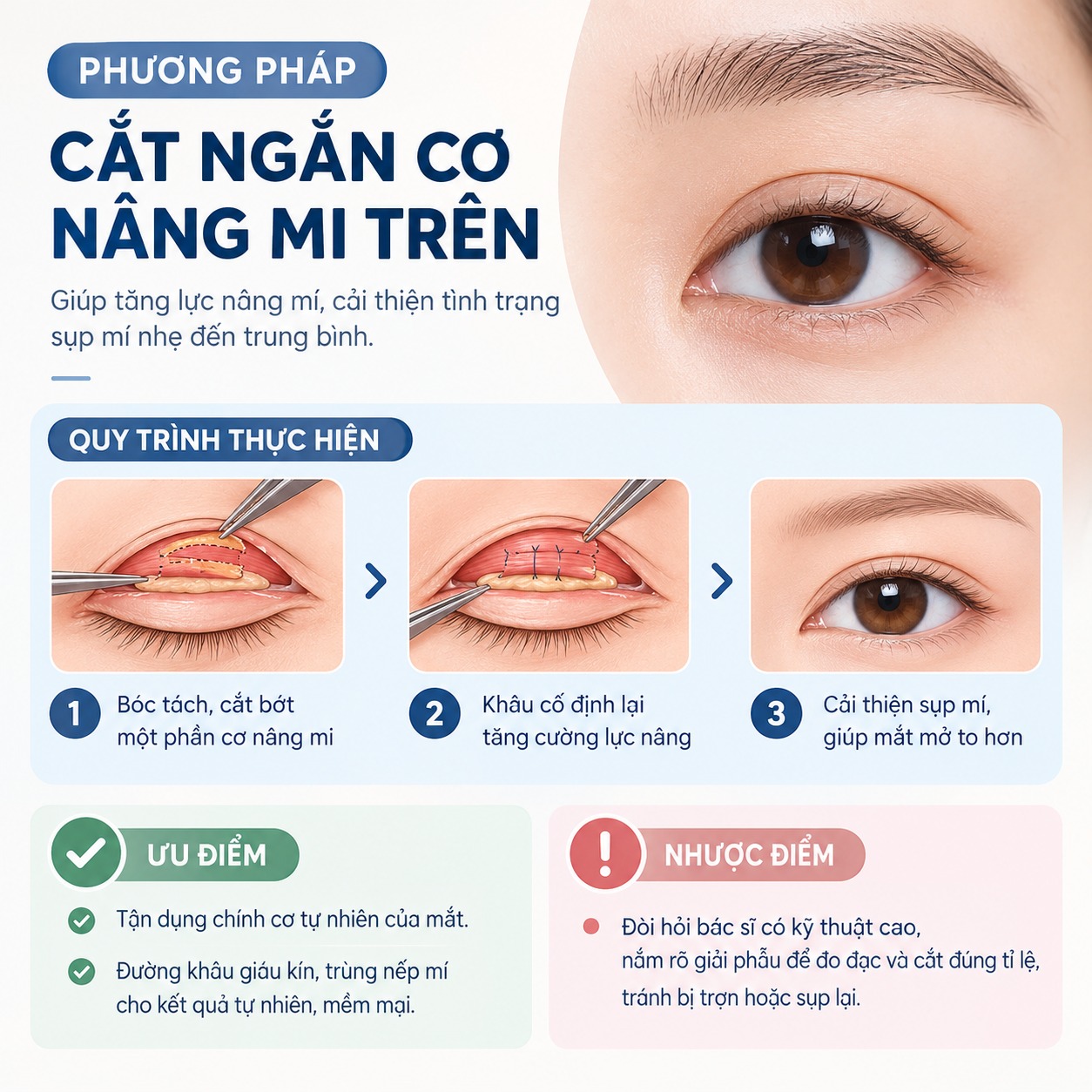
Levator muscle shortening technique
This approach is suitable for cases of mild to moderate ptosis (drooping eyelids) where the levator palpebrae superioris muscle retains some of its contractile function. The surgeon performs a dissection, shortens the levator muscle, and secures it in place to enhance its lifting strength.
- Advantages: It utilizes the eye’s own natural muscle, and the incision is concealed within the eyelid crease, resulting in a natural, soft appearance.
- Disadvantages: It requires a highly skilled surgeon with a thorough understanding of anatomical structures to ensure precise measurements and resection; otherwise, there is a risk of the eyelid becoming overly retracted (staring/exposed look) or failing to correct the drooping.
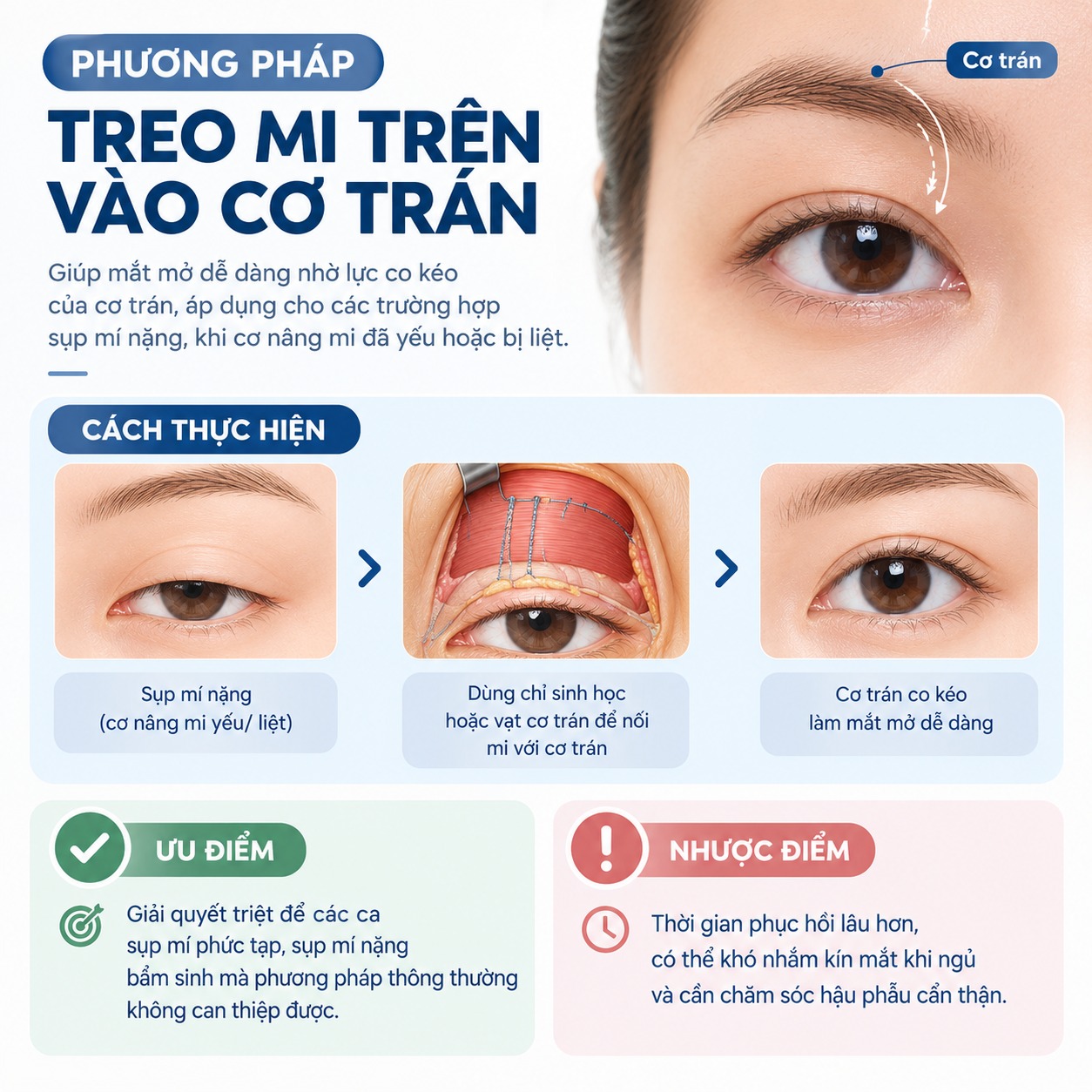
Method of suspending the upper eyelid to the frontalis muscle
Indicated for cases of severe ptosis (drooping eyelid) where the levator palpebrae superioris muscle is completely weakened or paralyzed. The surgeon uses a connecting material—such as a biological suture or a flap of the frontalis (forehead) muscle—to link the eyelid directly to the frontalis muscle, allowing the eyelid to be lifted through the contraction of the forehead muscle.
- Advantages: Effectively addresses complex cases of ptosis, including severe congenital ptosis, that cannot be treated using conventional methods.
- Disadvantages: Requires a longer recovery period; initially, the eye may not close completely during sleep, necessitating careful postoperative care.
Safe, medically-standardized correction for congenital ptosis at Dr. Xuan Quan Aesthetic Clinic
Correcting congenital ptosis is a complex procedure that requires a highly skilled surgeon to prevent complications such as an “over-corrected” (staring/wide-eyed) appearance or the inability to close the eyes completely. At Dr. Xuan Quan Aesthetic Clinic, you will be personally examined and operated on by a surgeon with over 10 years of experience and advanced training abroad. The surgeon will carefully assess your eyelid muscle strength to create a personalized treatment plan, ensuring the new eyelid crease is perfectly balanced, resulting in a wider, more vibrant, and natural-looking appearance.

Furthermore, the entire procedure is performed in a sterile, unidirectional-airflow operating room that meets medical standards, minimizing swelling and preventing infection. Following the minor surgery, clients receive dedicated post-operative care and benefit from a transparent warranty policy—ensuring complete peace of mind and long-lasting aesthetic results.

Answers to frequently asked questions about congenital drooping eyelids
To help you feel well-informed and confident before deciding to undergo an eye enhancement procedure, Dr. Xuan Quan Aesthetic Clinic has compiled and provided concise answers to the most frequently asked questions from our clients:
At what age can one undergo surgery for congenital ptosis (drooping eyelids)?
The most suitable age for intervention is 5 years or older, once the eye structure and the levator palpebrae superioris (eyelid-lifting muscle) have stabilized. However, in cases of severe ptosis that pose a risk of amblyopia (lazy eye), a surgeon may recommend earlier intervention to protect the child’s vision.
Is surgery for congenital ptosis painful, and will it leave scars?
The procedure is completely painless, thanks to modern local anesthesia techniques. The surgeon makes a micro-incision, skillfully concealing it within the new eyelid crease, and uses specialized cosmetic sutures. This ensures rapid healing and leaves no visible, unsightly scarring.
How long do the results last, and is there a risk of the eyelids drooping again?
Because the surgery directly addresses the muscle structure, the results—both in terms of lifting the eyelid and creating a double-eyelid crease—are typically long-lasting and durable. Recurrence of ptosis is extremely rare, unless the eyes are affected by the natural, significant aging process later in life.
The information above provides a scientific overview of congenital ptosis and current treatment solutions. If you are looking for a reputable, safe clinic for eyelid surgery and would like a personal consultation with an experienced specialist, please contact Dr. Xuan Quan Aesthetic Clinic today—and take the first step toward a more confident new look!