Tiếng Việt
Severed levator muscle after eyelid surgery is a rare complication, but it can directly affect eye opening function and facial aesthetics. Many cases result in drooping eyelids, bulging eyelids, or asymmetry between the eyes after surgery due to damage to the levator muscle. So what are the causes? Can it be corrected? This article from Dr Xuan Quan Clinic will help you understand the nature of the problem and safe treatment options, especially when more advanced intervention is needed.
Signs of eyelid surgery resulting in torn levator muscle
After surgery, the eyelids are usually slightly swollen and bruised for the first 5-7 days. However, if these unusual symptoms persist or become increasingly noticeable, you should be especially aware of the risk of levator muscle rupture after eyelid surgery. Below are some important signs to help you recognize this condition early:
Noticeable drooping eyelids after the swelling has subsided
Typically, after about 7-10 days, the eyelids will reduce swelling and begin to stabilize. However, if at this time:
- The eyes still cannot open as wide as before
- The upper eyelid covers a large part of the pupil
- The gaze lacks alertness and vitality
Then it is very likely that the levator muscle has been severely damaged. This is the most characteristic sign of a torn levator muscle after eyelid surgery.
The two eyes are noticeably asymmetrical
Mild eyelid asymmetry can occur due to uneven swelling. However, if:
- One eye opens normally
- The other feels significantly heavier and lower
- The distance from the eyelid to the eyebrow is asymmetrical
Then the cause may stem from one side’s levator muscle no longer functioning effectively.
You have to raise your forehead or tilt your head back to open your eyes
When the levator palpebrae muscle weakens or ruptures, the body automatically uses the frontal muscles to support the eyelid. People with this condition often:
- Constantly furrow their brows when opening their eyes
- Habitually tilt their heads slightly to see better
- Feeling tired forehead and eye strain at the end of the day
This is a typical compensatory reflex when the function of the levator palpebrae muscle is affected.
Dry eyes, eye strain, and reduced concentration
When the eyelids are not lifted high enough:
- Partial obstruction of vision
- Requires constant effort to keep eyes open
- Eye strain, burning, or dryness
In some severe cases, patients may even find their vision less clear than before the surgery.
Blurred, indistinct, or distorted eyelid crease
The levator muscle plays a crucial role in determining the clarity of the eyelid crease. If the muscle is torn or severely damaged:
- The eyelid crease may fade.
- The eyelid may be bent or discontinuous.
- The eyelid line may look unnatural.
This indicates that the internal supporting structure has been affected.
Can eyelid surgery that results in a torn levator muscle be repaired?
A torn levator muscle during eyelid surgery can be repaired; however, the effectiveness of recovery depends on the extent of the damage and the timing of the intervention. Here are some important factors you need to know:
- Earlier detection leads to a higher chance of recovery: When the muscle has not yet contracted or fibrosed significantly, the doctor can reconnect the muscle or adjust its tension to improve eye opening function.
- Complete spontaneous recovery is not possible: If the muscle is torn or deeply damaged, the drooping eyelid will not improve on its own over time.
- Correction surgery is more complex than the first time: Because the tissue has been previously intervened and has scar tissue, the correction requires a doctor with specialized experience in eye reshaping.
- Muscle function needs to be assessed before intervention: The doctor will measure the eyelid opening and check the strength of the levator muscle to develop a suitable plan.
Risks of levator muscle rupture during eyelid surgery revision
Eyelid revision surgery requires more complex surgical techniques and should be performed by a specialist in blepharoplasty. Some risks associated with revising a torn levator muscle include:
- Recurrent ptosis: If the levator muscle is not properly restored, the eyelid may continue to droop or the eye may not fully open.
- Uneven eyelids: Reconstructing the levator muscle can result in different eye openings if the revision is not done correctly.
- Longer recovery time: Due to the intervention on the muscle structure, the recovery process is usually longer than with regular eyelid surgery.
- Risk of scarring or fibrosis: Multiple revision surgeries can make the eyelid tissue more sensitive and increase the risk of scarring.
How much does it cost to repair a torn levator muscle after eyelid surgery?
The cost of correcting a torn levator muscle in eyelid surgery depends on the extent of muscle damage, the condition of the eyelid tissue, and the corrective method required. In many cases, the doctor needs to combine levator muscle reconstruction, eyelid crease correction, and adjustment of both eyes to ensure a natural result.
Below is a price list for reference for eye cosmetic surgery services at Dr. Xuan Quan Aesthetic Clinic:
|
Category |
Specific services |
Price |
| Upper eyelid surgery | Upper eyelid surgery / Lower eyelid lift / Under 40 years old | 300$ |
| Upper eyelid surgery (40–49 years old) | 340$ | |
| Upper eyelid surgery (50–59 years old) | 380$ | |
| Upper eyelid surgery (≥60T) | 418$ | |
| Eyelid surgery | Difficult eyelid surgery (eyelid revision, scarred eyelids, drooping eyelids) | 450$ |
| Lower your eyes wide open | Lowering the head | 570$ |
| Eyelid fat grafting | Eyelid fat grafting | 300$ |
| Lower eyelid surgery | Chin muscle blepharoplasty – Lower eyelid lift with fat repositioning | 570$ |
| Eyebrow lift | Eyebrow lift and frontal muscle suspension | 450$ |
| Eyebrow lift | 300$ | |
| Eyelid surgery | Eyelid surgery | 190$ |
| Remove the sutures from the eyelid lift | 70$ |
- All services come with a 6-month warranty, and results last approximately 5–10 years depending on individual factors.
- Sutures are removed after about 7 days, and detailed post-operative care instructions are provided.
Reputable eyelid surgery at Dr. Xuan Quan Aesthetic Clinic
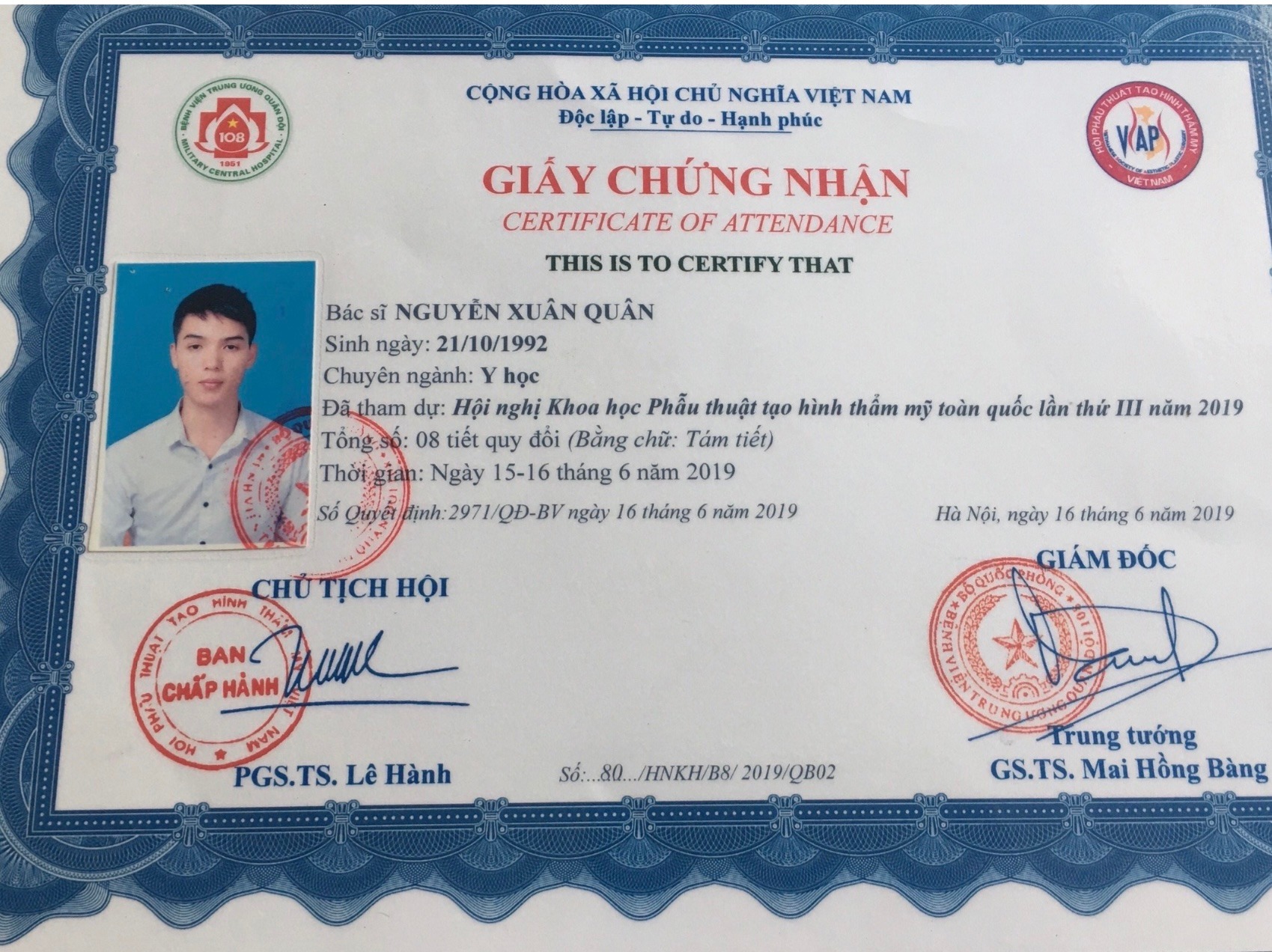
With over 10 years of experience, Dr. Xuan Quan Aesthetic Clinic has earned the trust of many clients thanks to its team of highly qualified doctors who directly examine and perform surgeries.
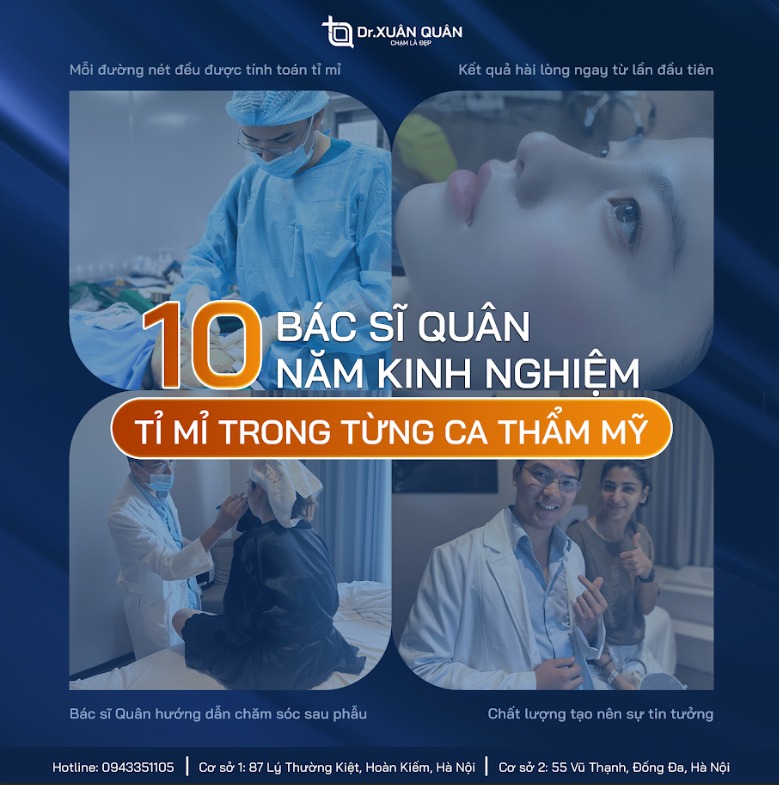
Through a rigorous and specialized professional process, the doctors here have successfully performed thousands of different eye cosmetic surgeries. Each eye surgery is designed with a personalized approach, prioritizing safety, accuracy, and long-lasting results. Before prescribing a method, the doctor conducts a thorough examination and assessment:
- Specialized eye surgery doctors: Accurately assess anatomical structure, avoiding excessive skin cutting or deep invasion that could affect the levator muscle.
- Personalized eyelid design: No fixed form is applied. The height, curvature, and depth of the eyelid crease are adjusted according to facial proportions, ensuring a natural and balanced look.
- Modern equipment: Supports precise tissue dissection, meticulous cosmetic suturing, reducing the risk of scarring and uneven eyelids.
- Standard medical procedures: Sterile operating rooms, adherence to safe surgical procedures, minimizing post-operative risks.
- Close post-operative monitoring: Sutures are removed after 7 days, and recovery progress is monitored regularly. Results last an average of 5-10 years depending on individual characteristics, with a 6-month warranty policy.
If you are considering improving your eye area or need to address a botched eyelid procedure, don’t delay a professional consultation. Signing up for a direct consultation at Dr. Xuan Quan Aesthetics will allow you to receive an accurate assessment of your current condition and develop a safe, personalized treatment plan.
Frequently Asked Questions about Eyelid Surgery with Torn Lifter Muscle
When experiencing a torn levator muscle after eyelid surgery, many patients worry about recovery and potential risks after the procedure. Here are some frequently asked questions:
Is eyelid surgery to repair a torn levator muscle painful?
The surgery is performed under local anesthesia, so it is virtually painless during the procedure. There may be slight tightness or discomfort for the first few days afterward.
Will eyelid surgery to repair a torn levator muscle leave scars?
If performed correctly, the sutures are placed within the eyelid crease, so the scars are usually very faint and difficult to notice after recovery.
Will the eyelids look natural after the surgery?
The doctor will adjust the levator muscle and eyelid crease to create a balanced look, resulting in natural-looking eyelids that harmonize with the face.
What should I avoid after eyelid surgery?
I should avoid rubbing my eyes, limit eye makeup in the initial period, and attend follow-up appointments as scheduled to ensure a good recovery.
In summary, this article has helped you understand the condition of eyelid surgery resulting in a torn levator muscle, recognize abnormal signs, and how to handle it promptly to protect eye opening function and long-term aesthetic results. If during the recovery process you experience prolonged drooping eyelids, noticeable eyelid asymmetry, or difficulty opening your eyes, you should consult a specialist early for proper examination and intervention to avoid affecting the structure of the levator muscle and future aesthetic results.