Tiếng Việt
Many people choose to get dimples created to have a charming and natural smile. However, in some cases, the results may not be as desired, such as uneven dimples, dimples that are too deep, unnatural-looking, or the stitches coming undone. So, can a botched dimple creation be fixed, and how should it be handled? Let’s find out in detail in the article below from Dr Xuan Quan Clinic.
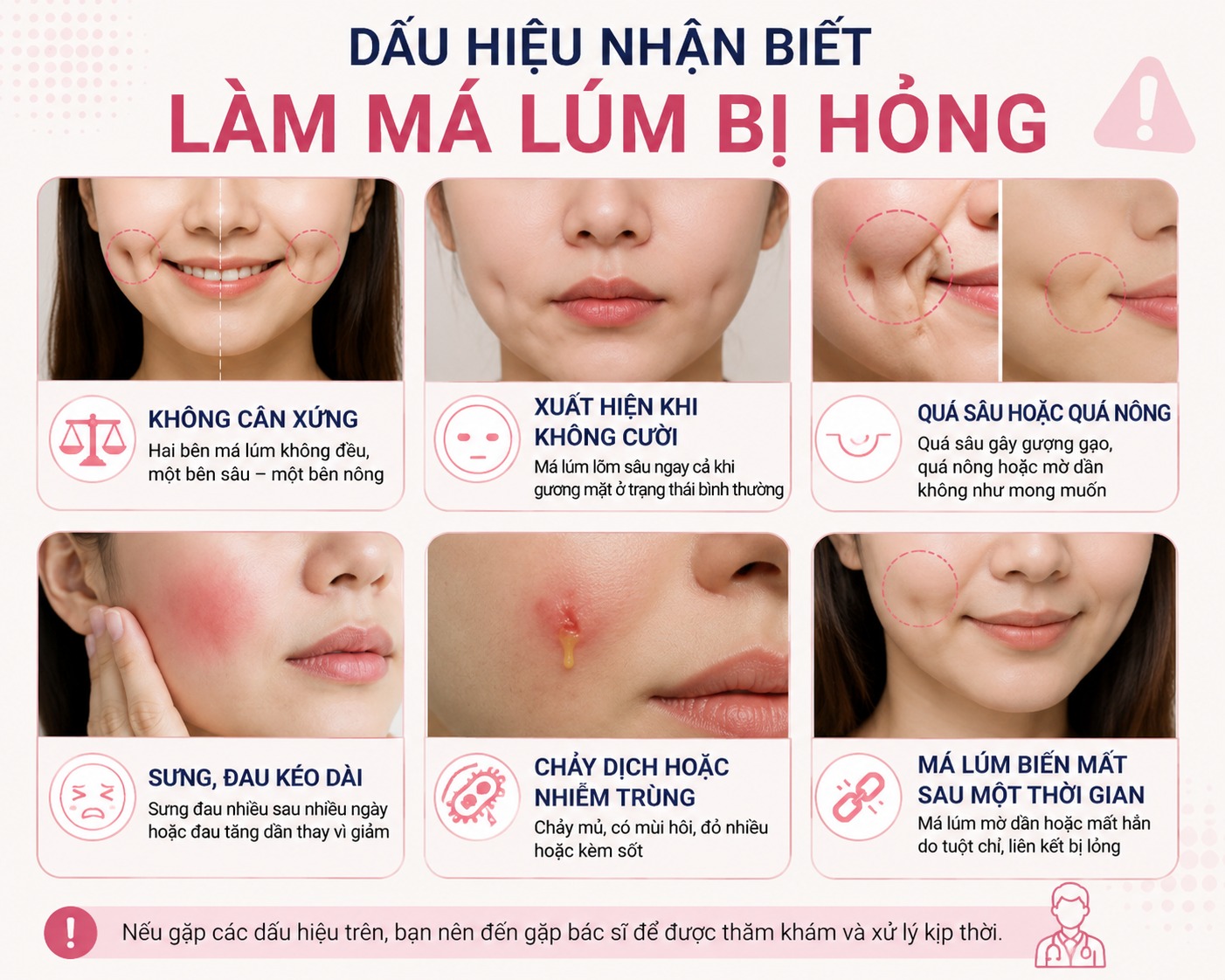
Signs of a botched dimple creation
After dimple creation, the cheek area needs time to stabilize, so slight swelling or unnatural-looking dimples in the first few days is completely normal. However, if after the recovery period you still experience the following signs, it is very likely that the dimple creation is botched and you need to see a doctor.
- Asymmetrical dimples: One dimple is deep, the other shallow, or the two dimples are unevenly positioned, making the face look unbalanced when smiling.
- Dimples appearing even when not smiling: After complete recovery, dimples should only be visible when smiling or expressing emotions. If the dimples remain deeply indented even when the face is in a normal state, this may be a sign of improper shaping.
- Dimples that are too deep or too shallow: Dimples that are too deep will look unnatural, while dimples that are too shallow or fading will not achieve the desired aesthetic effect.
- Prolonged swelling and pain: If the cheek area remains swollen and painful after many days, or the pain increases instead of decreasing, you should go to a medical facility for examination.
- Drainage or signs of infection: Wounds that discharge pus, have a foul odor, are very red, or are accompanied by fever are abnormal signs that need to be treated promptly.
- Dimples disappearing after a while: In some cases, dimples fade or disappear completely due to loose connections or suture detachment, affecting the aesthetic result.
Can a botched dimple creation be fixed?
The answer is yes, however, the possibility of correction will depend on the cause of the damage, the extent of the injury, and when it is detected.
Cases that can be monitored further
If your cheeks are still slightly swollen, the dimples are not symmetrical, or feel slightly stiff during the first 1 to 4 weeks, you shouldn’t worry too much. This is the healing phase, and the dimples will gradually stabilize over time.
Scheduled follow-up appointments will help your doctor assess the recovery process and provide appropriate aftercare instructions.
Cases requiring corrective intervention
You should consider correction if you experience the following:
- Dimples that are too deep or too shallow after complete recovery.
- The dimples on both sides are noticeably uneven or asymmetrical.
- Dimples that appear continuously even when not smiling.
- The dimple stitches have come loose, causing the dimples to fade or disappear.
- Infection, discharge, or signs of prolonged complications.
Depending on the case, the doctor may remove the stitches, treat the damaged area, or recreate the dimples after the tissue has stabilized.
When should you see a doctor?
You should see a doctor immediately if the cheek area is swollen and painful for a long time, discharges fluid, you have a fever, the dimples are significantly asymmetrical, or you suspect the dimples have been damaged. Early examination helps to accurately determine the cause and provide timely treatment, minimizing the impact on the aesthetic results later.
Reputable and professional dimple correction clinic
At Dr Xuan Quan Clinic, each client receives a thorough examination to choose the most suitable dimple shaping option for their face.
- Doctor-directed examination and procedure: The doctor assesses the facial structure, smile muscles, and facial proportions to determine the position and depth of the dimples, ensuring harmonious and natural results.
- Dimple design tailored to each individual’s face: The dimple placement is personalized, not following a fixed pattern, resulting in a balanced smile that suits each client’s unique features.
- Following standard medical procedures: The entire procedure is performed in a sterile environment with complete steps including examination, anesthesia, shaping, and post-procedure monitoring to ensure safety.
- Minimizing the risk of complications: Proper technique and a systematic aftercare process reduce the risk of dimple asymmetry, suture detachment, or other unwanted complications after the procedure.
- Support throughout the recovery process: Our team of doctors continuously monitors the results after the procedure, readily checking and advising if clients experience any unusual signs, ensuring peace of mind throughout the recovery process.

Frequently Asked Questions About Dimple Creation
Below are the most frequently asked questions from our clients, along with answers from a professional perspective.
Is it dangerous if the sutures come loose after dimple creation?
Generally, if the sutures come loose after dimple creation, it is not dangerous to your health, but it can cause the dimples to fade or disappear. If you suspect the sutures have come loose, you should see a doctor for examination and appropriate treatment.
How long after a dimple creation can I have it redone if it fails?
This depends on the recovery of the cheek tissue. Usually, the doctor will recommend redoing the dimple creation after the treated area has completely healed, usually several months or more, to ensure the best results.
Is it normal for dimples to disappear after a while?
It can happen. In some cases, dimples fade due to weakened connections between the skin and muscle or due to suture detachment. In that case, you should see a doctor to determine the cause and consider redoing the procedure if necessary.
How long does it take for dimple creation to stabilize?
Typically, swelling in the cheek area will subside after about 1 week, and the dimples will gradually look more natural after 1-3 months, depending on individual body constitution and aftercare.
Dimple creation complications are not uncommon, and in many cases, they can be corrected if detected early and treated correctly. Therefore, if you notice any unusual signs such as uneven dimples, dimples that are too deep, unnatural-looking, or the stitches coming loose, you should not try to treat it yourself at home but should see a doctor for examination and advice on the appropriate course of action.